
Genetic Improvement Programs
Expert-defined terms from the Postgraduate Certificate in Livestock Genomic Breeding course at HealthCareStudies (An LSPM brand). Free to read, free to share, paired with a professional course.
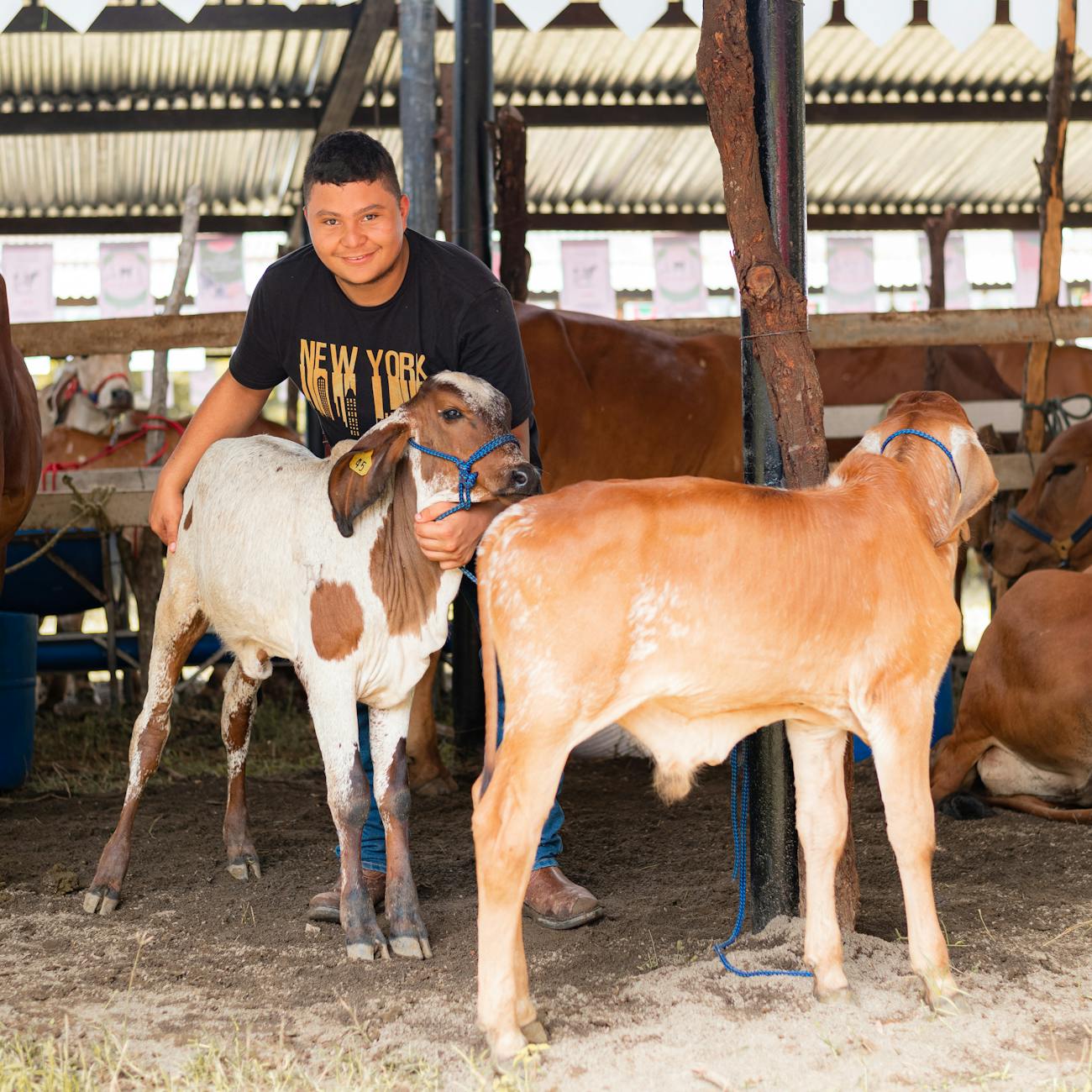
Genetic Improvement Programs #
Genetic Improvement Programs
Genetic Improvement Programs are structured breeding strategies designed to enha… #
These programs utilize advanced genomic tools and technologies to accelerate the rate of genetic gain and improve overall performance. The ultimate goal of Genetic Improvement Programs is to enhance productivity, health, and welfare traits in livestock species through selective breeding.
Allele #
Allele
An allele is a variant form of a gene that arises by mutation and is located at… #
Alleles can result in different phenotypic traits, such as coat color or milk production, depending on their specific genetic sequence. In livestock breeding, alleles play a crucial role in determining the genetic diversity and potential for genetic improvement within a population.
Backcrossing #
Backcrossing
Backcrossing is a breeding technique used to introduce a specific gene or trait… #
This technique allows breeders to retain the desirable traits of the recipient population while incorporating the desired trait from the donor population. Backcrossing is commonly used in livestock breeding to introduce valuable genetic material into established breeds.
Chromosome #
Chromosome
A chromosome is a thread #
like structure composed of DNA and proteins found in the nucleus of a cell. Chromosomes contain the genetic information necessary for the development, growth, and reproduction of an organism. In livestock species, chromosomes exist in pairs, with one set inherited from each parent. Chromosomes play a crucial role in determining the genetic makeup and inheritance patterns of livestock populations.
DNA #
DNA
DNA, or deoxyribonucleic acid, is a molecule that carries the genetic instructio… #
DNA is composed of two strands that form a double helix structure and is made up of nucleotides containing four different bases: adenine (A), thymine (T), cytosine (C), and guanine (G). In livestock breeding, DNA analysis is used to identify genetic variations, traits, and markers that influence important production and health characteristics.
Embryo Transfer #
Embryo Transfer
Embryo transfer is a reproductive technique used in livestock breeding to transf… #
This technique allows breeders to increase the reproductive efficiency of valuable female animals by producing multiple offspring from a single mating. Embryo transfer is commonly used in genetic improvement programs to propagate superior genetics and accelerate the rate of genetic gain within a population.
Founder Population #
Founder Population
A founder population is a group of individuals that establish a new breeding pop… #
Founder populations play a crucial role in the development of new breeds and genetic improvement programs by providing the initial genetic material for selection and breeding. The genetic composition of founder populations influences the genetic potential and diversity of subsequent generations.
Genetic Diversity #
Genetic Diversity
Genetic diversity refers to the variation in genetic material within a populatio… #
Genetic diversity is essential for the long-term viability and adaptability of livestock populations, as it provides the raw material for natural and artificial selection to act upon. Maintaining genetic diversity in breeding programs is critical to minimizing the risk of inbreeding, preserving valuable traits, and enhancing overall genetic progress.
Genetic Gain #
Genetic Gain
Genetic gain is the improvement in a specific trait or set of traits within a po… #
Genetic gain is measured as the difference between the average performance of the current generation and the previous generation. The rate of genetic gain is influenced by the selection intensity, genetic variability, heritability of traits, and generation interval. Maximizing genetic gain is a primary objective of genetic improvement programs in livestock breeding.
Genetic Marker #
Genetic Marker
A genetic marker is a specific DNA sequence or gene variant that is associated w… #
Genetic markers are used in livestock breeding to identify and track the inheritance of desirable traits, such as disease resistance, milk production, or growth rate. Genetic markers can be used to assist in selection decisions, estimate breeding values, and predict the genetic potential of individuals within a population.
Genome #
Genome
The genome is the complete set of genetic material (DNA) in an organism, includi… #
The genome contains the information necessary for the development, functioning, and reproduction of an organism. In livestock species, the genome plays a critical role in determining the genetic makeup and inheritance patterns that influence traits of economic importance. Advances in genomic technologies have enabled researchers to sequence and analyze the genomes of various livestock species, leading to the identification of key genes and markers for genetic improvement.
Genomic Selection #
Genomic Selection
Genomic selection is a breeding approach that uses genomic information (DNA mark… #
Genomic selection allows breeders to estimate breeding values more accurately and efficiently than traditional methods based solely on phenotypic data. By incorporating genomic information into selection decisions, genomic selection can accelerate the rate of genetic gain, increase selection accuracy, and improve the overall performance of livestock populations.
Heritability #
Heritability
Heritability is a measure of the proportion of phenotypic variation in a trait t… #
Heritability estimates range from 0 to 1, with higher values indicating that genetic factors have a greater influence on the expression of the trait. Heritability plays a critical role in determining the response to selection and the rate of genetic gain in breeding programs. Traits with high heritability are more easily improved through selective breeding than traits with low heritability.
Inbreeding #
Inbreeding
Marker #
Assisted Selection
Marker #
assisted selection is a breeding strategy that uses genetic markers to assist in the selection of individuals with desirable traits. Marker-assisted selection allows breeders to identify and select animals with specific genetic markers associated with traits of interest, such as disease resistance, feed efficiency, or meat quality. By incorporating genetic markers into selection decisions, marker-assisted selection can enhance the accuracy and efficiency of breeding programs and facilitate the improvement of key production traits in livestock populations.
Phenotype #
Phenotype
Phenotype refers to the observable characteristics or traits of an organism that… #
Phenotypic traits can include physical features, behavior, physiology, and performance traits such as growth rate, milk production, or disease resistance. Phenotypic data is used in livestock breeding to assess the performance and quality of individuals, estimate breeding values, and make selection decisions based on specific production and health traits.
Quantitative Trait Locus (QTL) #
Quantitative Trait Locus (QTL)
A quantitative trait locus (QTL) is a specific chromosomal region that is associ… #
QTLs are identified through genetic mapping studies that link markers to phenotypic traits of interest. Understanding the location and effect of QTLs in the genome is essential for marker-assisted selection, genomic selection, and genetic improvement programs in livestock breeding. QTL mapping can help breeders identify regions of the genome that influence important production traits and guide selection decisions to improve overall performance.
Selection Index #
Selection Index
A selection index is a method used in breeding programs to combine multiple trai… #
Selection indices are weighted according to the economic importance of each trait and the genetic correlations among traits. By using a selection index, breeders can simultaneously improve multiple traits in livestock populations, such as growth rate, feed efficiency, and carcass quality. Selection indices are valuable tools for optimizing genetic gain, balancing trait improvements, and achieving breeding goals in genetic improvement programs.
Single Nucleotide Polymorphism (SNP) #
Single Nucleotide Polymorphism (SNP)
A single nucleotide polymorphism (SNP) is a common type of genetic variation tha… #
SNPs are the most abundant type of genetic marker in the genome and can be used to identify differences among individuals within a population. SNPs are valuable tools in livestock breeding for association studies, genetic mapping, and genomic selection. By analyzing SNPs, breeders can identify regions of the genome that are associated with specific traits and use this information to make informed selection decisions in genetic improvement programs.
Superovulation #
Superovulation
Superovulation is a reproductive technique used in livestock breeding to induce… #
Superovulation increases the number of embryos available for collection and transfer, thereby enhancing the reproductive efficiency and genetic progress of breeding programs. Superovulation is commonly used in conjunction with embryo transfer to maximize the number of offspring produced from elite females with valuable genetic traits. This technique accelerates the rate of genetic gain and propagation of superior genetics within livestock populations.
Transgenic #
Transgenic
Transgenic refers to an organism that has been genetically modified by introduci… #
Transgenic livestock, also known as genetically modified organisms (GMOs), are created by introducing foreign genes into the genome to improve traits such as disease resistance, growth rate, or milk production. Transgenic technology has the potential to revolutionize genetic improvement programs by introducing novel genetic material and enhancing the performance and productivity of livestock species. However, transgenic livestock also raise ethical, environmental, and regulatory concerns that must be carefully considered in breeding programs.
Whole Genome Sequencing #
Whole Genome Sequencing
Whole genome sequencing is a comprehensive and detailed analysis of an organism'… #
Whole genome sequencing provides a complete genetic blueprint of an organism and enables researchers to identify genetic variations, mutations, and functional elements that influence traits of interest. In livestock breeding, whole genome sequencing is used to study the genetic architecture of production and health traits, identify candidate genes and markers for selection, and improve the efficiency and accuracy of genetic improvement programs.