
Immersive Design Presentation and Communication Skills
Expert-defined terms from the Professional Certificate in Immersive Interior Design course at HealthCareStudies (An LSPM brand). Free to read, free to share, paired with a professional course.
Ambient Intelligence #
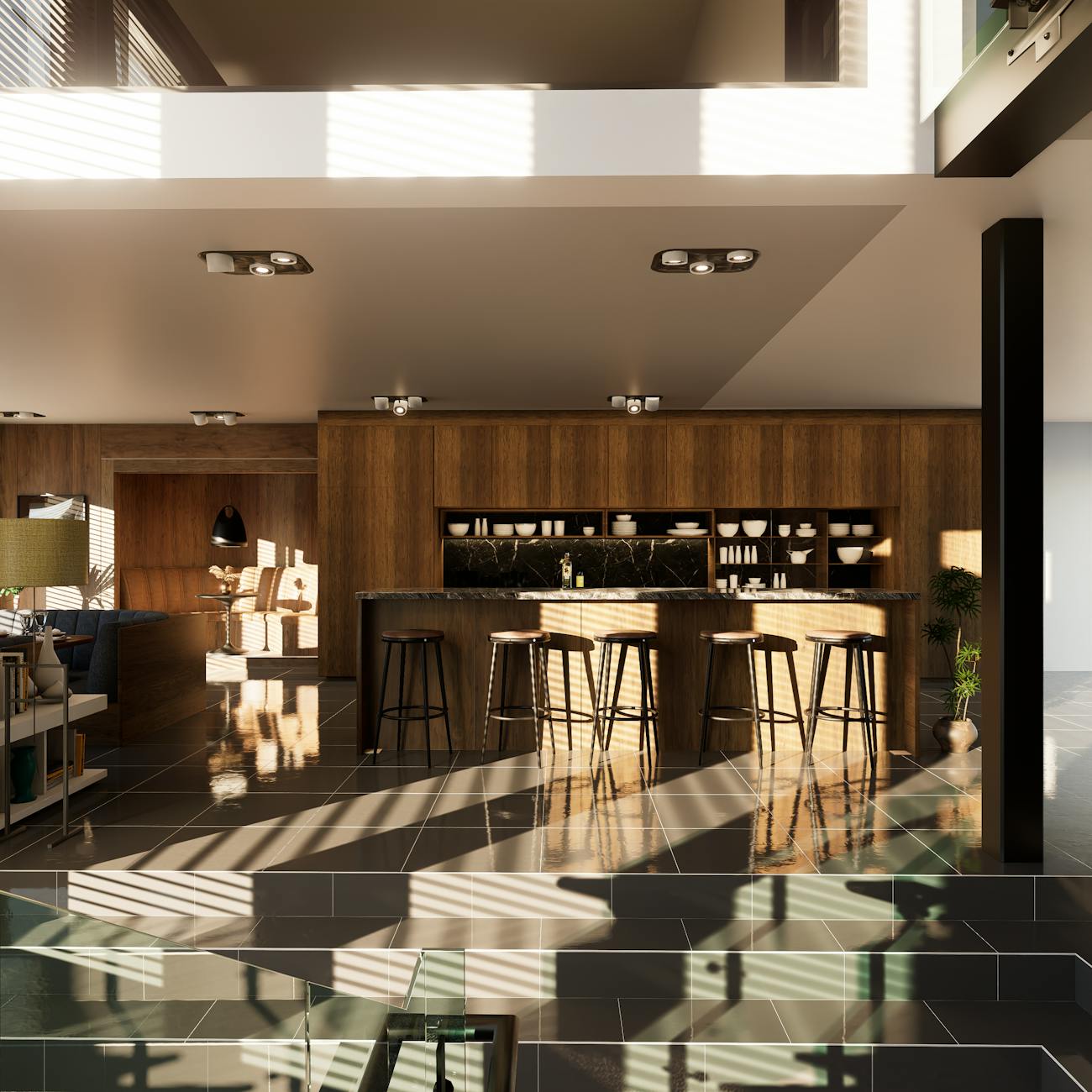
Ambient Intelligence (AmI) refers to the ability of an environment to sense and respond to the presence and activities of people, using technology that is seamlessly integrated into the space. In the context of immersive interior design, AmI can be used to create intelligent, responsive spaces that enhance user experience and well-being.
Augmented Reality (AR) #
AR is a technology that superimposes digital information onto the physical world, allowing users to view and interact with both real and virtual objects in a single environment. In immersive interior design, AR can be used to visualize design concepts in situ, enabling clients and designers to better understand and communicate design ideas.
Computer #
Aided Design (CAD): CAD is a software tool that enables designers to create, modify, and communicate design ideas using digital models and drawings. In immersive interior design, CAD is used to create detailed, accurate models of interior spaces, allowing designers to explore and refine design concepts in three dimensions.
Digital Fabrication #
Digital fabrication refers to the use of computer-controlled machines to produce physical objects from digital models. In immersive interior design, digital fabrication can be used to create custom furniture, lighting, and decorative elements that are tailored to the specific needs and preferences of clients.
Gamification #
Gamification is the application of game-design principles and mechanics to non-game contexts, such as education, marketing, and interior design. In immersive interior design, gamification can be used to engage and motivate clients, enabling them to participate more actively in the design process and better understand the design concepts being presented.
Haptic Feedback #
Haptic feedback is the use of tactile sensations to simulate the feel of physical objects and surfaces in a virtual environment. In immersive interior design, haptic feedback can be used to enhance the sense of immersion and realism, allowing clients to experience and evaluate design concepts in a more tangible and intuitive way.
Immersive Experience #
An immersive experience is a type of user experience that is characterized by a high degree of engagement and sensory involvement. In immersive interior design, the goal is to create spaces that are not only visually and functionally appealing but also emotionally engaging and memorable.
Interactive Design #
Interactive design refers to the creation of digital interfaces and experiences that allow users to interact with and manipulate virtual objects and environments. In immersive interior design, interactive design can be used to enable clients to explore and customize design concepts in real time, providing a more dynamic and collaborative design process.
Motion Capture #
Motion capture is a technology that records the movement of objects or actors and translates it into digital data that can be used to animate virtual characters or objects. In immersive interior design, motion capture can be used to create realistic animations of people using and interacting with interior spaces, providing a more accurate and immersive representation of the design concepts being presented.
Spatial Augmented Reality (SAR) #
SAR is a type of AR that projects digital content onto physical surfaces, creating the illusion of virtual objects existing within the real world. In immersive interior design, SAR can be used to enhance the sense of immersion and realism, allowing clients to experience and evaluate design concepts in a more tangible and intuitive way.
User Experience (UX) Design #
UX design is the process of creating digital interfaces and experiences that are intuitive, engaging, and user-friendly. In immersive interior design, UX design is used to ensure that clients can easily navigate and interact with virtual environments, enabling them to better understand and evaluate design concepts.
Virtual Reality (VR) #
VR is a technology that creates a simulated environment that can be experienced and explored in a fully immersive way. In immersive interior design, VR can be used to create virtual models of interior spaces, allowing clients to experience and evaluate design concepts in a more realistic and engaging way.
Visualization Tools #
Visualization tools are software applications that enable designers to create and communicate design concepts using digital models and renderings. In immersive interior design, visualization tools are used to create detailed, realistic representations of interior spaces, allowing clients to better understand and evaluate design concepts.
Wayfinding #
Wayfinding is the process of designing and implementing spatial cues and signage that help people navigate and orient themselves within a physical environment. In immersive interior design, wayfinding can be used to create intuitive, user-friendly spaces that are easy to navigate and understand.
360 #
Degree Panorama: A 360-degree panorama is a type of digital image that provides a full, 360-degree view of a scene or environment. In immersive interior design, 360-degree panoramas can be used to create virtual tours of interior spaces, allowing clients to explore and evaluate design concepts in a more immersive and engaging way.
4D Modeling #
4D modeling is a type of modeling that incorporates time as a fourth dimension, allowing designers to create dynamic, animated models of interior spaces that change and evolve over time. In immersive interior design, 4D modeling can be used to create realistic simulations of how interior spaces will be used and experienced over time, providing a more accurate and immersive representation of the design concepts being presented.
Agile Design #
Agile design is a flexible, iterative approach to design that emphasizes collaboration, adaptability, and continuous improvement. In immersive interior design, agile design can be used to enable designers to quickly and efficiently respond to changing client needs and preferences, providing a more collaborative and user-centered design process.
Animation Tools #
Animation tools are software applications that enable designers to create and manipulate digital animations of objects or environments. In immersive interior design, animation tools can be used to create realistic simulations of how interior spaces will be used and experienced over time, providing a more immersive and engaging representation of the design concepts being presented.
BIM (Building Information Modeling) #
BIM is a digital modeling technology that enables designers to create detailed, intelligent models of buildings and interior spaces. BIM models can be used to analyze and optimize building performance, simulate construction processes, and communicate design concepts to clients and stakeholders.
Biophilic Design #
Biophilic design is an approach to design that seeks to incorporate natural elements and patterns into the built environment. In immersive interior design, biophilic design can be used to create spaces that are not only visually appealing but also emotionally engaging and supportive of human health and well-being.
Cinematic Rendering #
Cinematic rendering is a type of rendering that creates highly realistic, photo-quality images of digital models. In immersive interior design, cinematic rendering can be used to create stunning visualizations of interior spaces, providing a more immersive and engaging representation of the design concepts being presented.
Collaborative Design #
Collaborative design is an approach to design that emphasizes collaboration, communication, and teamwork between designers, clients, and stakeholders. In immersive interior design, collaborative design can be used to enable designers to work more closely with clients, providing a more dynamic and user-centered design process.
Data Visualization #
Data visualization is the process of representing complex data sets in a visual format that is easy to understand and interpret. In immersive interior design, data visualization can be used to create interactive, immersive experiences that allow clients to explore and analyze design data in a more intuitive and engaging way.
Design Thinking #
Design thinking is a problem-solving approach that emphasizes empathy, creativity, and experimentation. In immersive interior design, design thinking can be used to enable designers to better understand and respond to the needs and preferences of clients, providing a more user-centered design process.
Digital Prototyping #
Digital prototyping is the process of creating and testing digital models of products or environments. In immersive interior design, digital prototyping can be used to quickly and efficiently test and refine design concepts, providing a more iterative and efficient design process.
Ergonomics #
Ergonomics is the study of how people interact with their environment, with a focus on designing products and spaces that are safe, comfortable, and efficient. In immersive interior design, ergonomics can be used to create spaces that are optimized for human use and well-being.
Experiential Design #
Experiential