
Robotics and Automation
Robotics and Automation are two closely related fields that play a crucial role in the advancement of AI technologies for Space Challenges . Understanding key terms and vocabulary in these domains is essential for professionals looking to e…
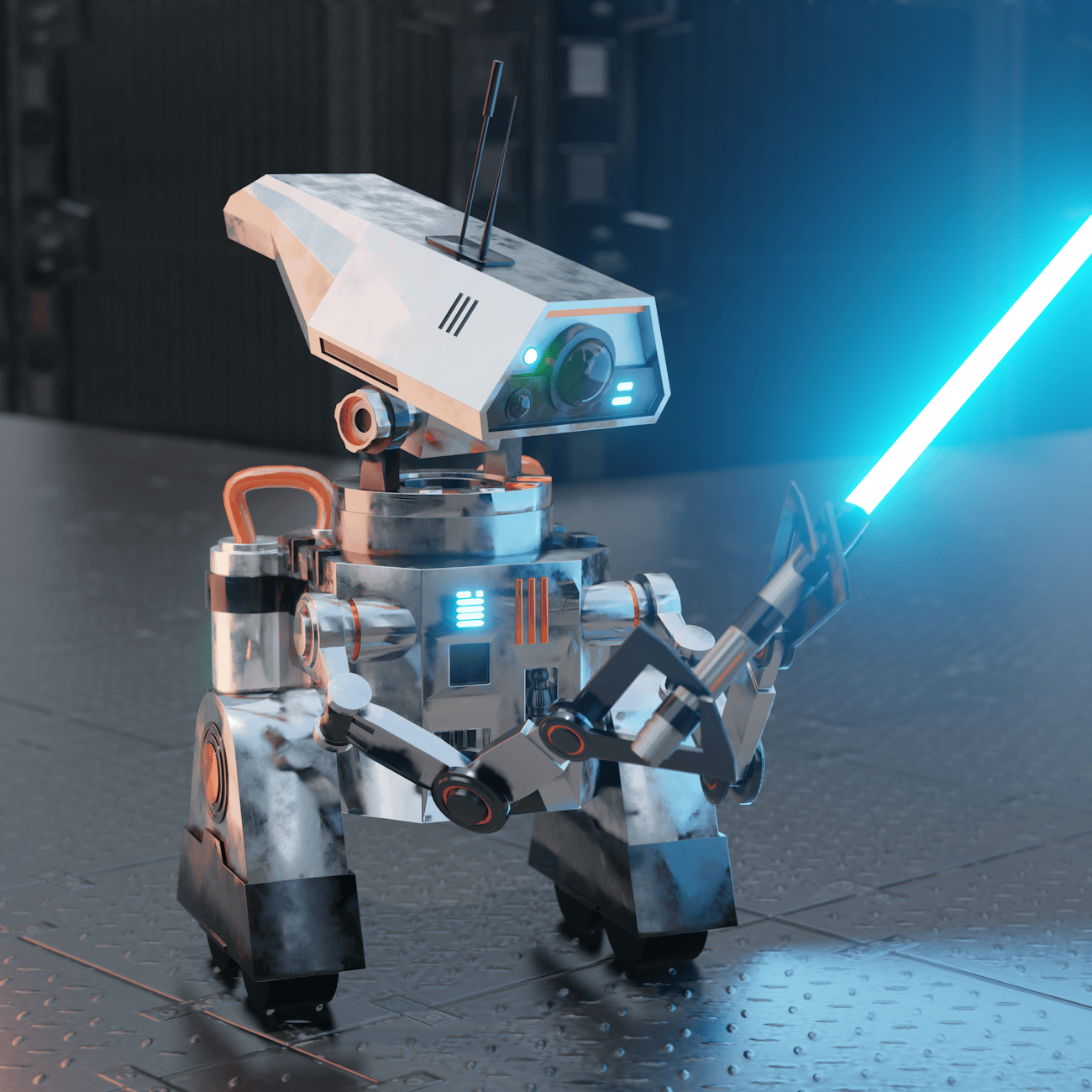
Robotics and Automation are two closely related fields that play a crucial role in the advancement of AI technologies for Space Challenges. Understanding key terms and vocabulary in these domains is essential for professionals looking to excel in this field.
Robotics is the branch of engineering and science that involves the design, construction, operation, and use of robots. A robot is a machine capable of carrying out a complex series of actions automatically, especially one programmable by a computer. Automation, on the other hand, is the technology by which a process is performed with minimal human assistance. It aims to reduce human intervention in repetitive tasks and increase efficiency and accuracy.
Key Terms in Robotics and Automation:
1. Artificial Intelligence (AI): The simulation of human intelligence processes by machines, especially computer systems. AI technologies enable robots to perform tasks that typically require human intelligence, such as visual perception, decision-making, and language understanding.
2. Machine Learning (ML): A subset of AI that focuses on the development of algorithms and statistical models that enable robots to learn and improve from experience. ML algorithms allow robots to adapt to new data and make predictions or decisions without being explicitly programmed.
3. Computer Vision: The field of AI that enables robots to interpret and understand the visual world. Computer vision algorithms allow robots to extract information from images or videos, enabling tasks such as object recognition, tracking, and navigation.
4. Natural Language Processing (NLP): The branch of AI that focuses on enabling robots to understand, interpret, and generate human language. NLP technologies allow robots to interact with humans through speech or text, enabling applications such as voice assistants and language translation.
5. Deep Learning: A subset of ML that uses artificial neural networks to model and solve complex problems. Deep learning algorithms enable robots to learn from large amounts of data and perform tasks such as image and speech recognition with high accuracy.
6. Autonomous Systems: Systems or robots that can perform tasks without human intervention. Autonomous systems rely on sensors, actuators, and AI algorithms to perceive their environment, make decisions, and execute actions.
7. Mobile Robotics: The field of robotics that focuses on the design and development of robots capable of moving in their environment. Mobile robots can be used for applications such as exploration, surveillance, and transportation.
8. Manipulation: The ability of a robot to interact with objects in its environment. Manipulation involves tasks such as grasping, moving, and manipulating objects with precision and dexterity.
9. Localization and Mapping: The process of determining a robot's position and orientation relative to its environment. Localization and mapping algorithms enable robots to navigate and operate in unknown or changing environments.
10. Human-Robot Interaction (HRI): The study of how humans and robots interact with each other. HRI research aims to design robots that can work alongside humans effectively and safely, enabling collaboration in various domains.
Practical Applications of Robotics and Automation in Space Challenges:
1. Space Exploration: Robots and autonomous systems play a crucial role in space exploration missions. Rovers such as NASA's Mars rovers Curiosity and Perseverance are equipped with AI technologies to explore the Martian surface, collect samples, and conduct scientific experiments.
2. Satellite Operations: Automation technologies are used in satellite operations to control and monitor spacecraft in orbit. Autonomous systems can perform tasks such as satellite deployment, attitude control, and collision avoidance without human intervention.
3. Astronaut Assistance: Robots can assist astronauts in space missions by performing tasks that are dangerous or time-consuming for humans. For example, the Robonaut on the International Space Station (ISS) can help astronauts with maintenance tasks and experiments.
4. Space Manufacturing: Automation technologies enable the manufacturing of components and structures in space. In-situ resource utilization (ISRU) technologies can use local resources such as lunar regolith to 3D print structures for habitats or spacecraft.
Challenges in Robotics and Automation for Space Challenges:
1. Harsh Environments: Space environments present challenges such as extreme temperatures, radiation, and vacuum conditions that can affect the performance of robots and automation systems. Designing robots that can withstand these conditions is crucial for space missions.
2. Communication Delays: Communication delays between Earth and spacecraft can impact the real-time control of robots and autonomous systems. Developing autonomous systems that can make decisions independently in the absence of continuous communication is a key challenge.
3. Resource Constraints: Space missions have limited resources such as power, bandwidth, and computational capabilities. Designing energy-efficient and lightweight robots that can operate within these constraints is essential for long-duration missions.
4. Adaptability: Space environments are dynamic and unpredictable, requiring robots to adapt to changing conditions and tasks. Developing robots with the flexibility to reconfigure themselves or learn new skills autonomously is a challenge in space robotics.
In conclusion, Robotics and Automation are critical fields for advancing AI technologies for Space Challenges. Understanding key terms and vocabulary in these domains is essential for professionals working in space exploration, satellite operations, astronaut assistance, and space manufacturing. Overcoming challenges such as harsh environments, communication delays, resource constraints, and adaptability is crucial for the successful deployment of robots and autonomous systems in space missions. By leveraging the latest advancements in AI technologies, researchers and engineers can push the boundaries of space exploration and unlock new opportunities for scientific discovery.
Key takeaways
- Robotics and Automation are two closely related fields that play a crucial role in the advancement of AI technologies for Space Challenges.
- A robot is a machine capable of carrying out a complex series of actions automatically, especially one programmable by a computer.
- AI technologies enable robots to perform tasks that typically require human intelligence, such as visual perception, decision-making, and language understanding.
- Machine Learning (ML): A subset of AI that focuses on the development of algorithms and statistical models that enable robots to learn and improve from experience.
- Computer vision algorithms allow robots to extract information from images or videos, enabling tasks such as object recognition, tracking, and navigation.
- NLP technologies allow robots to interact with humans through speech or text, enabling applications such as voice assistants and language translation.
- Deep learning algorithms enable robots to learn from large amounts of data and perform tasks such as image and speech recognition with high accuracy.