
Geospatial Intelligence
Geospatial Intelligence (GEOINT) is the systematic collection, analysis, and interpretation of geographically referenced information to describe, explain, and predict human activity. The undergraduate certificate in Military Intelligence Op…
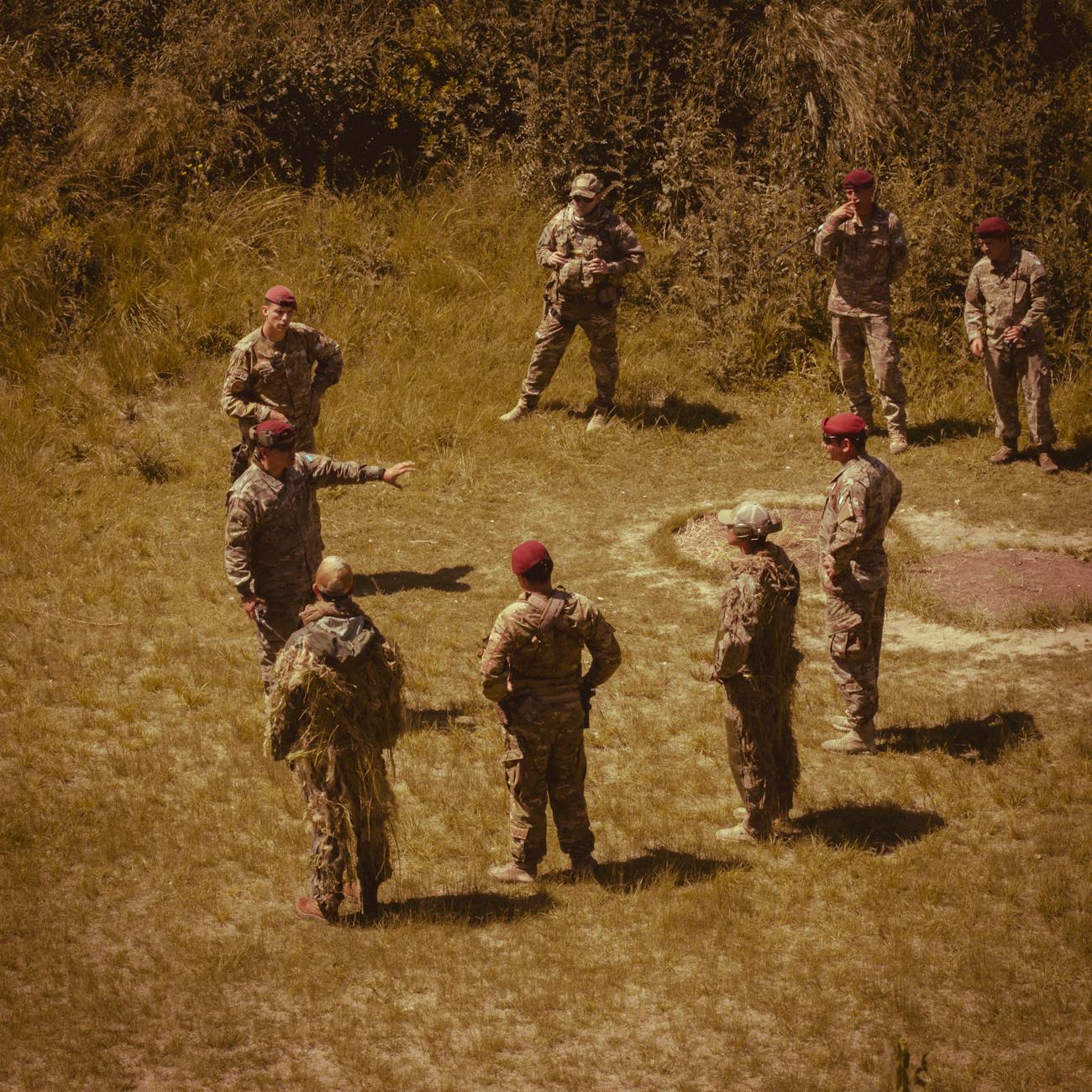
Geospatial Intelligence (GEOINT) is the systematic collection, analysis, and interpretation of geographically referenced information to describe, explain, and predict human activity. The undergraduate certificate in Military Intelligence Operations requires a solid understanding of GEOINT and its related key terms and vocabulary. In this explanation, we will discuss various GEOINT concepts, their definitions, examples, practical applications, and challenges.
**Imagery Intelligence (IMINT)**
Imagery Intelligence (IMINT) refers to the collection, analysis, and interpretation of images and video data from various sources, such as satellites, aircraft, and unmanned aerial vehicles (UAVs). IMINT provides valuable information for military and intelligence operations, such as identifying military installations, monitoring enemy movements, and assessing damage after a military strike.
Example: IMINT satellites captured images of Russian military bases in Ukraine, providing evidence of Moscow's involvement in the conflict.
Practical Application: Military commanders use IMINT to plan and execute operations, assess the enemy's capabilities, and monitor compliance with international agreements.
Challenge: IMINT data is often vast and complex, requiring advanced algorithms and machine learning techniques to process and analyze.
**Geolocation**
Geolocation is the process of determining the precise location of an object or event using geographic coordinates, such as latitude, longitude, and altitude. Geolocation is essential for military and intelligence operations, such as targeting enemy positions, tracking friendly forces, and monitoring natural disasters.
Example: Geolocation technology enabled military analysts to pinpoint the location of a terrorist training camp in Afghanistan.
Practical Application: Geolocation is used in various applications, such as navigation systems, emergency response, and border security.
Challenge: Geolocation data can be imprecise or inaccurate, requiring careful analysis and validation.
**Geospatial Analysis**
Geospatial analysis is the process of examining geographic data to identify patterns, trends, and relationships. Geospatial analysis involves statistical methods, data visualization, and spatial modeling to extract insights from geographic data.
Example: Geospatial analysis revealed a correlation between deforestation and drug trafficking in the Amazon rainforest.
Practical Application: Geospatial analysis is used in various fields, such as urban planning, environmental management, and public health.
Challenge: Geospatial analysis requires advanced technical skills and a deep understanding of geographic data and methods.
**Spatial Data Infrastructure (SDI)**
Spatial Data Infrastructure (SDI) is a framework of policies, standards, and technologies that enables the sharing, access, and use of geospatial data. SDIs facilitate data integration, interoperability, and collaboration between organizations and communities.
Example: The US National Geospatial-Intelligence Agency (NGA) developed an SDI to share geospatial data with federal, state, and local authorities.
Practical Application: SDIs support various applications, such as disaster response, infrastructure management, and climate change monitoring.
Challenge: SDIs require significant resources, investment, and coordination to develop and maintain.
**Remote Sensing**
Remote sensing is the process of acquiring information about the Earth's surface and atmosphere using sensors mounted on aircraft, satellites, or other platforms. Remote sensing provides valuable data for various applications, such as land use planning, natural resource management, and environmental monitoring.
Example: Remote sensing technology enabled scientists to monitor the melting of polar ice caps and the rising sea levels.
Practical Application: Remote sensing is used in various fields, such as agriculture, forestry, and urban planning.
Challenge: Remote sensing data can be affected by various factors, such as atmospheric conditions, sensor calibration, and data processing errors.
**Photogrammetry**
Photogrammetry is the science of making measurements from photographs, especially for recovering the exact positions of surface points. Photogrammetry provides accurate and detailed information for various applications, such as topographic mapping, 3D modeling, and engineering surveys.
Example: Photogrammetry enabled archaeologists to create a 3D model of the ancient city of Petra in Jordan.
Practical Application: Photogrammetry is used in various fields, such as construction, transportation, and forensics.
Challenge: Photogrammetry requires precise control over camera parameters, such as focal length, orientation, and distance.
**Light Detection and Ranging (LiDAR)**
Light Detection and Ranging (LiDAR) is a remote sensing technology that uses laser light to measure the distance between the sensor and the target. LiDAR provides accurate and detailed information for various applications, such as digital elevation modeling, vegetation mapping, and infrastructure inspection.
Example: LiDAR technology enabled scientists to create a detailed map of the Great Barrier Reef in Australia.
Practical Application: LiDAR is used in various fields, such as forestry, mining, and transportation.
Challenge: LiDAR data can be affected by various factors, such as atmospheric conditions, surface reflectance, and data processing errors.
**Geographic Information Systems (GIS)**
Geographic Information Systems (GIS) are software tools that enable the creation, management, analysis, and visualization of geospatial data. GIS provides powerful capabilities for integrating, querying, and analyzing geographic data, such as maps, images, and statistics.
Example: GIS technology enabled urban planners to analyze the impact of traffic congestion on air quality in a city.
Practical Application: GIS is used in various fields, such as environmental management, public safety, and logistics.
Challenge: GIS requires advanced technical skills and a deep understanding of geographic data and methods.
**Global Positioning System (GPS)**
The Global Positioning System (GPS) is a satellite-based navigation system that provides accurate and precise location information worldwide. GPS enables various applications, such as navigation, tracking, and timing.
Example: GPS technology enabled soldiers to navigate in unfamiliar terrain and communicate their position to their commanders.
Practical Application: GPS is used in various fields, such as transportation, agriculture, and construction.
Challenge: GPS signals can be weak or interrupted, requiring backup systems and redundancy.
**Elevation Data**
Elevation data is the measurement of the height of the Earth's surface above or below a reference level, such as mean sea level. Elevation data is essential for various applications, such as topographic mapping, flood modeling, and site planning.
Example: Elevation data enabled engineers to design a dam that withstands floods and earthquakes.
Practical Application: Elevation data is used in various fields, such as geology, hydrology, and urban planning.
Challenge: Elevation data can be affected by various factors, such as sensor accuracy, data resolution, and data interpolation.
In conclusion, GEOINT is a critical discipline that involves various concepts, techniques, and technologies for collecting, analyzing, and interpreting geospatial data. Understanding these key terms and vocabulary is essential for the undergraduate certificate in Military Intelligence Operations. GEOINT provides valuable insights and intelligence for military and intelligence operations, as well as various civilian applications. However, GEOINT also poses challenges and limitations, requiring careful consideration and validation.
Key takeaways
- Geospatial Intelligence (GEOINT) is the systematic collection, analysis, and interpretation of geographically referenced information to describe, explain, and predict human activity.
- Imagery Intelligence (IMINT) refers to the collection, analysis, and interpretation of images and video data from various sources, such as satellites, aircraft, and unmanned aerial vehicles (UAVs).
- Example: IMINT satellites captured images of Russian military bases in Ukraine, providing evidence of Moscow's involvement in the conflict.
- Practical Application: Military commanders use IMINT to plan and execute operations, assess the enemy's capabilities, and monitor compliance with international agreements.
- Challenge: IMINT data is often vast and complex, requiring advanced algorithms and machine learning techniques to process and analyze.
- Geolocation is essential for military and intelligence operations, such as targeting enemy positions, tracking friendly forces, and monitoring natural disasters.
- Example: Geolocation technology enabled military analysts to pinpoint the location of a terrorist training camp in Afghanistan.