
Virtual Reality and Augmented Reality
Virtual Reality (VR)
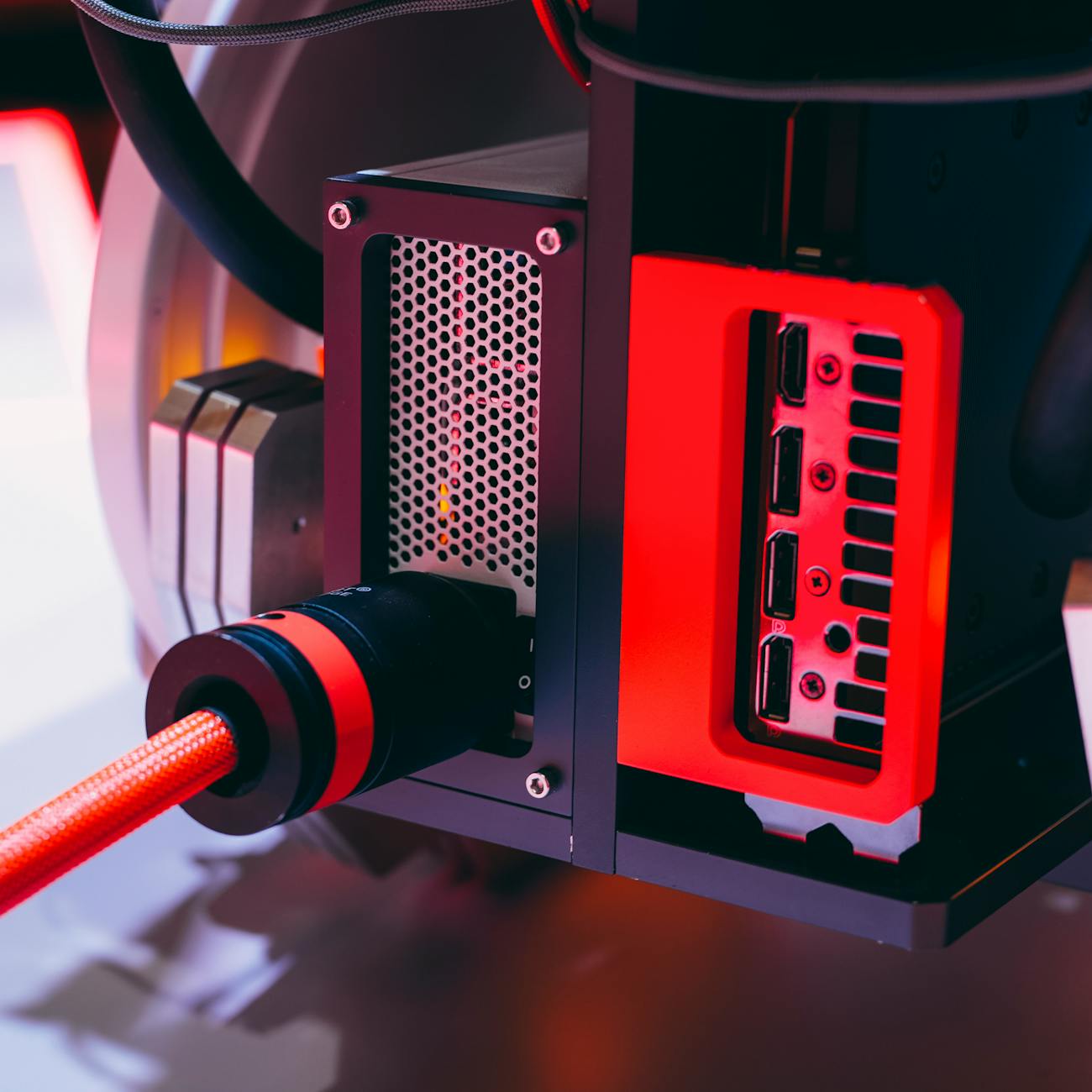
Virtual Reality (VR)
Virtual Reality (VR) refers to a computer-generated simulation of a three-dimensional environment that can be interacted with in a seemingly real or physical way by a person using special electronic equipment, such as a headset with a screen inside or gloves fitted with sensors. The goal of VR is to immerse users into a virtual world, making them feel as though they are actually present in that environment.
One of the key components of VR is the use of head-mounted displays (HMDs), which are typically worn over the eyes and ears to provide a fully immersive experience. These displays can track the movement of the user's head and adjust the visuals accordingly to create a sense of presence within the virtual environment.
Another important aspect of VR is the use of motion sensors and controllers, which allow users to interact with the virtual world through gestures, movements, and actions. This enhances the sense of immersion and engagement, making the experience more realistic and interactive.
VR has a wide range of applications across various industries, including entertainment, gaming, education, training, healthcare, and engineering. For example, in the gaming industry, VR technology is used to create realistic and immersive gaming experiences that allow players to feel like they are part of the game world. In the healthcare industry, VR is used for medical training, pain management, and therapy. In the engineering field, VR is used for designing and prototyping products, as well as for simulating complex environments and scenarios.
One of the main challenges of VR is the need for high-quality hardware and software to create realistic and immersive experiences. This can be costly and require specialized expertise to develop and maintain. Additionally, some users may experience motion sickness or disorientation when using VR, which can limit the widespread adoption of the technology. Despite these challenges, VR continues to evolve and improve, offering new opportunities for innovation and exploration in various industries.
Augmented Reality (AR)
Augmented Reality (AR) is a technology that overlays digital information, such as images, videos, or 3D models, onto the real world to enhance the user's perception of their surroundings. Unlike VR, which immerses users in a completely virtual environment, AR blends the digital and physical worlds together to create an interactive and enriched experience.
AR is typically experienced through the use of mobile devices, such as smartphones or tablets, which have built-in cameras and sensors that can detect the user's location and orientation. By pointing the device at a real-world object or environment, AR applications can superimpose digital content on top of it, creating a mixed-reality experience.
One of the key features of AR is its ability to provide contextually relevant information to users in real-time. For example, AR navigation apps can overlay directions and points of interest onto a live video feed of the user's surroundings, making it easier to navigate unfamiliar places. In the retail industry, AR can be used to allow customers to try on virtual clothes or accessories before making a purchase.
AR has a wide range of applications across various industries, including marketing, advertising, education, healthcare, and manufacturing. For example, in the education sector, AR can be used to create interactive learning experiences that engage students and enhance their understanding of complex concepts. In the healthcare industry, AR can be used for medical training, surgical planning, and patient education.
One of the main challenges of AR is the need for accurate and reliable tracking of the user's location and orientation in real-time. This requires sophisticated algorithms and sensors to ensure that digital content is properly aligned with the physical world. Additionally, AR applications must be designed with usability and user experience in mind to ensure that they are intuitive and easy to use. Despite these challenges, AR technology continues to advance and expand into new areas, offering exciting possibilities for innovation and creativity.
Virtual Reality vs. Augmented Reality
While both Virtual Reality (VR) and Augmented Reality (AR) are immersive technologies that enhance the user's perception of reality, there are key differences between the two that set them apart.
VR completely immerses users in a simulated environment, blocking out the real world entirely, whereas AR overlays digital content onto the real world, allowing users to interact with both the physical and virtual elements simultaneously.
VR requires specialized hardware, such as head-mounted displays and motion sensors, to create a fully immersive experience, whereas AR can be experienced through everyday devices, such as smartphones and tablets, making it more accessible to a wider audience.
VR is often used for gaming, training, and simulations where a completely virtual environment is needed, whereas AR is used for applications that enhance the real world with digital information, such as navigation, education, and marketing.
Both VR and AR have their unique strengths and applications, and the choice between the two depends on the specific use case and desired user experience. As both technologies continue to evolve and improve, the lines between VR and AR are becoming increasingly blurred, leading to the emergence of mixed-reality experiences that combine elements of both technologies.
Digital Twin Technology
Digital Twin Technology is a concept that involves creating a virtual representation or model of a physical asset, process, or system. This virtual twin is a digital replica that mirrors the physical counterpart in real-time, capturing its current state, behavior, and performance. By connecting the digital twin to sensors, data sources, and analytics tools, it is possible to monitor, analyze, and simulate the physical asset or system in a virtual environment.
One of the key benefits of Digital Twin Technology is its ability to provide insights into the performance and behavior of physical assets, allowing for predictive maintenance, optimization, and decision-making. For example, in the oil and gas industry, digital twins can be used to monitor the condition of equipment, predict failures, and optimize production processes.
Digital twins can be created for various assets and systems, including individual components, entire facilities, or even entire supply chains. By combining data from different sources, such as IoT devices, sensors, and historical records, it is possible to create a comprehensive and accurate representation of the physical world in a digital format.
Digital Twin Technology has a wide range of applications across industries, including manufacturing, healthcare, transportation, and energy. For example, in manufacturing, digital twins can be used to optimize production processes, improve quality control, and reduce downtime. In healthcare, digital twins can be used for personalized medicine, patient monitoring, and treatment planning.
One of the main challenges of Digital Twin Technology is the integration of data from different sources and systems to create a coherent and accurate digital twin. This requires interoperability, data standardization, and data governance to ensure that the digital twin reflects the physical reality accurately. Additionally, maintaining and updating the digital twin over time can be challenging, as physical assets and systems change and evolve.
Overall, Digital Twin Technology offers a powerful tool for monitoring, analyzing, and optimizing physical assets and systems in real-time, providing valuable insights and enabling data-driven decision-making. As the technology continues to advance and become more widespread, its potential to transform industries and create new opportunities for innovation is becoming increasingly apparent.
Key takeaways
- The goal of VR is to immerse users into a virtual world, making them feel as though they are actually present in that environment.
- One of the key components of VR is the use of head-mounted displays (HMDs), which are typically worn over the eyes and ears to provide a fully immersive experience.
- Another important aspect of VR is the use of motion sensors and controllers, which allow users to interact with the virtual world through gestures, movements, and actions.
- For example, in the gaming industry, VR technology is used to create realistic and immersive gaming experiences that allow players to feel like they are part of the game world.
- Additionally, some users may experience motion sickness or disorientation when using VR, which can limit the widespread adoption of the technology.
- Augmented Reality (AR) is a technology that overlays digital information, such as images, videos, or 3D models, onto the real world to enhance the user's perception of their surroundings.
- AR is typically experienced through the use of mobile devices, such as smartphones or tablets, which have built-in cameras and sensors that can detect the user's location and orientation.