
Data Collection and Analysis
Data collection and analysis are crucial components of the Postgraduate Certificate in Clinical Audit, as they enable healthcare professionals to assess the quality of care provided to patients and identify areas for improvement. The proces…
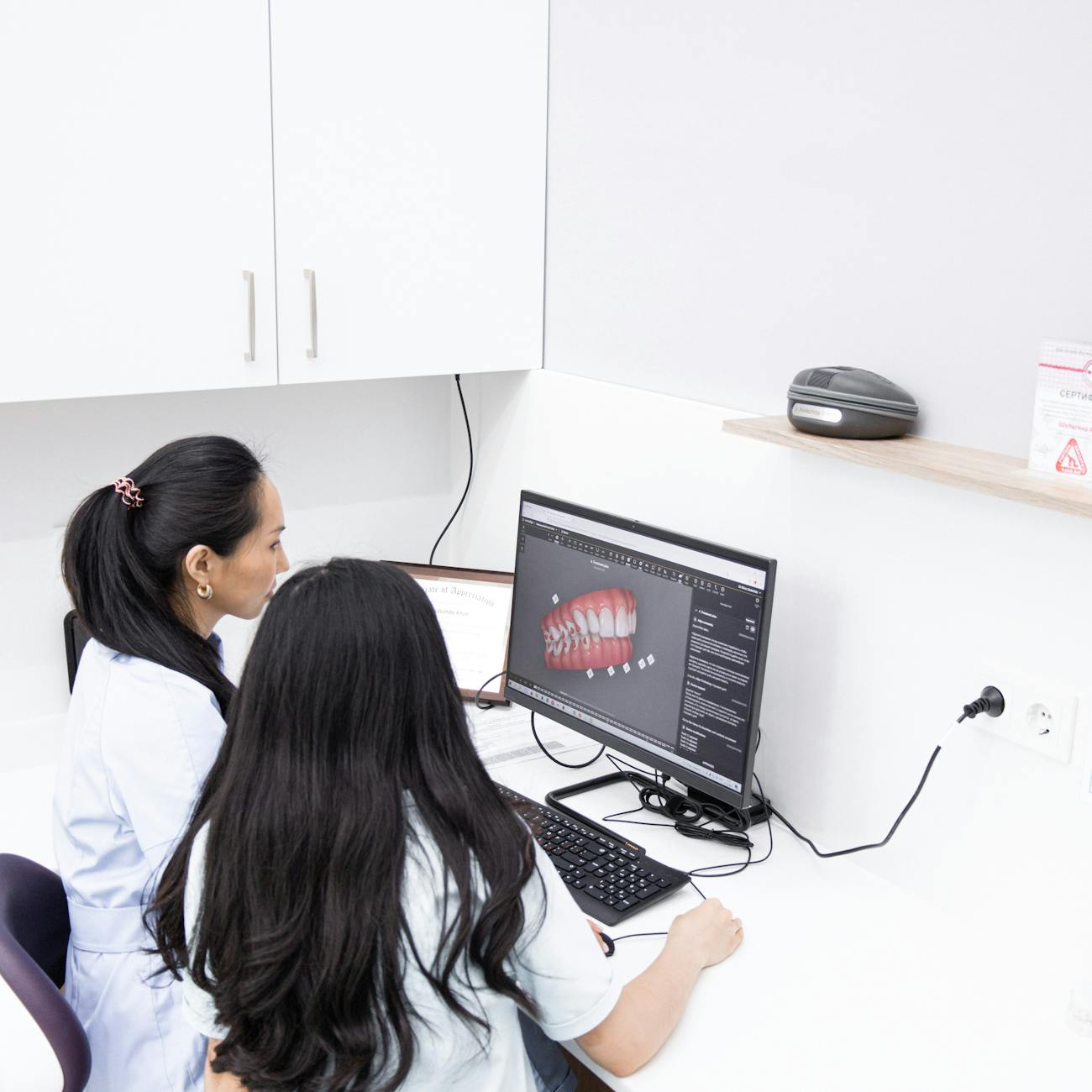
Data collection and analysis are crucial components of the Postgraduate Certificate in Clinical Audit, as they enable healthcare professionals to assess the quality of care provided to patients and identify areas for improvement. The process of data collection involves gathering information from various sources, including patient records, surveys, and observations. This information is then analyzed to identify trends, patterns, and correlations, which can inform decisions about patient care and service delivery.
One key term in data collection is variable, which refers to a characteristic or attribute that is being measured or observed. Variables can be categorical, meaning they can take on a limited number of distinct values, or continuous, meaning they can take on any value within a given range. For example, a patient's blood pressure is a continuous variable, while their gender is a categorical variable.
Another important concept is data quality, which refers to the accuracy, completeness, and consistency of the data collected. Ensuring high data quality is essential to producing reliable and valid results. This can be achieved by using standardized data collection tools, such as questionnaires or data extraction forms, and by training data collectors to follow consistent procedures.
Data analysis involves using statistical methods to summarize and describe the data, as well as to identify relationships between variables. One common statistical technique is descriptive statistics, which involves calculating measures such as means, medians, and standard deviations to summarize the data. For example, a healthcare professional might use descriptive statistics to calculate the average length of stay for patients undergoing a particular procedure.
Inferential statistics, on the other hand, involve using sample data to make inferences about a larger population. This can be done using techniques such as hypothesis testing and confidence intervals. Hypothesis testing involves testing a null hypothesis, which states that there is no significant difference or relationship, against an alternative hypothesis, which states that there is a significant difference or relationship. Confidence intervals provide a range of values within which a population parameter is likely to lie.
Data visualization is also an important aspect of data analysis, as it enables healthcare professionals to communicate complex data insights to others. Common data visualization tools include bar charts, line graphs, and scatter plots. For example, a healthcare professional might use a bar chart to compare the rates of hospital-acquired infections across different wards.
In addition to these statistical techniques, data analysis also involves considering the study design, which refers to the overall plan for collecting and analyzing the data. Common study designs include cross-sectional studies, which involve collecting data from a sample of participants at a single point in time, and longitudinal studies, which involve collecting data from the same participants over an extended period.
When designing a study, healthcare professionals must also consider the sample size, which refers to the number of participants included in the study. A larger sample size can provide more precise estimates and increase the likelihood of detecting statistically significant differences. However, it can also increase the cost and complexity of the study.
Data collection and analysis can be applied to a wide range of topics in clinical audit, including patient outcomes, service delivery, and resource allocation. For example, a healthcare professional might use data collection and analysis to evaluate the effectiveness of a new treatment or to identify areas where resources could be more efficiently allocated.
One of the challenges of data collection and analysis is ensuring that the data is reliable and valid. Reliability refers to the consistency of the data, while validity refers to the accuracy of the data. Ensuring reliability and validity can be achieved by using standardized data collection tools, training data collectors, and piloting data collection procedures.
Another challenge is dealing with missing data, which can occur when participants fail to respond to survey questions or when data is lost or corrupted. Missing data can be addressed by using techniques such as imputation, which involves replacing missing values with estimated values, or by using sensitivity analysis, which involves analyzing the data under different assumptions about the missing values.
Data collection and analysis can also be influenced by bias, which refers to any systematic error or distortion in the data. Bias can occur due to a range of factors, including the study design, data collection methods, and analysis techniques. For example, a study may be subject to selection bias if the sample is not representative of the population, or to information bias if the data collection methods are flawed.
In addition to these challenges, data collection and analysis must also be conducted in accordance with ethics and regulations. This includes obtaining informed consent from participants, protecting participant confidentiality, and complying with relevant laws and regulations. For example, a healthcare professional must obtain informed consent from patients before collecting their data, and must protect patient confidentiality by anonymizing the data and storing it securely.
To overcome these challenges, healthcare professionals must have a range of skills and knowledge, including statistical analysis, data visualization, and study design. They must also be able to communicate complex data insights to others, including clinicians, managers, and patients. This requires strong communication skills, including the ability to present data in a clear and concise manner.
In terms of practical applications, data collection and analysis can be used to evaluate the effectiveness of quality improvement initiatives, such as changes to clinical procedures or the introduction of new technologies. For example, a healthcare professional might use data collection and analysis to evaluate the impact of a new medication on patient outcomes.
Data collection and analysis can also be used to identify areas for improvement in patient care and service delivery. For example, a healthcare professional might use data collection and analysis to identify wards with high rates of hospital-acquired infections, and to develop targeted interventions to reduce these rates.
In addition to these applications, data collection and analysis can also be used to inform policy decisions and resource allocation. For example, a healthcare professional might use data collection and analysis to evaluate the cost-effectiveness of different treatments, and to inform decisions about resource allocation.
To conduct data collection and analysis, healthcare professionals can use a range of tools and software, including statistical software packages, data visualization tools, and spreadsheets. For example, a healthcare professional might use a statistical software package to analyze the data and identify trends and patterns.
In terms of future developments, data collection and analysis are likely to become increasingly important in clinical audit, as healthcare professionals seek to improve the quality and safety of patient care. The use of big data and artificial intelligence is likely to become more widespread, enabling healthcare professionals to analyze large datasets and identify complex patterns and relationships.
The increasing use of electronic health records is also likely to improve the quality and accuracy of data collection, enabling healthcare professionals to access and analyze large amounts of data quickly and easily. Additionally, the development of data analytics and machine learning is likely to enable healthcare professionals to analyze complex data and identify insights that might not be apparent through traditional statistical techniques.
Overall, data collection and analysis are essential components of clinical audit, enabling healthcare professionals to evaluate the quality and safety of patient care and identify areas for improvement. By using a range of statistical techniques, data visualization tools, and software, healthcare professionals can analyze complex data and inform decisions about patient care and service delivery.
The use of data collection and analysis can also be applied to a wide range of topics, including patient outcomes, service delivery, and resource allocation. By considering the study design, sample size, and data quality, healthcare professionals can ensure that their data collection and analysis are reliable and valid, and that their results are generalizable to the wider population.
In addition to these applications, data collection and analysis can also be used to evaluate the effectiveness of quality improvement initiatives, identify areas for improvement, and inform policy decisions and resource allocation. By using a range of tools and software, healthcare professionals can conduct data collection and analysis efficiently and effectively, and can communicate complex data insights to others.
The challenges of data collection and analysis, including ensuring reliability and validity, dealing with missing data, and addressing bias, can be overcome by using a range of techniques, including standardized data collection tools, training data collectors, and piloting data collection procedures. By considering ethics and regulations, healthcare professionals can ensure that their data collection and analysis are conducted in accordance with relevant laws and guidelines.
In terms of skills and knowledge, healthcare professionals must have a range of statistical analysis, data visualization, and study design skills, as well as strong communication skills. They must also be able to apply data collection and analysis to a wide range of topics, including patient outcomes, service delivery, and resource allocation.
The future of data collection and analysis in clinical audit is likely to involve the increasing use of big data, artificial intelligence, and electronic health records. The development of data analytics and machine learning is likely to enable healthcare professionals to analyze complex data and identify insights that might not be apparent through traditional statistical techniques.
Key takeaways
- Data collection and analysis are crucial components of the Postgraduate Certificate in Clinical Audit, as they enable healthcare professionals to assess the quality of care provided to patients and identify areas for improvement.
- Variables can be categorical, meaning they can take on a limited number of distinct values, or continuous, meaning they can take on any value within a given range.
- This can be achieved by using standardized data collection tools, such as questionnaires or data extraction forms, and by training data collectors to follow consistent procedures.
- One common statistical technique is descriptive statistics, which involves calculating measures such as means, medians, and standard deviations to summarize the data.
- Hypothesis testing involves testing a null hypothesis, which states that there is no significant difference or relationship, against an alternative hypothesis, which states that there is a significant difference or relationship.
- Data visualization is also an important aspect of data analysis, as it enables healthcare professionals to communicate complex data insights to others.
- In addition to these statistical techniques, data analysis also involves considering the study design, which refers to the overall plan for collecting and analyzing the data.