
Simulation and Digital Twin Technology in Aerospace
Simulation and Digital Twin Technology in Aerospace are crucial components of the Professional Certificate in AI for Aerospace Engineering. These technologies enable engineers to design, test, and optimize aerospace systems in a virtual env…
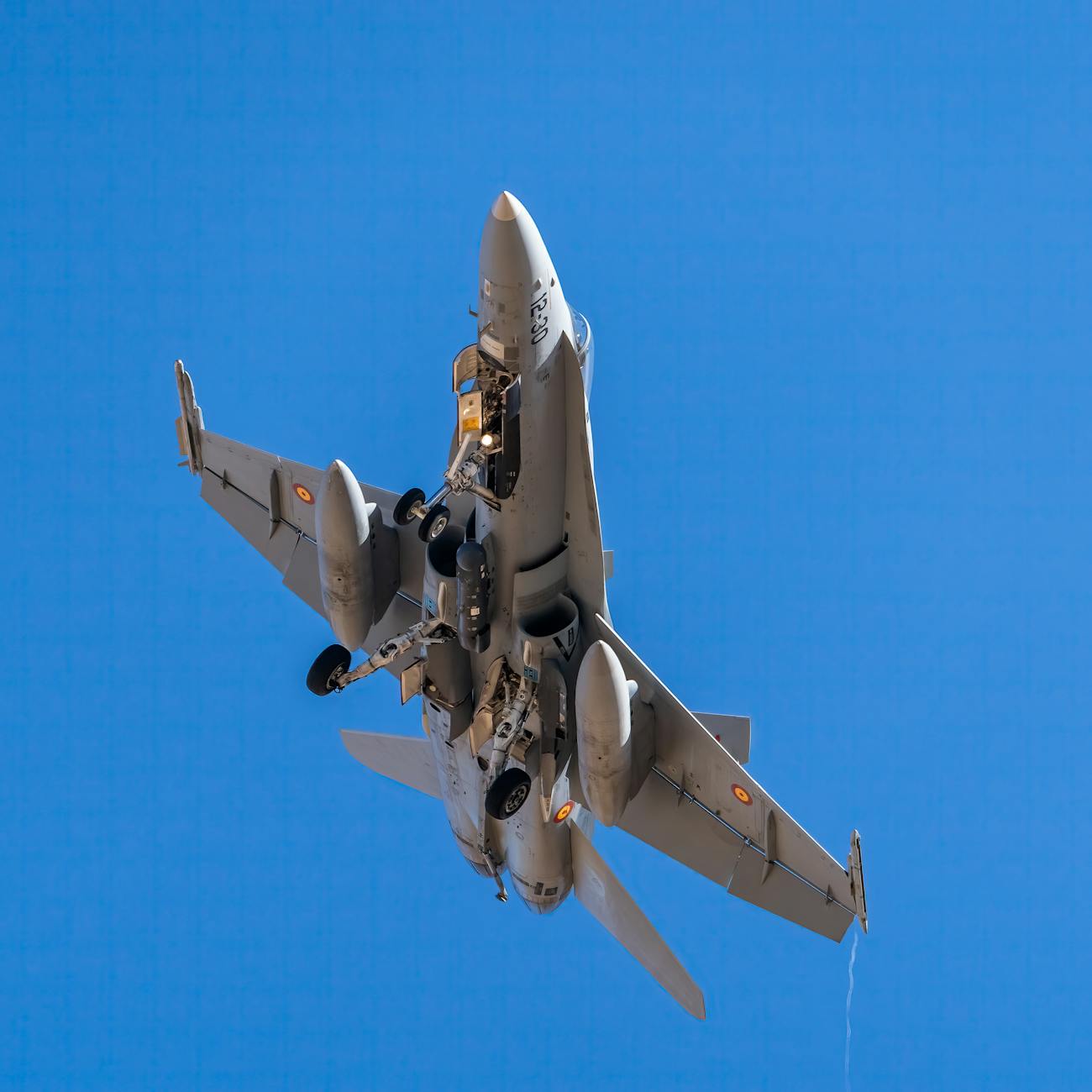
Simulation and Digital Twin Technology in Aerospace are crucial components of the Professional Certificate in AI for Aerospace Engineering. These technologies enable engineers to design, test, and optimize aerospace systems in a virtual environment, reducing the need for physical prototypes and minimizing development costs and time. In this explanation, we will cover key terms and vocabulary related to Simulation and Digital Twin Technology in Aerospace.
1. Simulation
A simulation is a representation of a physical system or process using mathematical models and computational algorithms. Simulations enable engineers to analyze and predict the behavior of complex systems under various conditions, providing insights that would be difficult or impossible to obtain through theoretical analysis or physical testing alone.
In aerospace engineering, simulations are used to model and analyze various aspects of aircraft and spacecraft design, including aerodynamics, structures, propulsion, control systems, and avionics. Simulations can also be used to evaluate the impact of external factors such as weather, altitude, and temperature on the performance of aerospace systems.
2. Digital Twin
A digital twin is a virtual representation of a physical system or product that simulates its behavior and performance in real-time. Digital twins are created by integrating data from multiple sources, including sensors, simulations, and historical data, to provide a comprehensive and accurate model of the physical system.
In aerospace engineering, digital twins are used to monitor and optimize the performance of aircraft and spacecraft throughout their lifecycle, from design and testing to operation and maintenance. Digital twins can also be used to simulate various scenarios and conditions, enabling engineers to identify potential issues and optimize the performance of aerospace systems before they are deployed.
3. Mathematical Models
Mathematical models are mathematical representations of physical systems or processes that describe their behavior and performance. Mathematical models can be used to predict the behavior of a system under various conditions, enabling engineers to analyze and optimize its performance.
In aerospace engineering, mathematical models are used to describe various aspects of aircraft and spacecraft design, including aerodynamics, structures, propulsion, control systems, and avionics. Mathematical models can be based on first principles, such as the laws of motion and thermodynamics, or derived from empirical data.
4. Computational Algorithms
Computational algorithms are mathematical procedures or techniques used to solve complex problems using computers. Computational algorithms can be used to simulate the behavior of physical systems or processes, enabling engineers to analyze and optimize their performance.
In aerospace engineering, computational algorithms are used to solve complex equations and optimization problems related to aircraft and spacecraft design. Examples of computational algorithms used in aerospace engineering include finite element analysis (FEA), computational fluid dynamics (CFD), and machine learning algorithms.
5. Sensors
Sensors are devices that measure physical quantities and convert them into electrical signals that can be processed and analyzed. Sensors are used in aerospace engineering to monitor the behavior and performance of aircraft and spacecraft in real-time.
In aerospace engineering, sensors are used to measure various physical quantities, including temperature, pressure, humidity, speed, acceleration, and position. Sensors can be integrated into digital twins to provide real-time data on the behavior and performance of aerospace systems.
6. Aerodynamics
Aerodynamics is the study of the behavior of gases and the interaction between gases and solid objects in motion. Aerodynamics is crucial in aerospace engineering, as it plays a significant role in the design and performance of aircraft and spacecraft.
In aerospace engineering, aerodynamics is used to model and analyze the behavior of gases around aircraft and spacecraft, enabling engineers to optimize their design and performance. Aerodynamic simulations can be used to predict the lift, drag, and stability of aerospace systems under various conditions, providing insights that would be difficult or impossible to obtain through physical testing alone.
7. Structures
Structures are the physical components of aircraft and spacecraft that provide support, stability, and rigidity. Structures are crucial in aerospace engineering, as they play a significant role in the safety and performance of aerospace systems.
In aerospace engineering, structures are designed and analyzed using computational models and simulations, enabling engineers to optimize their strength, weight, and durability. Structural simulations can be used to predict the behavior of aerospace systems under various loads and conditions, providing insights that would be difficult or impossible to obtain through physical testing alone.
8. Propulsion
Propulsion is the process of generating thrust to move a vehicle through a fluid medium, such as air or space. Propulsion is crucial in aerospace engineering, as it plays a significant role in the performance and efficiency of aircraft and spacecraft.
In aerospace engineering, propulsion systems are designed and analyzed using computational models and simulations, enabling engineers to optimize their efficiency, reliability, and durability. Propulsion simulations can be used to predict the behavior of aerospace systems under various conditions, providing insights that would be difficult or impossible to obtain through physical testing alone.
9. Control Systems
Control systems are the components of aerospace systems that enable them to maintain stable and controlled flight. Control systems are crucial in aerospace engineering, as they play a significant role in the safety and performance of aircraft and spacecraft.
In aerospace engineering, control systems are designed and analyzed using computational models and simulations, enabling engineers to optimize their stability, responsiveness, and accuracy. Control system simulations can be used to predict the behavior of aerospace systems under various conditions, providing insights that would be difficult or impossible to obtain through physical testing alone.
10. Avionics
Avionics are the electronic systems used in aerospace engineering to provide navigation, communication, and control functions. Avionics are crucial in aerospace engineering, as they play a significant role in the safety and performance of aircraft and spacecraft.
In aerospace engineering, avionics systems are designed and analyzed using computational models and simulations, enabling engineers to optimize their functionality, reliability, and accuracy. Avionics simulations can be used to predict the behavior of aerospace systems under various conditions, providing insights that would be difficult or impossible to obtain through physical testing alone.
Challenges
While simulation and digital twin technology have numerous benefits in aerospace engineering, there are also challenges and limitations to their use. Some of these challenges and limitations include:
* Accuracy and Validity: Simulations and digital twins rely on mathematical models and computational algorithms that may not accurately represent the behavior and performance of physical systems. As a result, simulations and digital twins may not always provide accurate or valid results. * Data Quality and Availability: Simulations and digital twins require high-quality and accurate data to provide valid results. However, data may be incomplete, inaccurate, or unavailable, limiting the usefulness of simulations and digital twins. * Complexity and Computational Costs: Simulations and digital twins can be complex and computationally expensive, requiring significant computational resources and time to execute. * Integration and Interoperability: Simulations and digital twins may not always integrate or interoperate with other systems or tools, limiting their usefulness and effectiveness.
Examples
Some examples of simulation and digital twin technology in aerospace engineering include:
* Aircraft Design and Analysis: Simulations and digital twins are used to design and analyze aircraft, enabling engineers to optimize their performance, safety, and efficiency. * Spacecraft Design and Analysis: Simulations and digital twins are used to design and analyze spacecraft, enabling engineers to optimize their performance, reliability, and durability in the harsh conditions of space. * Flight Testing and Validation: Simulations and digital twins are used to test and validate the behavior and performance of aircraft and spacecraft under various conditions, reducing the need for physical prototypes and testing. * Maintenance and Support: Simulations and digital twins are used to monitor and optimize the performance of aircraft and spacecraft throughout their lifecycle, reducing maintenance costs and downtime.
Conclusion
Simulation and digital twin technology are critical components of aerospace engineering, enabling engineers to design, test, and optimize aerospace systems in a virtual environment. By using mathematical models and computational algorithms, simulations and digital twins provide insights that would be difficult or impossible to obtain through theoretical analysis or physical testing alone. However, there are also challenges and limitations to their use, including accuracy, data quality, complexity, and computational costs. Despite these challenges, simulation and digital twin technology have numerous benefits in aerospace engineering, enabling engineers to design and analyze aerospace systems more efficiently, effectively, and safely.
Key takeaways
- These technologies enable engineers to design, test, and optimize aerospace systems in a virtual environment, reducing the need for physical prototypes and minimizing development costs and time.
- Simulations enable engineers to analyze and predict the behavior of complex systems under various conditions, providing insights that would be difficult or impossible to obtain through theoretical analysis or physical testing alone.
- In aerospace engineering, simulations are used to model and analyze various aspects of aircraft and spacecraft design, including aerodynamics, structures, propulsion, control systems, and avionics.
- Digital twins are created by integrating data from multiple sources, including sensors, simulations, and historical data, to provide a comprehensive and accurate model of the physical system.
- Digital twins can also be used to simulate various scenarios and conditions, enabling engineers to identify potential issues and optimize the performance of aerospace systems before they are deployed.
- Mathematical models can be used to predict the behavior of a system under various conditions, enabling engineers to analyze and optimize its performance.
- In aerospace engineering, mathematical models are used to describe various aspects of aircraft and spacecraft design, including aerodynamics, structures, propulsion, control systems, and avionics.