
Future Trends in 3D Scanning for Conservation.
3D scanning is a non-contact, non-destructive method of capturing the shape and appearance of a physical object. It involves the use of laser or structured light technology to digitize the object’s surface, creating a 3D model that can be v…
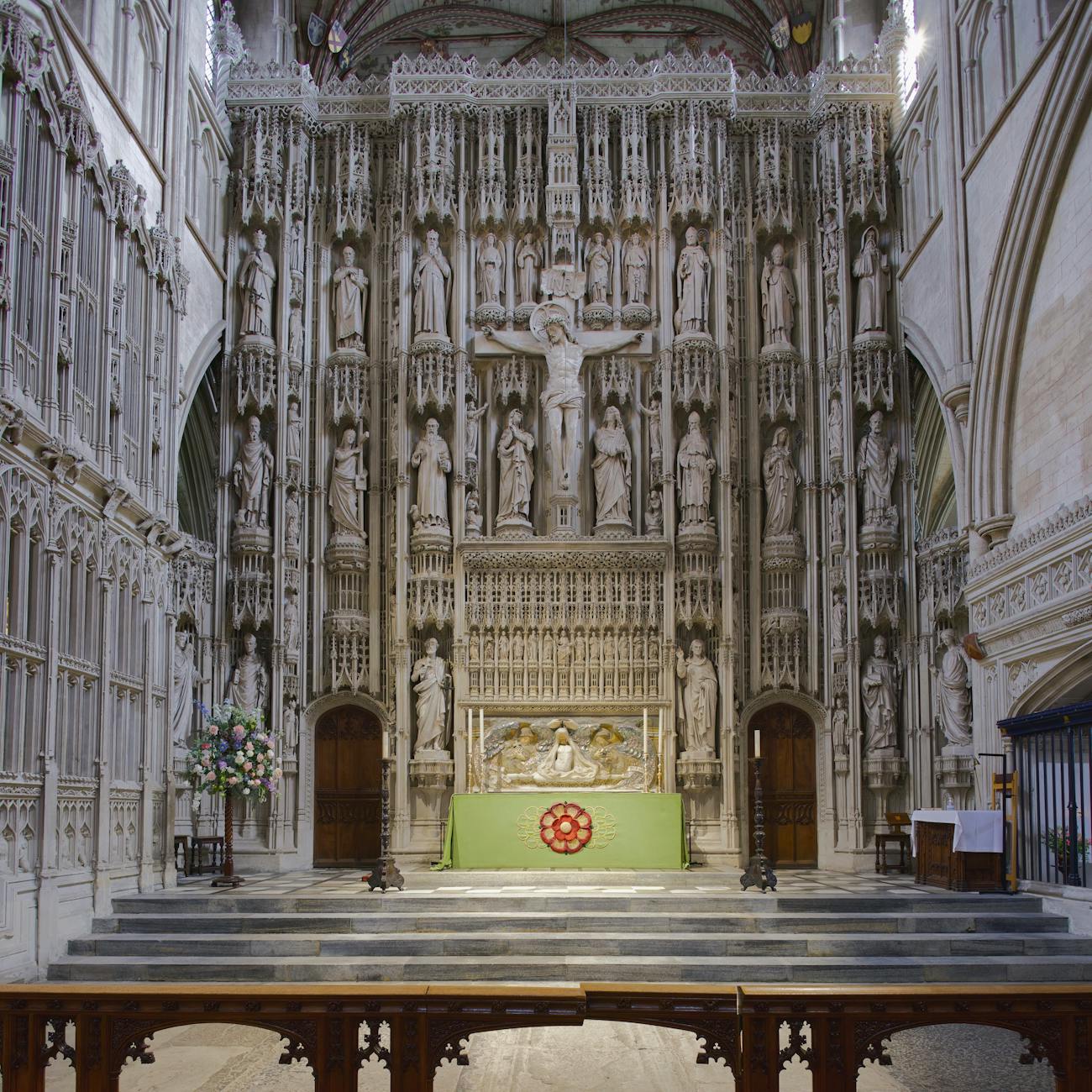
3D scanning is a non-contact, non-destructive method of capturing the shape and appearance of a physical object. It involves the use of laser or structured light technology to digitize the object’s surface, creating a 3D model that can be viewed, manipulated, and analyzed on a computer. In the field of conservation, 3D scanning is becoming an increasingly important tool for documenting, preserving, and restoring cultural heritage. Here are some key terms and vocabulary related to future trends in 3D scanning for conservation:
1. Point cloud: A point cloud is a set of data points in a coordinate system, representing the 3D shape of an object. Point clouds are created by 3D scanners, which measure the distance between the scanner and the object’s surface at many different points. Point clouds can be visualized as a cloud of colored dots, or they can be used to create a 3D model of the object. 2. 3D modeling: 3D modeling is the process of creating a mathematical representation of a 3D object. 3D models can be created manually using computer-aided design (CAD) software, or they can be generated automatically from point cloud data using 3D scanning software. 3D models are used in a variety of applications, including animation, gaming, and product design. 3. Photogrammetry: Photogrammetry is the science of making measurements from photographs. In the context of 3D scanning, photogrammetry involves taking multiple photographs of an object from different angles and using software to create a 3D model from the images. Photogrammetry can be used to create high-resolution 3D models of large objects, such as buildings or landscapes. 4. Structured light: Structured light 3D scanning uses a projector to cast a pattern of light onto an object’s surface. The deformation of the pattern is then measured by a camera, allowing the object’s shape to be calculated. Structured light scanning is often used for industrial applications, such as quality control and reverse engineering. 5. Laser scanning: Laser scanning uses a laser beam to measure the distance between the scanner and the object’s surface. The laser beam is scanned across the object’s surface, creating a point cloud of data points. Laser scanning is often used for cultural heritage applications, such as creating 3D models of artifacts or buildings. 6. Reverse engineering: Reverse engineering is the process of recreating a design from an existing object. In the context of 3D scanning, reverse engineering involves creating a 3D model of an object and then using that model to recreate the object’s design. Reverse engineering is often used in product design, manufacturing, and maintenance. 7. Digital preservation: Digital preservation is the process of ensuring that digital assets, such as 3D models, are preserved for the long term. Digital preservation involves managing and maintaining digital files, ensuring that they remain accessible and usable over time. Digital preservation is an important consideration in the field of cultural heritage, where 3D models may have long-term value for research and education. 8. Metrology: Metrology is the science of measurement. In the context of 3D scanning, metrology involves using precise measurements to ensure the accuracy and repeatability of 3D scanning data. Metrology is important in industrial applications, where precise measurements are necessary for quality control and product design. 9. Augmented reality: Augmented reality (AR) is a technology that superimposes digital information onto the real world. In the context of 3D scanning, AR can be used to visualize 3D models in a real-world context, allowing users to see how an object would look in a particular location. AR has potential applications in fields such as architecture, urban planning, and cultural heritage. 10. Artificial intelligence: Artificial intelligence (AI) is a branch of computer science that deals with the creation of intelligent machines that can perform tasks that normally require human intelligence. In the context of 3D scanning, AI can be used to automate the 3D scanning process, making it faster and more efficient. AI can also be used to analyze 3D scanning data, allowing for more accurate and detailed models. 11. Machine learning: Machine learning is a subset of AI that involves training algorithms to recognize patterns in data. In the context of 3D scanning, machine learning can be used to automate the 3D scanning process, allowing for faster and more accurate scanning. Machine learning can also be used to analyze 3D scanning data, allowing for more detailed and nuanced models. 12. Deep learning: Deep learning is a subset of machine learning that involves training artificial neural networks to perform tasks that require human-like intelligence. In the context of 3D scanning, deep learning can be used to automate the 3D scanning process, allowing for faster and more accurate scanning. Deep learning can also be used to analyze 3D scanning data, allowing for more detailed and nuanced models. 13. Internet of Things: The Internet of Things (IoT) is a network of physical devices, vehicles, home appliances, and other items embedded with sensors, software, and network connectivity, allowing these objects to connect and exchange data. In the context of 3D scanning, IoT can be used to automate the scanning process, allowing for faster and more accurate scanning. IoT can also be used to analyze 3D scanning data, allowing for more detailed and nuanced models. 14. Blockchain: Blockchain is a decentralized, digital ledger that records transactions across a network of computers. In the context of 3D scanning, blockchain can be used to ensure the authenticity and provenance of 3D models, allowing for secure and trustworthy digital preservation. 15. Virtual reality: Virtual reality (VR) is a technology that creates a simulated environment that can be experienced through the senses, particularly sight and hearing. In the context of 3D scanning, VR can be used to visualize 3D models in a fully immersive environment, allowing users to interact with the models in a more intuitive and engaging way.
Challenges in 3D scanning for conservation include:
1. Accuracy: Ensuring the accuracy of 3D scanning data is critical in conservation applications, where precise measurements are necessary for documentation and restoration. 2. Resolution: The resolution of 3D scanning data is an important consideration in conservation applications, where fine details and surface textures may be important for documentation and analysis. 3. Cost: 3D scanning equipment can be expensive, making it difficult for some institutions to acquire the necessary technology for conservation applications. 4. Training: Proper training is necessary to ensure that 3D scanning data is collected and analyzed correctly. This can be a challenge for institutions with limited resources or expertise. 5. Data management: Managing and preserving large volumes of 3D scanning data can be a challenge, particularly for institutions with limited data storage and management capabilities. 6. Ethical considerations: There are ethical considerations related to the use of 3D scanning in conservation, such as the potential for 3D models to be used for replication or commercial exploitation of cultural heritage.
Examples of practical applications of 3D scanning for conservation include:
1. Documentation: 3D scanning can be used to create detailed records of cultural heritage artifacts and sites, allowing for accurate documentation and analysis. 2. Restoration: 3D scanning can be used to create accurate replicas of damaged or missing parts of cultural heritage artifacts, allowing for more effective restoration. 3. Education and outreach: 3D scanning can be used to create interactive educational materials, such as virtual exhibits and 3D models that can be viewed and manipulated online. 4. Research: 3D scanning can be used to analyze cultural heritage artifacts in new ways, allowing for more detailed and nuanced understanding of their history and significance. 5. Accessibility: 3D scanning can be used to create accessible versions of cultural heritage artifacts, allowing individuals with disabilities to experience them in new ways.
In conclusion, 3D scanning is a powerful tool for conservation applications, offering the potential for accurate documentation, effective restoration, and detailed analysis of cultural heritage artifacts and sites. Future trends in 3D scanning for conservation are likely to include advances in AI, machine learning, and deep learning, as well as the integration of 3D scanning with other emerging technologies such as AR, VR, and IoT. However, challenges remain, including issues related to accuracy, resolution, cost, training, data management, and ethics. Addressing these challenges will be critical to ensuring the successful application of 3D scanning in conservation contexts.
Key takeaways
- It involves the use of laser or structured light technology to digitize the object’s surface, creating a 3D model that can be viewed, manipulated, and analyzed on a computer.
- Internet of Things: The Internet of Things (IoT) is a network of physical devices, vehicles, home appliances, and other items embedded with sensors, software, and network connectivity, allowing these objects to connect and exchange data.
- Ethical considerations: There are ethical considerations related to the use of 3D scanning in conservation, such as the potential for 3D models to be used for replication or commercial exploitation of cultural heritage.
- Education and outreach: 3D scanning can be used to create interactive educational materials, such as virtual exhibits and 3D models that can be viewed and manipulated online.
- Future trends in 3D scanning for conservation are likely to include advances in AI, machine learning, and deep learning, as well as the integration of 3D scanning with other emerging technologies such as AR, VR, and IoT.