
Green Building Design and Operations
Green Building Design and Operations : This refers to the practice of designing, constructing, and operating buildings in a way that minimizes their environmental impact. This can include using sustainable materials, reducing energy and wat…
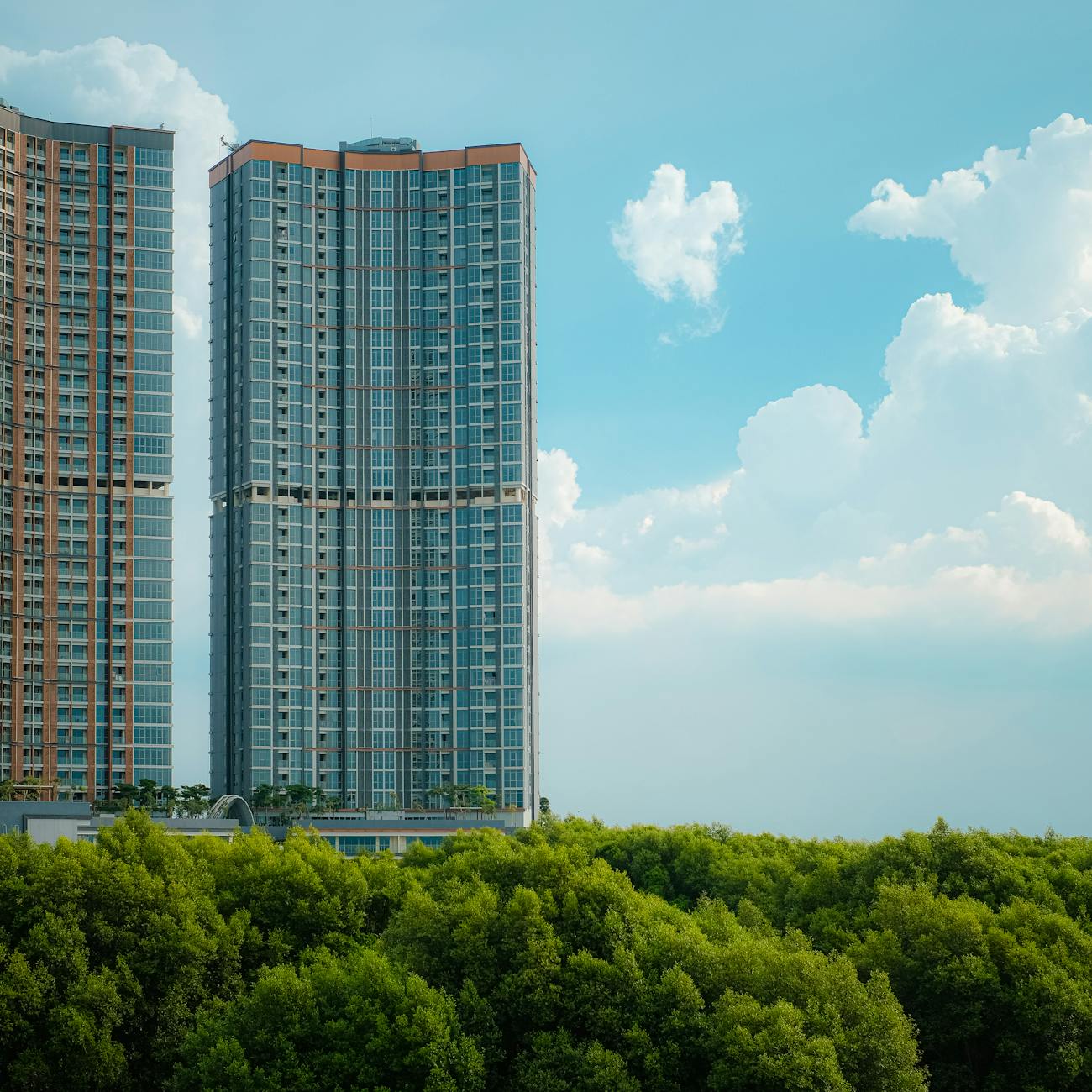
Green Building Design and Operations: This refers to the practice of designing, constructing, and operating buildings in a way that minimizes their environmental impact. This can include using sustainable materials, reducing energy and water use, and improving indoor air quality.
Sustainable materials: These are materials that are sourced in an environmentally responsible way, and that can be reused or recycled at the end of their life. Examples include reclaimed wood, straw bale, and recycled metal.
Energy efficiency: This refers to the practice of reducing the amount of energy used by a building, while still maintaining a comfortable living or working environment. This can be achieved through measures such as using energy-efficient appliances, improving insulation, and using natural light.
Water conservation: This refers to the practice of reducing the amount of water used by a building. This can be achieved through measures such as installing low-flow faucets and toilets, collecting and reusing rainwater, and using drought-resistant landscaping.
Indoor air quality: This refers to the air quality within a building, and is affected by factors such as the presence of pollutants, humidity, and temperature. Good indoor air quality is important for the health and comfort of building occupants.
Life-cycle assessment (LCA): This is a tool used to evaluate the environmental impact of a product or building over its entire life cycle, from the extraction of raw materials to disposal or recycling. LCA can be used to compare the environmental impact of different design options and materials.
LEED certification: The Leadership in Energy and Environmental Design (LEED) certification is a voluntary rating system developed by the U.S. Green Building Council. It is used to evaluate the environmental performance of buildings and provides a framework for designing and operating green buildings.
Living building challenge: The Living Building Challenge is a certification program that is considered to be more rigorous than LEED. It requires that buildings be self-sufficient in terms of energy and water, and that they be designed to regenerate the surrounding ecosystem.
Net-zero energy building: A net-zero energy building is a building that produces as much energy as it consumes over the course of a year. This can be achieved through a combination of energy efficiency measures and on-site renewable energy generation, such as solar panels or wind turbines.
Green roof: A green roof is a roof that is partially or completely covered with vegetation. Green roofs can provide a number of benefits, including reduced energy costs, improved stormwater management, and increased biodiversity.
Geothermal heating and cooling: Geothermal heating and cooling systems use the constant temperature of the earth to heat and cool buildings. This can be more energy-efficient than traditional heating and cooling systems.
Greywater reuse: Greywater is water that has been used in showers, sinks, and washing machines. Greywater reuse systems collect this water and use it for irrigation or toilet flushing, reducing overall water use.
Rainwater harvesting: Rainwater harvesting is the collection and storage of rainwater for use in irrigation, toilet flushing, or other non-potable uses. This can help to reduce stormwater runoff and water bills.
Biophilic design: Biophilic design is a design approach that seeks to incorporate natural elements, such as plants, water, and natural light, into the built environment. This can help to improve indoor air quality, reduce stress, and increase productivity.
Daylighting: Daylighting is the practice of using natural light to illuminate buildings. This can be achieved through the use of skylights, clerestory windows, and light shelves. Daylighting can reduce energy costs and improve the visual comfort of building occupants.
Challenges: Some of the challenges of green building design and operations include the upfront cost of sustainable materials and technologies, the lack of knowledge and awareness among building professionals, and the need for ongoing maintenance and monitoring to ensure that buildings continue to operate efficiently. Additionally, green building design and operations must also take into account the social and economic impacts of buildings on the surrounding community.
Examples of green building design and operations can be seen in buildings such as the Bullitt Center in Seattle, which is a net-zero energy building that uses a combination of energy efficiency measures and on-site renewable energy generation to meet its energy needs. The building also features a greywater reuse system, rainwater harvesting, and a green roof.
Another example is the California Academy of Sciences in San Francisco, which is a LEED Platinum certified building that features a living roof, natural ventilation, and a rainwater harvesting system. The building also has a number of exhibits and programs that educate visitors about sustainability and the environment.
In practical applications, music enterprises can incorporate green building design and operations in their facilities, such as recording studios and music venues, by using sustainable materials, improving energy and water efficiency, and incorporating natural elements. They can also consider obtaining LEED or Living Building Challenge certification for their buildings.
In conclusion, green building design and operations is an important aspect of environmental sustainability for music enterprises. By incorporating sustainable materials, energy and water efficiency, and natural elements into their facilities, music enterprises can reduce their environmental impact, improve the health and comfort of building occupants, and demonstrate their commitment to sustainability. However, it's important to consider the challenges and costs associated with green building design and operations and to take a holistic approach that considers the social and economic impacts of buildings on the surrounding community.
Key takeaways
- Green Building Design and Operations: This refers to the practice of designing, constructing, and operating buildings in a way that minimizes their environmental impact.
- Sustainable materials: These are materials that are sourced in an environmentally responsible way, and that can be reused or recycled at the end of their life.
- Energy efficiency: This refers to the practice of reducing the amount of energy used by a building, while still maintaining a comfortable living or working environment.
- This can be achieved through measures such as installing low-flow faucets and toilets, collecting and reusing rainwater, and using drought-resistant landscaping.
- Indoor air quality: This refers to the air quality within a building, and is affected by factors such as the presence of pollutants, humidity, and temperature.
- Life-cycle assessment (LCA): This is a tool used to evaluate the environmental impact of a product or building over its entire life cycle, from the extraction of raw materials to disposal or recycling.
- LEED certification: The Leadership in Energy and Environmental Design (LEED) certification is a voluntary rating system developed by the U.