
Machine Learning for Environmental Monitoring and Prediction
Machine Learning (ML) is a subset of Artificial Intelligence (AI) that focuses on enabling computers to learn and improve from experience without explicit programming. In the context of environmental monitoring and prediction, ML can be use…
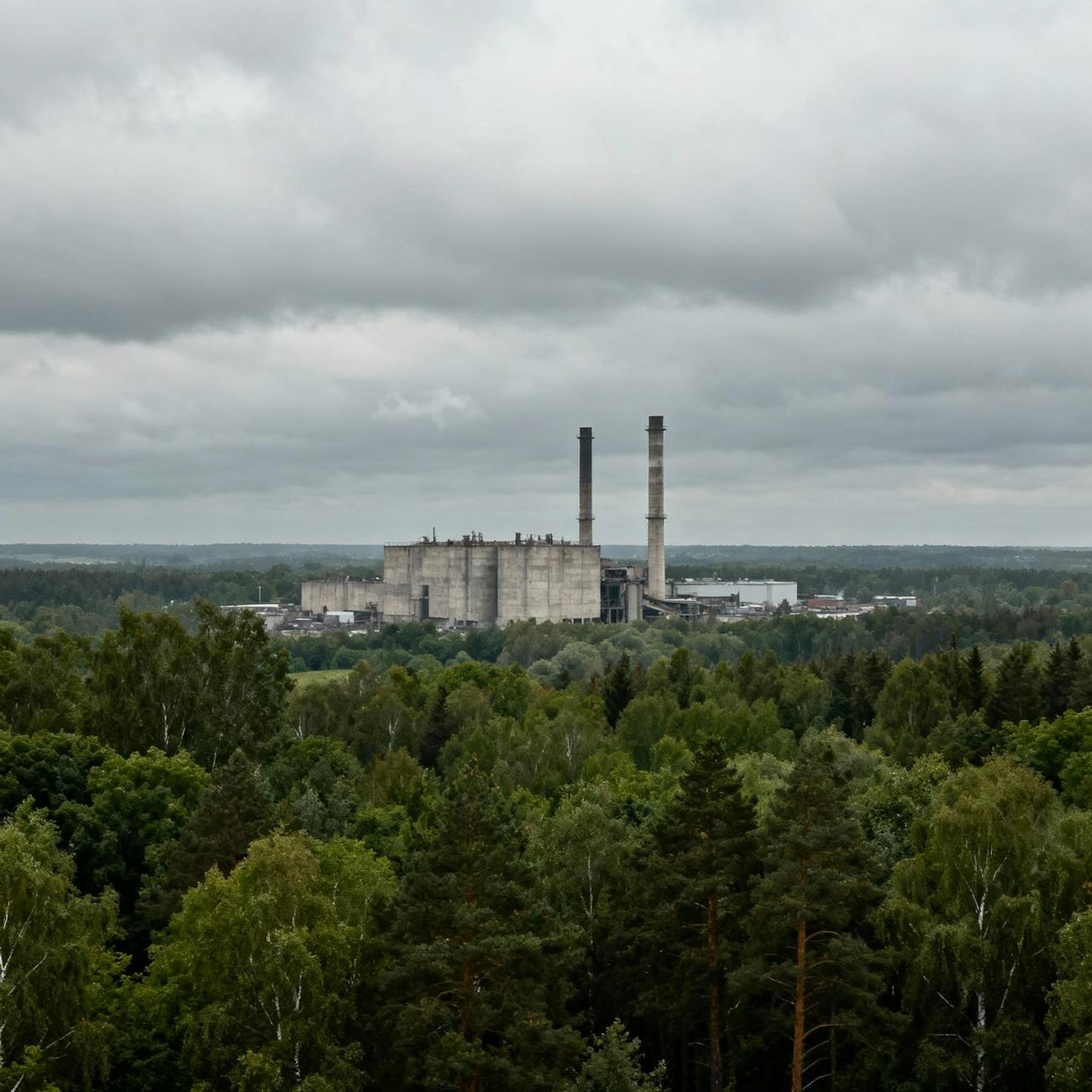
Machine Learning (ML) is a subset of Artificial Intelligence (AI) that focuses on enabling computers to learn and improve from experience without explicit programming. In the context of environmental monitoring and prediction, ML can be used to analyze large amounts of environmental data and make predictions or decisions based on that data. Here are some key terms and vocabulary related to ML for environmental monitoring and prediction:
1. **Supervised Learning**: This is a type of ML where the model is trained on a labeled dataset, meaning that the input data and the corresponding output or label are provided. The model learns to map inputs to outputs based on this data. For example, a supervised learning model for environmental monitoring could be trained on historical air quality data and the corresponding pollution source information to predict the source of pollution based on current air quality data. 2. **Unsupervised Learning**: In contrast to supervised learning, unsupervised learning involves training a model on an unlabeled dataset. The model learns to identify patterns and relationships in the data without any prior knowledge of the output. For example, an unsupervised learning model for environmental monitoring could be used to identify clusters of similar air quality data points, which could help identify areas with poor air quality. 3. **Reinforcement Learning**: This is a type of ML where an agent learns to make decisions by interacting with an environment and receiving feedback in the form of rewards or penalties. The agent learns to maximize the rewards over time, leading to optimal decision-making. For example, a reinforcement learning model for environmental prediction could be used to optimize the placement of air quality sensors in a city to maximize coverage and minimize costs. 4. **Features**: These are the input variables or attributes that are used to train a ML model. In the context of environmental monitoring, features could include air quality data, weather data, traffic data, and other relevant variables. 5. **Labels**: These are the output variables or categories that are predicted by a ML model. In the context of environmental monitoring, labels could include pollution source information, air quality categories, or other relevant outputs. 6. **Training**: This is the process of teaching a ML model to make predictions or decisions based on a dataset. During training, the model learns to adjust its internal parameters to minimize the difference between its predicted outputs and the actual labels. 7. **Testing**: After a ML model has been trained, it is tested on a separate dataset to evaluate its performance. This helps ensure that the model can generalize well to new data and is not overfitting to the training data. 8. **Overfitting**: This occurs when a ML model is too complex and learns the noise or random fluctuations in the training data, rather than the underlying patterns. Overfitting can lead to poor performance on new data, as the model is not able to generalize well. 9. **Underfitting**: This occurs when a ML model is too simple and is not able to capture the underlying patterns in the training data. Underfitting can lead to poor performance on both the training and new data. 10. **Cross-Validation**: This is a technique used to evaluate the performance of a ML model by splitting the dataset into multiple subsets and training and testing the model on each subset. This helps ensure that the model can generalize well to new data and is not overfitting to the training data. 11. **Regression**: This is a type of ML that is used to predict a continuous output variable based on one or more input variables. For example, a regression model for environmental monitoring could be used to predict the level of a pollutant based on air quality data, weather data, and other relevant variables. 12. **Classification**: This is a type of ML that is used to predict a categorical output variable based on one or more input variables. For example, a classification model for environmental monitoring could be used to predict the type of pollution source based on air quality data. 13. **Neural Networks**: These are a type of ML model that are inspired by the structure and function of the human brain. Neural networks consist of multiple layers of interconnected nodes or neurons, and can be used for a variety of ML tasks, including regression, classification, and prediction. 14. **Deep Learning**: This is a subset of ML that focuses on using neural networks with multiple layers to learn and represent complex patterns in data. Deep learning models can be used for a variety of tasks, including image recognition, natural language processing, and environmental monitoring and prediction. 15. **Convolutional Neural Networks (CNNs)**: These are a type of deep learning model that are commonly used for image recognition and processing. CNNs use convolutional layers to extract features from images and can be used for tasks such as object detection, image segmentation, and image classification. 16. **Recurrent Neural Networks (RNNs)**: These are a type of deep learning model that are commonly used for sequential data analysis, such as time series data and natural language processing. RNNs use feedback connections to maintain a hidden state that represents the context of the sequence, and can be used for tasks such as language translation, speech recognition, and environmental monitoring and prediction. 17. **Long Short-Term Memory (LSTM)**: This is a type of RNN that is designed to handle long-term dependencies in sequential data. LSTMs use memory cells to store and access information from previous time steps, and can be used for tasks such as language translation, speech recognition, and environmental monitoring and prediction. 18. **Generative Adversarial Networks (GANs)**: These are a type of deep learning model that consist of two components: a generator and a discriminator. The generator creates new data samples, while the discriminator evaluates the quality of the generated samples. GANs can be used for a variety of tasks, including image synthesis, style transfer, and environmental monitoring and prediction. 19. **Data Preprocessing**: This is the process of cleaning, transforming, and preparing data for ML. Data preprocessing can include tasks such as data cleaning, feature scaling, normalization, and transformation. 20. **Data Augmentation**: This is a technique used to increase the size and diversity of a dataset by generating new samples from existing data. Data augmentation can be used to improve the performance of ML models, particularly for tasks with limited data availability.
Here are some practical applications of ML for environmental monitoring and prediction:
1. **Air Quality Monitoring**: ML can be used to analyze air quality data and predict pollution levels in real-time. This can help inform public health decisions and enable targeted interventions to reduce pollution. 2. **Climate Modeling**: ML can be used to analyze climate data and predict future climate patterns, such as temperature, precipitation, and sea level rise. This can help inform climate change mitigation and adaptation strategies. 3. **Water Quality Monitoring**: ML can be used to analyze water quality data and detect contaminants, such as heavy metals, nutrients, and pathogens. This can help inform water management decisions and enable targeted interventions to improve water quality. 4. **Biodiversity Monitoring**: ML can be used to analyze biodiversity data and detect changes in species distributions and abundances. This can help inform conservation and management decisions and enable targeted interventions to protect biodiversity. 5. **Disaster Response**: ML can be used to analyze disaster data and predict the impact of natural disasters, such as hurricanes, floods, and wildfires. This can help inform disaster response and enable targeted interventions to reduce the impact of disasters.
Here are some challenges and limitations of ML for environmental monitoring and prediction:
1. **Data Availability**: ML models require large amounts of high-quality data to train and evaluate. The availability and quality of environmental data can be limited, particularly in developing countries and remote areas. 2. **Data Bias**: ML models can be biased by the data they are trained on, leading to inaccurate or unfair predictions. Environmental data can be biased by factors such as sampling methods, measurement errors, and data gaps. 3. **Model Interpretability**: ML models can be complex and difficult to interpret, making it challenging to understand how they make predictions and decisions. This can be particularly problematic in environmental monitoring and prediction, where transparency and accountability are important. 4. **Model Robustness**: ML models can be sensitive to changes in the data and the environment, leading to poor performance and unreliable predictions. This can be particularly problematic in environmental monitoring and prediction, where the data and the environment can be highly variable and uncertain. 5. **Model Generalizability**: ML models can be overfitted to the training data, leading to poor performance on new data. This can be particularly problematic in environmental monitoring and prediction, where the data and the environment can be highly variable and uncertain.
In conclusion, ML is a powerful tool for environmental monitoring and prediction, enabling the analysis of large amounts of data and the prediction of environmental patterns and processes. However, ML also presents challenges and limitations, particularly in terms of data availability, bias, interpretability, robustness, and generalizability. Addressing these challenges and limitations will require a multidisciplinary approach that combines ML with environmental science, policy,
Key takeaways
- In the context of environmental monitoring and prediction, ML can be used to analyze large amounts of environmental data and make predictions or decisions based on that data.
- For example, a supervised learning model for environmental monitoring could be trained on historical air quality data and the corresponding pollution source information to predict the source of pollution based on current air quality data.
- **Climate Modeling**: ML can be used to analyze climate data and predict future climate patterns, such as temperature, precipitation, and sea level rise.
- **Model Interpretability**: ML models can be complex and difficult to interpret, making it challenging to understand how they make predictions and decisions.
- In conclusion, ML is a powerful tool for environmental monitoring and prediction, enabling the analysis of large amounts of data and the prediction of environmental patterns and processes.