
Introduction to Artificial Intelligence and Machine Learning
Artificial Intelligence (AI) and Machine Learning (ML) are two of the most exciting and rapidly growing fields in technology today. In the context of the Professional Certificate in AI for International Taxation, these technologies have the…
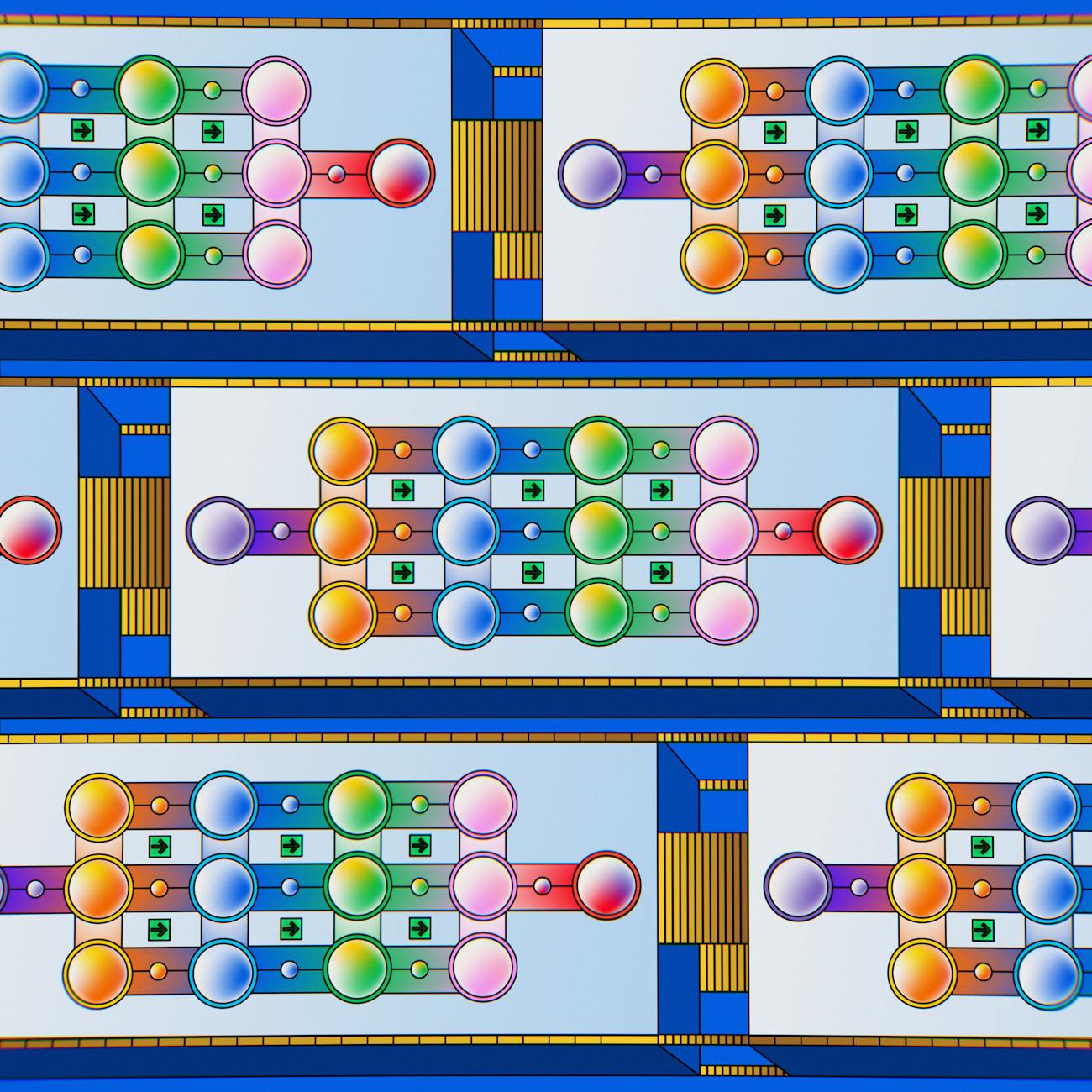
Artificial Intelligence (AI) and Machine Learning (ML) are two of the most exciting and rapidly growing fields in technology today. In the context of the Professional Certificate in AI for International Taxation, these technologies have the potential to revolutionize the way that tax professionals work, making processes more efficient, accurate, and intelligent. Here, we will explore some of the key terms and vocabulary that you will encounter in your studies of AI and ML.
Artificial Intelligence (AI) ==============
AI is a broad field that focuses on creating machines that can perform tasks that would normally require human intelligence. This can include things like understanding natural language, recognizing images, and making decisions based on large amounts of data. AI is often divided into two main categories: narrow or weak AI, which is designed to perform a specific task, and general or strong AI, which can perform any intellectual task that a human can.
Machine Learning (ML) ==============
ML is a subset of AI that focuses on the development of algorithms that can learn from data and improve their performance over time. This is done by providing the algorithm with a large dataset, which it can use to identify patterns, make predictions, and take action. ML algorithms can be divided into three main categories: supervised learning, unsupervised learning, and reinforcement learning.
Supervised Learning =================
Supervised learning is a type of ML in which the algorithm is trained on a labeled dataset. This means that the data includes both the input (or features) and the desired output (or label). The algorithm uses this information to learn the relationship between the input and output, and can then make predictions about new, unseen data. Common supervised learning algorithms include linear regression, logistic regression, and support vector machines.
Unsupervised Learning =================
Unsupervised learning is a type of ML in which the algorithm is trained on an unlabeled dataset. This means that the data only includes the input, and the algorithm must figure out the relationships and patterns on its own. Unsupervised learning algorithms are typically used for clustering, dimensionality reduction, and anomaly detection. Common unsupervised learning algorithms include k-means clustering, principal component analysis (PCA), and autoencoders.
Reinforcement Learning =================
Reinforcement learning is a type of ML in which the algorithm learns by interacting with its environment. The algorithm takes an action, receives a reward or penalty, and then adjusts its behavior based on this feedback. Reinforcement learning is often used in robotics, gaming, and autonomous systems. Common reinforcement learning algorithms include Q-learning, SARSA, and deep Q-networks (DQNs).
Neural Networks ==============
Neural networks are a type of ML algorithm that are inspired by the structure and function of the human brain. They consist of interconnected nodes, or "neurons," that process information and learn from data. Neural networks can be used for a wide range of tasks, including image recognition, natural language processing, and time series forecasting.
Deep Learning =============
Deep learning is a subset of neural networks that involves the use of many layers, or "hidden units," to process and analyze data. Deep learning algorithms are particularly well-suited to large, complex datasets, and are often used in applications such as computer vision, speech recognition, and natural language processing.
Transfer Learning ================
Transfer learning is a technique in which a pre-trained model is used as the starting point for a new task. This is particularly useful when the new task has limited data, as the pre-trained model can provide a strong foundation for learning. Transfer learning is often used in computer vision, where a model trained on a large dataset of images can be fine-tuned for a specific task, such as object detection or image classification.
Evaluation Metrics =================
Evaluation metrics are used to assess the performance of an AI or ML model. These metrics can include things like accuracy, precision, recall, and F1 score. It's important to choose the right evaluation metric for the task at hand, as different metrics can provide different insights into the performance of the model.
Conclusion ==========
In conclusion, AI and ML are powerful technologies that have the potential to transform the field of international taxation. By understanding the key terms and vocabulary in these fields, you will be well-equipped to explore the potential applications of AI and ML in your own work. Whether you're looking to improve efficiency, accuracy, or intelligence, AI and ML have much to offer. So, get started today and discover the exciting world of AI and ML in international taxation!
Key takeaways
- In the context of the Professional Certificate in AI for International Taxation, these technologies have the potential to revolutionize the way that tax professionals work, making processes more efficient, accurate, and intelligent.
- AI is often divided into two main categories: narrow or weak AI, which is designed to perform a specific task, and general or strong AI, which can perform any intellectual task that a human can.
- This is done by providing the algorithm with a large dataset, which it can use to identify patterns, make predictions, and take action.
- The algorithm uses this information to learn the relationship between the input and output, and can then make predictions about new, unseen data.
- This means that the data only includes the input, and the algorithm must figure out the relationships and patterns on its own.
- The algorithm takes an action, receives a reward or penalty, and then adjusts its behavior based on this feedback.
- Neural networks can be used for a wide range of tasks, including image recognition, natural language processing, and time series forecasting.