
Foundations Of Hip Hop Rhythm
Beat – The basic unit of time in music, the pulse that listeners feel in the body. In hip‑hop, the beat is often a steady four‑on‑the‑floor pattern, but variations such as half‑time and double‑time are common. When a dancer counts “1‑2‑3‑4,…
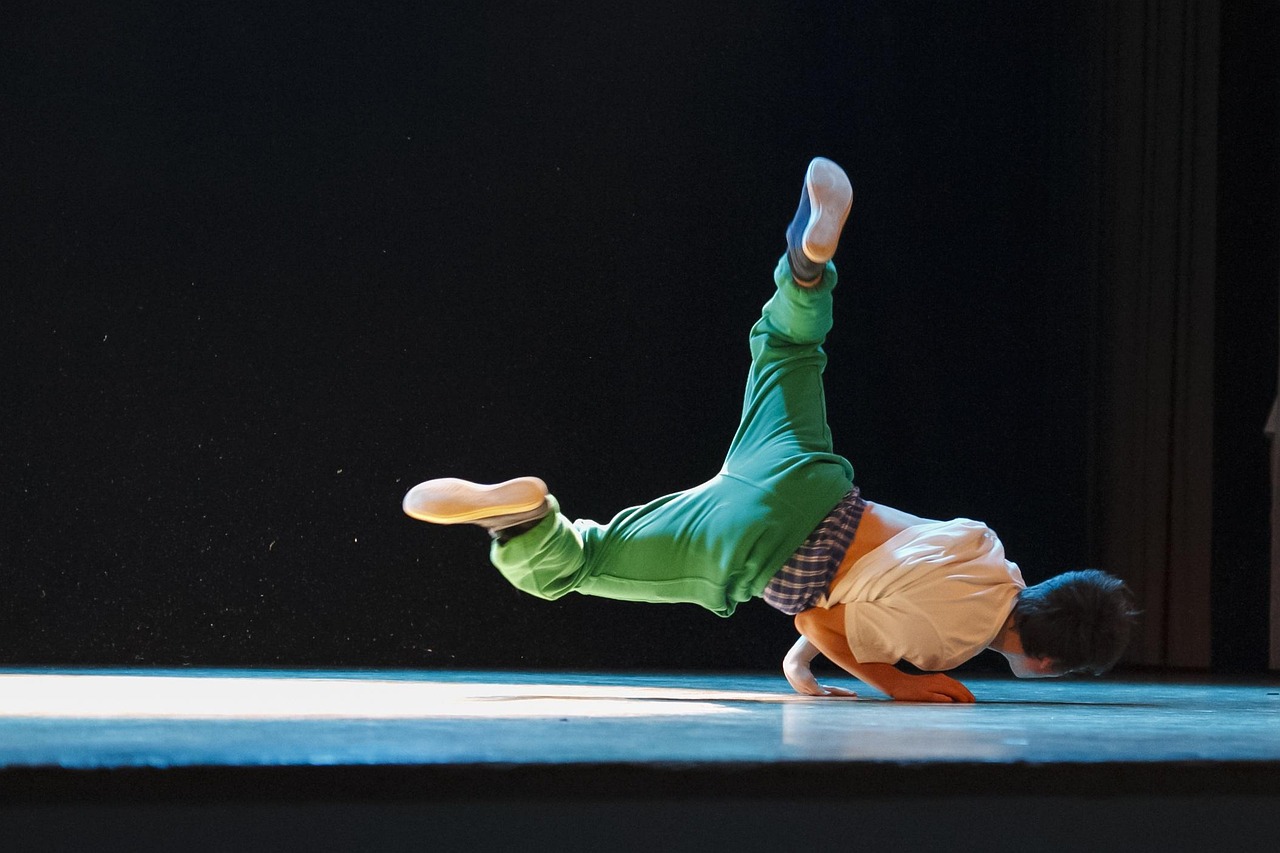
Beat – The basic unit of time in music, the pulse that listeners feel in the body. In hip‑hop, the beat is often a steady four‑on‑the‑floor pattern, but variations such as half‑time and double‑time are common. When a dancer counts “1‑2‑3‑4,” each count corresponds to a beat. Understanding the beat allows a dancer to lock movements to the music, creating a sense of unity between sound and motion.
Tempo – The speed at which the beats occur, measured in beats per minute (BPM). Hip‑hop tracks can range from slow, relaxed tempos around 80 BPM to fast, energetic tempos exceeding 120 BPM. A dancer must adjust the size and intensity of movements to match the tempo; slower tempos often invite fluid, grounded motions, while faster tempos require crisp, precise execution.
Meter – The organization of beats into repeating groups, usually of two, three, or four beats. Most hip‑hop music uses common time (4/4 meter), meaning four beats per measure. Recognizing the meter helps dancers anticipate where musical phrases begin and end, allowing them to place accents and transitions at musically appropriate moments.
Subdivision – The division of a beat into smaller units, such as eighth notes, sixteenth notes, or triplets. For example, a quarter‑note beat can be split into two eighth‑note pulses (1‑&‑2‑&‑3‑&‑4‑&) or four sixteenth‑note pulses (1‑e‑a‑2‑e‑a‑3‑e‑a‑4‑e‑a). Mastery of subdivisions enables a dancer to execute rapid footwork, syncopated steps, and intricate rhythmic patterns that align with the music’s internal timing.
Accent – An emphasized beat or subdivision that stands out from surrounding pulses. Accents can be created by a louder musical element (such as a snare hit) or by a dancer’s movement that is more pronounced, like a sharp arm gesture or a staccato foot stamp. Placing accents on the correct beats enhances musicality and adds dynamic contrast.
Syncopation – The deliberate displacement of accents away from the strongest beats, creating a sense of surprise and rhythmic tension. In hip‑hop, syncopation is a core element; dancers often emphasize off‑beats or “&” counts, such as stepping on the “&” after beat 2 instead of directly on beat 3. Practicing syncopated patterns develops a dancer’s ability to feel the groove beyond the simple “1‑2‑3‑4” pulse.
Groove – The overall feel or “pocket” that emerges when rhythm, tempo, and accent interact smoothly. A solid groove feels natural and makes the dancer’s movements appear effortless. Developing groove involves internalizing the music, allowing the body to respond instinctively rather than forcing each motion. Dancers can practice groove by isolating body parts (e.G., Head nods, shoulder rolls) and aligning them with the music’s underlying pulse.
Swing – A rhythmic variation where notes are played with a “lilted” timing, often converting straight eighth notes into a long‑short pattern (approximately a 2:1 Ratio). Swing is less common in modern hip‑hop but appears in tracks that blend jazz or funk influences. When a dancer detects swing, they may adjust the timing of steps to match the elongated first note and shortened second note, creating a laid‑back, loose feel.
Polyrhythm – The simultaneous use of two or more contrasting rhythmic patterns. For instance, a dancer might execute a triple‑meter foot sequence while the music stays in 4/4 meter, creating a 3‑against‑4 relationship. Practicing polyrhythms sharpens coordination and expands rhythmic vocabulary, allowing dancers to add complexity and surprise to choreography.
Cross‑rhythm – A specific type of polyrhythm where a rhythmic pattern is superimposed over the primary beat, often creating a sense of tension that resolves on the downbeat. In hip‑hop, a common cross‑rhythm is the “triplet feel” placed over a straight 4/4 beat. Mastery of cross‑rhythm helps dancers to weave syncopated footwork that feels intentional rather than chaotic.
Downbeat – The first beat of a measure, typically the strongest accent. In 4/4 time, the downbeat is beat 1. Dancers frequently anchor major movements (such as a body roll or a pose) on the downbeat to emphasize musical structure. Recognizing the downbeat also aids in counting phrases and planning choreography that aligns with musical sections.
Upbeat – The beat that follows the downbeat, often beat 2, 3, or 4 in a measure. In hip‑hop, many moves are initiated on the upbeat, giving a sense of forward momentum. For example, a “step‑ball‑step” pattern may start on the “&” after beat 2, creating a syncopated feel that propels the dancer into the next measure.
Off‑beat – Any beat or subdivision that does not fall on the primary accented beats (typically beats 1 and 3 in 4/4). Off‑beats are essential for creating syncopation; stepping on the “&” after beat 1 or beat 3 adds rhythmic interest. Dancers can practice off‑beat placement by clapping on the “&” counts while listening to a track, then translating that feeling into footwork.
Ghost step – A subtle, often understated foot movement that occurs in the background of a phrase, adding texture without dominating the visual field. Ghost steps are typically performed on off‑beats or during musical rests, providing a sense of continuity and flow. Because they are low‑intensity, they can be layered under more pronounced moves, enriching the overall rhythmic tapestry.
Stomp – A strong, percussive foot strike that emphasizes a beat, often used to accentuate the downbeat or a syncopated rhythm. Stomps can be executed with the heel or the ball of the foot, depending on the desired tonal quality. In choreography, a stomp might coincide with a bass kick, reinforcing the music’s low‑frequency impact.
Slide – A gliding foot movement that travels across the floor, usually performed on a beat or subdivision that requires a fluid transition. Slides can be executed on beats 1 and 3 for a smooth, grounded feel, or on off‑beats to create a “floating” sensation. Proper weight transfer and core control are essential to maintain balance while sliding.
Pop – A sharp, isolated contraction of a muscle group, often the torso or a limb, that creates a sudden accent. Pops are frequently timed to snare hits or vocal punctuations within a track. By aligning pops with specific musical cues, a dancer can highlight rhythmic elements and add visual emphasis to the beat.
Lock – A rapid, controlled movement that halts the body’s momentum, creating a momentary freeze before resuming motion. Locks are typically timed to strong beats or accented notes, making the pause feel intentional. Practicing locks on different beats (e.G., On the downbeat versus the upbeat) helps develop rhythmic flexibility.
Shuffle – A quick, alternating foot pattern that occupies two subdivisions, often the “&” and the following beat. Shuffles are a staple of hip‑hop footwork, providing a sense of kinetic energy. A common shuffle pattern is “step‑ball‑step‑ball” over a single beat, creating a rapid, rhythmic texture.
Stutter – A rapid repetition of a movement in quick succession, usually on a subdivided beat (such as sixteenth‑note pulses). Stutters convey excitement and can be used to build intensity before a musical drop. Executing a stutter requires precise timing and muscle control to avoid loss of balance.
Tick‑tock – A rhythmic pattern that mimics the sound of a metronome, typically a steady alternation of two contrasting movements (e.G., A low‑step followed by a high‑step). The tick‑tock can be used as a foundational exercise to improve timing, as it forces the dancer to internalize the beat and subdivision simultaneously.
Break – A moment in the music where the instrumentation drops out or simplifies, often leaving only drums or a vocal phrase. Breaks provide an opportunity for dancers to showcase freestyle moves, accentuate isolated pops, or execute a dramatic freeze. Understanding where breaks occur enables a dancer to plan highlight moments in choreography.
Drop – The point in a track where energy intensifies, usually after a build‑up, marked by a heavier bass line or a sudden increase in volume. Dancers often respond to a drop with expansive, high‑energy movements such as jumps, spins, or large‑scale body waves. Synchronizing movement peaks with the musical drop enhances the overall impact of the performance.
Riff – A short, repeated musical phrase that often serves as a hook. Riffs can be melodic, percussive, or vocal. When a riff repeats, dancers may mirror its pattern with a repeated movement motif, creating visual cohesion. Recognizing riffs helps in structuring choreography around recurring musical ideas.
Hook – The most memorable part of a song, typically a vocal line or instrumental phrase that repeats. In hip‑hop, the hook often aligns with the chorus and provides a natural point for dancers to emphasize the music with signature moves. Choreographers may design a “signature phrase” that aligns with the hook, strengthening audience recall.
Phrase – A musical segment, usually four or eight measures long, that forms a complete thought. Dancers use phrases to organize choreography, placing transitions at phrase boundaries. Counting phrases (e.G., “Eight‑measure phrase”) assists in planning where to introduce new movement ideas, accents, or dynamics.
Bar – Another term for a measure; the segment of time containing a set number of beats. In 4/4 time, each bar contains four beats. Counting bars helps dancers keep track of larger musical structures, ensuring that movement changes align with the music’s form.
Feel – The subjective perception of rhythm, encompassing timing, groove, and expressive nuances. Two dancers may interpret the same beat differently; one might feel a laid‑back swing, while another feels a tight, on‑the‑beat pulse. Developing an individual feel involves listening deeply to the music and experimenting with varied movement qualities.
Pulse – The underlying steady beat that can be felt physically, often corresponding to the heart’s rhythm. The pulse is the anchor that keeps dancers synchronized with each other and with the music. Practicing with a metronome or a simple “clap‑on‑the‑pulse” exercise helps solidify a dancer’s sense of timing.
Timing – The exact placement of movements relative to the beat and subdivisions. Accurate timing ensures that steps land on the intended counts, whether on the downbeat, upbeat, or off‑beat. Timing can be practiced by counting aloud, using a click track, or rehearsing with isolated drum loops.
Rhythmic phrasing – The way a dancer groups movements to reflect musical phrasing, creating a natural ebb and flow. For instance, a dancer might execute three quick steps followed by a pause, mirroring a musical phrase that consists of three notes and a rest. Rhythmic phrasing enhances musicality and makes choreography feel organic.
Dynamics – Variations in intensity, volume, and energy within a performance. In hip‑hop, dynamics can be expressed through changes in movement speed, force of footwork, or the size of gestures. Applying dynamics in alignment with musical dynamics (e.G., Softer verses versus louder choruses) creates a cohesive artistic experience.
Articulation – The clarity with which movements are executed, especially in relation to rhythmic subdivisions. Sharp articulation on sixteenth notes produces a crisp, staccato effect, while smooth articulation on eighth notes yields a legato feel. Practicing articulation on different subdivisions refines a dancer’s control and musical responsiveness.
Isolation – The ability to move one body part independently while keeping the rest of the body still. Isolations are essential for accenting particular beats or off‑beats, such as a head nod on the “&” after beat 2 or a rib cage pop on a snare hit. Isolations add texture and rhythmic depth to a routine.
Flow – The seamless transition between movements, creating an uninterrupted sense of motion. Flow is achieved by linking steps, maintaining consistent weight transfer, and matching the music’s continuity. A dancer with good flow appears to “ride” the music, making rhythmic changes feel natural.
Transition – A movement that bridges two distinct sections or ideas within choreography. Transitions can be simple (a single step) or complex (a multi‑directional turn). Effective transitions respect the musical timing, ensuring that the shift occurs on a natural beat or phrase boundary.
Freestyle – An improvised performance that responds in real time to the music. In hip‑hop, freestyle emphasizes rhythmic awareness, as dancers must instantly interpret beats, accents, and breaks. Practicing freestyle on a variety of tracks develops adaptability, quick decision‑making, and personal style.
Battle – A competitive setting where dancers showcase rhythmic precision, creativity, and originality. Battles often involve call‑and‑response elements, with each dancer responding to a musical cue or the opponent’s moves. Mastery of rhythmic vocabulary is crucial for success in battles, as judges evaluate timing, syncopation, and musical interpretation.
Count – The verbal or mental labeling of beats and subdivisions (e.G., “1‑2‑3‑4,” “1‑&‑2‑&‑3‑&‑4‑&”). Counting reinforces rhythmic accuracy and helps dancers synchronize with each other. Advanced counting may include triplet counts (“1‑trip‑let‑2‑trip‑let”) or sixteenth‑note counts (“1‑e‑a‑2‑e‑a”).
Meter change – A shift in the grouping of beats, such as moving from 4/4 to 6/8. Hip‑hop tracks occasionally incorporate meter changes to create surprise or tension. Dancers must adapt quickly, recalibrating their counting system and adjusting movement phrasing to fit the new metric structure.
Groove pocket – The sweet spot where a dancer’s movement aligns perfectly with the music’s underlying feel. Finding the groove pocket often involves micro‑adjustments in timing, such as delaying a foot placement by a fraction of a beat to land “just after” the snare. Practicing with recordings and focusing on subtle timing shifts helps dancers locate the pocket.
Micro‑timing – Small deviations from strict metronomic timing that create a human, expressive feel. In hip‑hop, micro‑timing can involve slightly pulling back on a step before a beat or pushing forward on an accent. These nuances distinguish a mechanically precise performance from a musically expressive one.
Layering – The practice of combining multiple rhythmic elements simultaneously, such as a foot pattern on eighth notes while the upper body pops on sixteenth notes. Layering expands a dancer’s rhythmic vocabulary and adds visual complexity. Successful layering requires strong isolation skills and precise timing.
Beatboxing – The vocal imitation of percussive sounds, often used in hip‑hop performances to create live rhythmic accompaniment. When a dancer works with a beatboxer, they must respond to the live, sometimes improvised, rhythmic patterns, sharpening their ability to adapt to fluctuating tempos and accents.
Sampling – The inclusion of a short musical excerpt from another recording within a hip‑hop track. Samples can introduce unexpected rhythmic motifs, such as a breakbeat from an old funk song. Dancers should become familiar with the sampled element, as it may provide a distinct rhythmic cue for a choreographic highlight.
Breakdown – A section where the instrumentation is stripped down, often leaving only drums or a simple bass line. Breakdowns give dancers space to showcase intricate footwork or rhythmic improvisation without competing with dense melodic layers. Recognizing breakdowns allows a performer to adjust intensity and focus accordingly.
Loop – A repeated segment of music that creates a continuous rhythmic foundation. Loops can be short (four bars) or longer (eight bars). Dancers can exploit loops by developing a recurring movement motif that aligns with the loop’s repetition, reinforcing the music’s cyclical nature.
Rhythmic motif – A short, identifiable pattern of movement that mirrors a musical motif. For example, a three‑step shuffle that repeats every eight measures can serve as a rhythmic motif. Motifs provide cohesion and memorability, making it easier for audiences to follow the choreography.
Accentuation – The deliberate placement of emphasis on specific beats or movements. Accentuation can be achieved through dynamic changes (e.G., A louder stomp), spatial shifts (e.G., A jump), or stylistic choices (e.G., A sharp pop). Effective accentuation highlights key musical moments and guides audience attention.
Counter‑rhythm – A secondary rhythmic pattern that opposes the primary beat, creating tension. Counter‑rhythms are often used in advanced footwork, such as dancing a triplet rhythm while the music stays in straight eighths. Mastery of counter‑rhythm expands a dancer’s expressive range and adds sophistication.
Time feel – The overall character of how time is perceived in a piece, encompassing groove, swing, and tempo. A “tight” time feel may feel rigid and precise, while a “loose” time feel feels relaxed and laid‑back. Dancers adjust body tension, movement speed, and articulation to match the intended time feel.
Staccato – A short, detached execution of movement, mirroring a staccato musical articulation. Staccato steps are quick and sharply defined, often landing on strong beats. Practicing staccato footwork improves clarity and rhythmic precision.
Legato – A smooth, connected execution of movement, akin to a legato musical phrase. Legato transitions involve fluid weight shifts and continuous motion, often used in slower sections of a track. Incorporating legato passages adds contrast to a choreography that also contains staccato sections.
Dynamic contrast – The variation between soft and loud, slow and fast, or subtle and explosive movements. Dynamic contrast mirrors musical dynamics, such as a quiet verse followed by a thunderous chorus. By mirroring these contrasts, dancers enhance the emotional impact of the performance.
Pulse shift – A deliberate displacement of the perceived pulse, often used to create a “delayed” feel. For instance, a dancer might intentionally land a step slightly after the downbeat, creating a relaxed, behind‑the‑beat sensation. Pulse shifts are common in styles that emphasize “pocket” and “groove.”
Beat subdivision drills – Structured exercises that isolate specific subdivisions, such as clapping on sixteenth notes while a metronome clicks on quarter notes. These drills build internal timing and improve the ability to layer movements across different rhythmic layers.
Footfall pattern – The sequence of steps and weight transfers that create a rhythmic footprint on the floor. Recognizing common footfall patterns (e.G., “Step‑ball‑step‑ball” for shuffles) helps dancers quickly internalize rhythmic structures and apply them to new musical contexts.
Hip‑hop canon – A set of foundational rhythmic concepts and movement vocabularies that define the style. Mastery of the canon, including syncopated shuffles, ghost steps, and lock‑and‑pop techniques, provides a solid base from which dancers can innovate and personalize their artistry.
Practice methodology – A systematic approach to developing rhythmic proficiency. This typically includes: 1) Listening analysis – identifying beats, accents, and phrases. 2) Count work – verbalizing subdivisions while moving. 3) Isolated drills – focusing on a single rhythmic element (e.G., Syncopated shuffles). 4) Integration – combining multiple elements into a fluid phrase. 5) Application – performing to full tracks, incorporating dynamics, transitions, and expressive qualities.
Challenge: Rhythm memory – The ability to retain complex rhythmic patterns after brief exposure. To improve, dancers can practice “call‑and‑response” drills: A teacher claps a syncopated pattern, and the student replicates it after a short pause. Repeating this with increasing complexity strengthens auditory‑motor memory.
Challenge: Tempo elasticity – Maintaining precision while the music’s tempo fluctuates. Dancers can train this skill by using tracks with variable BPM (e.G., A beat that accelerates from 90 BPM to 110 BPM). By counting aloud and consciously feeling each beat, the dancer learns to adapt without losing accuracy.
Challenge: Polyrhythmic layering – Executing two or more rhythmic patterns simultaneously. A practical exercise involves tapping a steady quarter‑note pulse with the right hand while stepping a triplet rhythm with the left foot. Gradually increase speed and then reverse the roles, reinforcing the brain’s ability to separate and integrate multiple time streams.
Challenge: Syncopated improvisation – Creating spontaneous movement that emphasizes off‑beats. Dancers can practice by looping a simple 4‑measure phrase, then deliberately inserting a step on the “&” after beat 3, listening to how the music responds. Repeating this process with different off‑beat placements builds confidence in improvisational settings.
Challenge: Dynamic shaping – Controlling intensity across a phrase. An exercise for this involves performing a four‑measure shuffling pattern, starting with soft, low‑energy steps on measure 1, increasing to medium intensity on measure 2, reaching a peak on measure 3, and then pulling back to a gentle finish on measure 4. This mirrors musical crescendos and decrescendos.
Application: Choreographic structuring – Using the vocabulary to design a piece. A choreographer might begin with a four‑measure intro, establishing the groove with a simple footfall pattern. The second phrase could introduce syncopated shuffles on the off‑beat, adding ghost steps for texture. At the chorus, a drop triggers a series of stomps and jumps, emphasizing the downbeat. A bridge featuring a breakdown allows for isolated pops and counter‑rhythms, showcasing the dancer’s technical range. The final phrase returns to the original groove, now enriched with layered polyrhythms and dynamic contrast, delivering a satisfying resolution.
Application: Teaching methodology – Introducing terms to students. Begin with “beat” and “tempo,” using a metronome to illustrate steady pulse. Progress to “subdivision” by clapping eighth notes, then sixteenth notes. Introduce “accent” by having students stomp on the downbeat while keeping a soft tap on the off‑beats. Follow with “syncopation,” encouraging learners to step on the “&” after beat 2. Use “groove” exercises where students isolate torso rolls while maintaining foot timing. Finally, combine all elements into a short routine that incorporates “stomp,” “slide,” “pop,” and “lock,” reinforcing the integrated vocabulary.
Application: Battle preparation – Building a arsenal of rhythmic moves for competition. Create a repertoire list that includes: A basic “shuffle” on straight eighths, a “triplet pop” on sixteenth notes, a “ghost step” on off‑beats, a “stutter” on a break, and a “lock” timed to a snare accent. Practice transitioning between each move on different beats (downbeat, upbeat, off‑beat) to ensure fluidity. Incorporate “pulse shift” by deliberately delaying a final pose, creating a laid‑back feel that can surprise judges. Rehearse with varied tracks, including those with tempo changes and meter shifts, to develop adaptability.
Application: Musical analysis – Breaking down a hip‑hop track to extract rhythmic cues. Identify the intro’s drum pattern: A kick on beats 1 and 3, a snare on beats 2 and 4, and hi‑hats playing eighth notes. Note any syncopated hi‑hat variations (e.G., Open hi‑hat on the “&” after beat 2). Locate the chorus’s melodic hook, and observe whether the rhythm shifts to a half‑time feel (kick on beat 1, snare on beat 3). Detect any breakdowns where the drums drop out, leaving only a bass sub‑pulse. Map these sections onto a count sheet, marking where accents, breaks, and drops occur. Use this map to align choreographic sections with the musical structure.
Application: Personal style development – Integrating rhythmic vocabulary into an individual aesthetic. Dancers may choose to emphasize “ghost steps” for a smooth, flowing style, or focus on “stomp” and “pop” for a powerful, percussive look. Experiment with “micro‑timing” by slightly delaying a slide to create a laid‑back vibe, or by advancing a pop to land just before a snare hit for added tension. Record rehearsals and review the timing of each movement relative to the music, adjusting as needed to refine personal expression.
Practical tip: Count aloud while moving – Speaking the counts (“1‑&‑2‑&‑3‑&‑4”) while executing footwork reinforces internal timing and helps catch misalignments early. Once confidence builds, transition to silent counting, allowing the body to feel the beat naturally.
Practical tip: Use a metronome with subdivision clicks – Many metronomes can be set to click on quarter notes while subdividing with eighth or sixteenth notes. Practicing steps on the subdivision clicks trains precise placement of syncopated movements.
Practical tip: Record and review – Filming practice sessions provides visual evidence of timing accuracy. Playback allows dancers to see whether a “pop” truly lands on the intended beat, or if a “slide” drifts forward or backward.
Practical tip: Internalize the drum pattern – Tap the kick, snare, and hi‑hat patterns with the fingers while listening to the track. This tactile connection deepens rhythmic awareness and translates into more authentic movement.
Practical tip: Isolate body parts – Practice head nods, shoulder rolls, and rib cage pops independently, aligning each with a specific subdivision. Once mastery is achieved, layer these isolations over a basic foot pattern to create richer rhythmic texture.
Practical tip: Vary dynamics within a phrase – Start a four‑measure phrase softly, increase intensity on the second measure, peak on the third, and resolve gently on the fourth. This mirrors musical phrasing and adds emotional contour.
Practical tip: Embrace silence – During a musical break, maintain a subtle movement (e.G., A slow body wave) to keep the visual flow, while allowing the music’s silence to create tension. This demonstrates control and an understanding of musical space.
Practical tip: Challenge yourself with odd meters – Practice a simple step sequence in 6/8 time (1‑2‑3‑4‑5‑6) to develop flexibility. Once comfortable, integrate the pattern into a 4/4 track that includes a 6/8 bridge, transitioning smoothly between meters.
Practical tip: Collaborate with musicians – Working directly with a beatboxer or drummer provides immediate feedback on timing. The dancer can experiment with micro‑timing adjustments, and the musician can respond, creating a dynamic, interactive learning environment.
Practical tip: Use “count‑and‑clap” warm‑ups – Begin each rehearsal by clapping the main beat, then adding a second clapping layer on the “&” counts, and finally a third layer on sixteenth‑note subdivisions. This progressive layering mirrors the complexity of hip‑hop rhythm.
Practical tip: Explore “tempo elasticity” drills – Play a track that gradually speeds up, and practice maintaining consistent step size while the BPM increases. This builds the ability to stay grounded during fast musical passages.
Practical tip: Develop “groove pocket” awareness – While rehearsing, experiment with slightly delaying a movement by a fraction of a beat (e.G., Landing a step just after the snare). Notice how the altered timing changes the feel; repeat until the movement feels naturally aligned with the music’s swing.
Practical tip: Incorporate “counter‑rhythm” exercises – While a steady beat plays, chant a simple rhythmic phrase (e.G., “Ta‑ta‑ta”) that conflicts with the beat’s subdivision. Then, match a foot pattern to the chant, creating a counter‑rhythm. This exercise strengthens the brain’s ability to separate and combine rhythmic streams.
Practical tip: Perform “rhythmic motif” improvisation – Choose a short movement phrase (three steps) and repeat it over an eight‑measure loop, varying only the timing (e.G., Shifting the start by an “&” each repeat). This demonstrates how a motif can evolve while staying anchored to the music.
Practical tip: Study classic hip‑hop tracks – Analyze the rhythmic structure of foundational songs (e.G., “Rapper’s Delight,” “The Message,” “Hip Hop Hooray”). Identify the beat, accents, syncopation, and any breakdowns. Replicate the rhythmic patterns in practice to internalize the style’s historical roots.
Practical tip: Use “beat‑map” charts – Write down the count for each measure, marking where kicks, snares, and hi‑hats occur. Annotate where you plan to place choreography accents. This visual map serves as a reference during rehearsal, ensuring that movement aligns with the musical structure.
Practical tip: Engage in “group timing” drills – Rehearse with a partner, each counting the beat aloud while the other performs a movement phrase. Switch roles, ensuring both dancers can maintain accurate timing while listening to each other’s cues. This builds ensemble cohesion and collective rhythmic awareness.
Practical tip: Experiment with “pulse shift” in performance – Deliberately land a movement a fraction of a beat after the downbeat during a live show. Observe audience reaction; a well‑executed pulse shift can create a cool, relaxed vibe, especially in slower grooves.
Practical tip: Create “rhythmic contrast” sections – Design a choreography segment where the footwork is staccato on straight eighths, followed by a legato, flowing torso wave on a slower half‑time feel. This contrast showcases the dancer’s versatility and mirrors musical dynamic shifts.
Practical tip: Practice “syncopated footwork” with a metronome set to click on beats 1 and 3 only – The absence of clicks on beats 2 and 4 forces the dancer to feel the off‑beats internally, strengthening syncopation skills.
Practical tip: Use “mirror” drills for isolation – Stand facing a mirror, isolate a movement (e.G., A rib cage pop), and observe whether the timing aligns with the intended subdivision. Adjust as necessary until the visual feedback confirms precise execution.
Practical tip: Incorporate “dynamic contrast” in everyday rehearsal – Alternate between soft, low‑energy shuffles and powerful, high‑energy stomps within a single practice session. This habit trains the body to switch dynamics quickly, essential for live performance where music may shift abruptly.
Practical tip: Apply “layering” in improvisation sessions – Choose one rhythmic element (e.G., A basic foot shuffle) and add a second layer (e.G., A head nod on the “&”) while maintaining the first layer’s timing. Gradually add more layers, such as a shoulder pop, to build complex rhythmic textures on the spot.
Practical tip: Conduct “breakdown” practice – Isolate a musical breakdown, and rehearse a series of isolated pops and isolations without any foot movement. This sharpens control over small, precise gestures that will stand out when the music returns.
Practical tip: Emphasize “accentuation” through body tension – When a movement is meant to accent a beat, engage core muscles and increase arm extension, creating a visual “bang” that matches the musical accent.
Practical tip: Leverage “tempo elasticity” in live DJ sets – DJs may speed up or slow down tracks on the fly. Train by rehearsing to tracks with gradually changing BPM, developing a sense of internal timing that can adapt to live fluctuations.
Practical tip: Use “call‑and‑response” with a partner for rhythmic memory – One dancer claps a complex syncopated rhythm; the partner repeats it after a short pause. This exercise enhances auditory recall and quick translation into movement.
Practical tip: Study “meter change” sections in songs – Identify tracks that shift from 4/4 to 6/8 for a bridge. Practice counting the new meter and creating a movement phrase that reflects the altered feel, then transition back to the original meter smoothly.
Practical tip: Explore “pulse shift” by practicing “behind‑the‑beat” movements – Intentionally land steps slightly after the beat, creating a relaxed, laid‑back groove. Record to verify the shift and adjust as needed.
Practical tip: Combine “groove pocket” with “micro‑timing” for expressive nuance – While maintaining the overall groove, add a subtle delay of a few milliseconds on a particular accent. This micro‑adjustment can make a movement feel more human and expressive.
Practical tip: Incorporate “beatboxing” in rehearsal – Have a beatboxer create a live rhythm, and practice reacting to spontaneous changes. This builds adaptability and reinforces the dancer’s ability to lock onto a constantly evolving beat.
Practical tip: Use “sampling” as a rhythmic cue – Identify a sampled drum loop within a track and align a signature movement motif to that loop, reinforcing the connection between the sampled rhythm and the choreography.
Practical tip: Design a “rhythmic motif” that evolves over a song’s structure – Begin with a simple three‑step shuffle in the intro, add a ghost step in the verse, introduce a lock on the chorus, and conclude with a layered polyrhythm in the bridge. This evolution mirrors musical development and keeps the audience engaged.
Practical tip: Analyze “dynamic contrast” in live performances – Watch videos of seasoned hip‑hop dancers and note how they shift from soft, subtle movements in verses to explosive, high‑energy moves in choruses. Emulate this contrast in your own practice.
Practical tip: Practice “rhythmic phrasing” by counting musical phrases – Count “1‑2‑3‑4‑5‑6‑7‑8” for an eight‑measure phrase, then design a movement phrase that spans the same length, ensuring that transitions align with phrase boundaries.
Practical tip: Conduct “layered polyrhythm” drills with a metronome set to click on quarter notes while you tap a triplet rhythm with your fingers, then add a foot pattern on eighth notes. This multi‑layered approach builds the capacity to handle complex rhythmic structures.
Practical tip: Use “pulse shift” as a stylistic signature – Consistently landing a particular move a fraction after the beat can become a recognizable element of your personal style, distinguishing you in battles and performances.
Practical tip: Embrace “breakdowns” as opportunities for improvisation – When the music strips down, experiment with rapid isolations, micro‑pops, and subtle foot shuffles, showcasing technical finesse during moments of musical minimalism.
Practical tip: Apply “accentuation” through spatial dynamics – Move a larger distance or jump higher when accenting a beat, contrasting with smaller, more contained movements on non‑accented beats.
Key takeaways
- In hip‑hop, the beat is often a steady four‑on‑the‑floor pattern, but variations such as half‑time and double‑time are common.
- A dancer must adjust the size and intensity of movements to match the tempo; slower tempos often invite fluid, grounded motions, while faster tempos require crisp, precise execution.
- Recognizing the meter helps dancers anticipate where musical phrases begin and end, allowing them to place accents and transitions at musically appropriate moments.
- Mastery of subdivisions enables a dancer to execute rapid footwork, syncopated steps, and intricate rhythmic patterns that align with the music’s internal timing.
- Accents can be created by a louder musical element (such as a snare hit) or by a dancer’s movement that is more pronounced, like a sharp arm gesture or a staccato foot stamp.
- In hip‑hop, syncopation is a core element; dancers often emphasize off‑beats or “&” counts, such as stepping on the “&” after beat 2 instead of directly on beat 3.
- Developing groove involves internalizing the music, allowing the body to respond instinctively rather than forcing each motion.