
Drone Applications and Use Cases
Drone Applications and Use Cases: Key Terms and Vocabulary
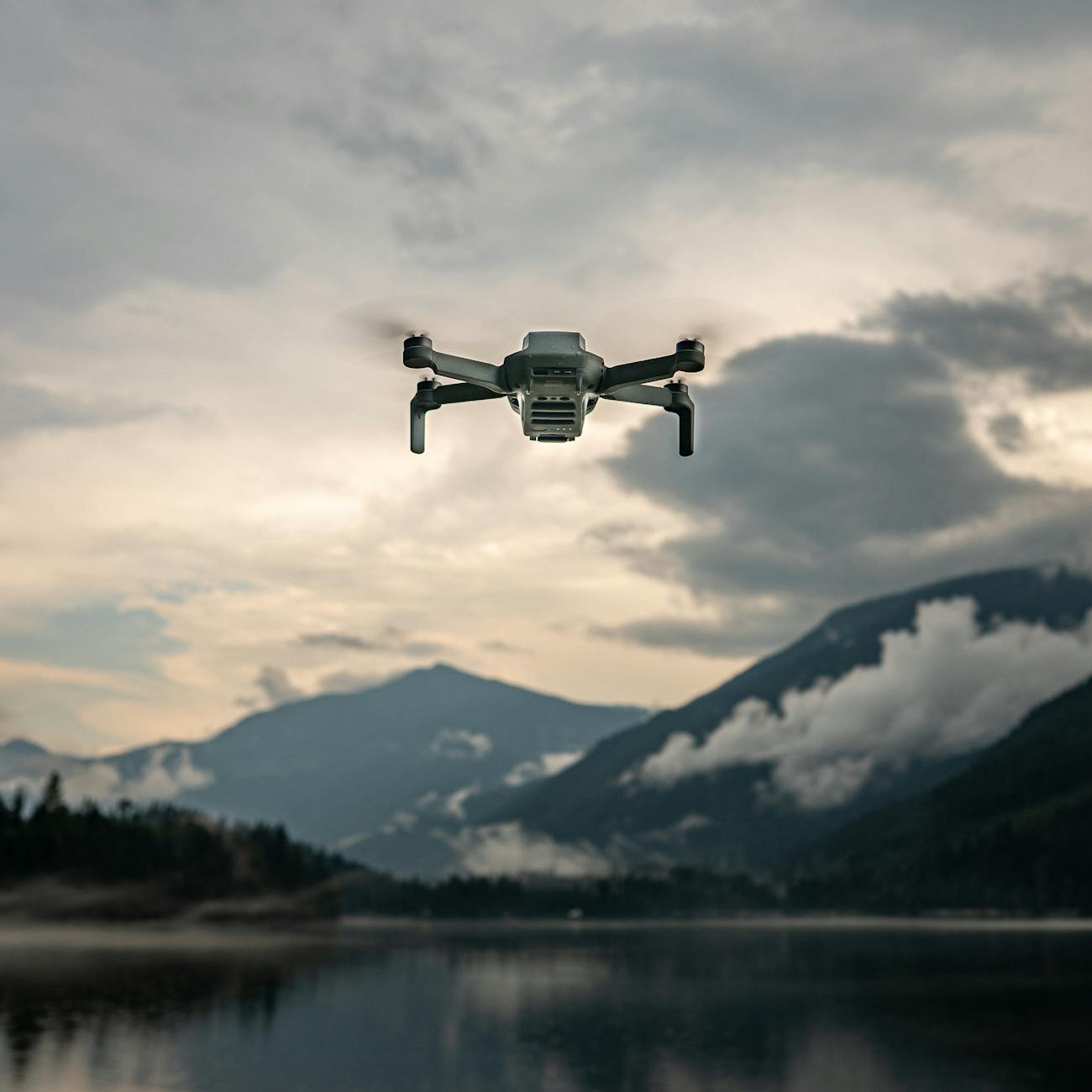
Drone Applications and Use Cases: Key Terms and Vocabulary
Drones, also known as unmanned aerial vehicles (UAVs), are becoming increasingly popular in various industries due to their ability to perform tasks that are dangerous, difficult, or time-consuming for humans. In this explanation, we will discuss key terms and vocabulary related to drone applications and use cases in the undergraduate certificate in drone technology engineering.
1. Aerial Photography and Videography Aerial photography and videography involve taking photos or videos from the air using drones. Drones are equipped with high-resolution cameras that can capture stunning aerial views, making them popular for filmmaking, real estate, and event photography. 2. Surveying and Mapping Drones are used in surveying and mapping to collect data on the ground, which is then processed to create detailed maps and 3D models. This technology is used in fields such as construction, agriculture, and environmental monitoring. 3. Inspection Drones are used for inspecting infrastructure such as bridges, power lines, and wind turbines. They can reach areas that are difficult or dangerous for humans to access, providing a safe and cost-effective solution for inspecting and maintaining infrastructure. 4. Delivery Drones are being explored for delivery purposes, such as delivering packages, food, and medical supplies. Companies such as Amazon and Zipline are using drones for delivery, providing a faster and more efficient solution than traditional delivery methods. 5. Precision Agriculture Precision agriculture involves using drones to monitor crop health, identify pests and diseases, and optimize crop yields. Drones can collect data on crop health and soil moisture, allowing farmers to make informed decisions about crop management. 6. Disaster Management Drones are used in disaster management to assess damage, locate victims, and deliver supplies. They can quickly survey large areas, providing valuable information to emergency responders and helping to save lives. 7. Surveillance and Security Drones are used for surveillance and security purposes, such as monitoring borders, detecting illegal activities, and providing security for events and facilities. They can provide real-time footage, allowing security personnel to respond quickly to potential threats. 8. Wildlife Monitoring Drones are used for wildlife monitoring, such as tracking endangered species, monitoring animal populations, and studying animal behavior. They can cover large areas and provide detailed information about wildlife, helping to conserve and protect wildlife populations. 9. Search and Rescue Drones are used in search and rescue operations to locate missing persons, assess damage, and deliver supplies. They can quickly cover large areas and provide real-time footage, allowing emergency responders to make informed decisions and save lives. 10. Telecommunications Drones are used in telecommunications to provide temporary internet and phone coverage in remote areas or during natural disasters. They can be equipped with cellular base stations or satellite dishes, providing connectivity to people in need. 11. Geographic Information Systems (GIS) GIS is a system for capturing, analyzing, and managing geographical data. Drones are used in GIS to collect data on the ground, which is then processed to create detailed maps and 3D models. 12. Global Positioning System (GPS) GPS is a system for determining a location on Earth. Drones use GPS to navigate and fly accurately, allowing them to collect data on specific locations and create detailed maps and 3D models. 13. Light Detection and Ranging (LiDAR) LiDAR is a remote sensing technology that uses laser light to measure distances. Drones are equipped with LiDAR sensors, allowing them to create detailed 3D models of the ground and objects on the ground. 14. Infrared (IR) IR is a type of radiation that is not visible to the human eye. Drones are equipped with IR cameras, allowing them to detect heat signatures and see in the dark. 15. Synthetic Aperture Radar (SAR) SAR is a type of radar that uses moving antennas to create detailed images of the ground. Drones are equipped with SAR sensors, allowing them to create detailed images of the ground, even in adverse weather conditions. 16. First-Person View (FPV) FPV is a technology that allows drone pilots to see what the drone sees in real-time. Drones are equipped with FPV cameras, allowing pilots to fly the drone from a first-person perspective, making it easier to navigate and fly accurately. 17. Return to Home (RTH) RTH is a feature that allows drones to return to their takeoff location automatically in case of a lost signal or low battery. Drones are equipped with RTH functionality, ensuring safe and reliable operation. 18. Obstacle Avoidance Obstacle avoidance is a technology that allows drones to detect and avoid obstacles in their path. Drones are equipped with obstacle avoidance sensors, allowing them to fly safely and accurately. 19. Real-Time Kinematic (RTK) RTK is a technology that uses GPS signals to provide accurate positioning information. Drones are equipped with RTK receivers, allowing them to fly accurately and collect precise data. 20. Autonomous Flight Autonomous flight is a technology that allows drones to fly without human intervention. Drones are equipped with autonomous flight capabilities, allowing them to fly pre-programmed routes and perform tasks autonomously.
Challenges:
While drones have many applications and use cases, there are also challenges that need to be addressed. These challenges include:
1. Regulations: Drones are subject to regulations, and operators must comply with rules related to flight altitude, airspace restrictions, and operator certification. 2. Safety: Drones can pose safety risks, such as collisions with other aircraft or people, and operators must ensure that they operate drones safely. 3. Privacy: Drones can be used to invade privacy, and operators must respect privacy laws and regulations. 4. Battery Life: Drones have limited battery life, and operators must ensure that they have enough battery power to complete tasks. 5. Communication: Drones rely on communication with the ground station, and operators must ensure that they have reliable communication links. 6. Weather: Drones can be affected by weather conditions, such as wind and rain, and operators must ensure that they fly drones in suitable conditions. 7. Cybersecurity: Drones can be vulnerable to cyber attacks, and operators must ensure that they protect drones from unauthorized access.
Examples:
Here are some examples of drone applications and use cases:
1. Aerial photography and videography for filmmaking and real estate. 2. Surveying and mapping for construction and environmental monitoring. 3. Inspection of infrastructure such as bridges, power lines, and wind turbines. 4. Delivery of packages, food, and medical supplies. 5. Precision agriculture for crop management and yield optimization. 6. Disaster management for assessing damage, locating victims, and delivering supplies. 7. Surveillance and security for monitoring borders, detecting illegal activities, and providing security for events and facilities. 8. Wildlife monitoring for tracking endangered species, monitoring animal populations, and studying animal behavior. 9. Search and rescue operations for locating missing persons, assessing damage, and delivering supplies. 10. Telecommunications for providing temporary internet and phone coverage in remote areas or during natural disasters.
Conclusion:
Drones have many applications and use cases in various industries, and they offer numerous benefits, such as cost-effectiveness, safety, and efficiency. However, there are also challenges that need to be addressed, such as regulations, safety, privacy, battery life, communication, weather, and cybersecurity. By understanding key terms and vocabulary related to drone applications and use cases, students in the undergraduate certificate in drone technology engineering can gain a deeper understanding of this exciting and rapidly evolving technology.
Key takeaways
- Drones, also known as unmanned aerial vehicles (UAVs), are becoming increasingly popular in various industries due to their ability to perform tasks that are dangerous, difficult, or time-consuming for humans.
- Surveillance and Security Drones are used for surveillance and security purposes, such as monitoring borders, detecting illegal activities, and providing security for events and facilities.
- While drones have many applications and use cases, there are also challenges that need to be addressed.
- Regulations: Drones are subject to regulations, and operators must comply with rules related to flight altitude, airspace restrictions, and operator certification.
- Surveillance and security for monitoring borders, detecting illegal activities, and providing security for events and facilities.
- However, there are also challenges that need to be addressed, such as regulations, safety, privacy, battery life, communication, weather, and cybersecurity.