
Computer Vision and Player Tracking
Computer vision in cricket coaching relies on a set of foundational concepts that enable the extraction of meaningful information from video streams. At its core, image processing transforms raw pixel data into a format that algorithms can …
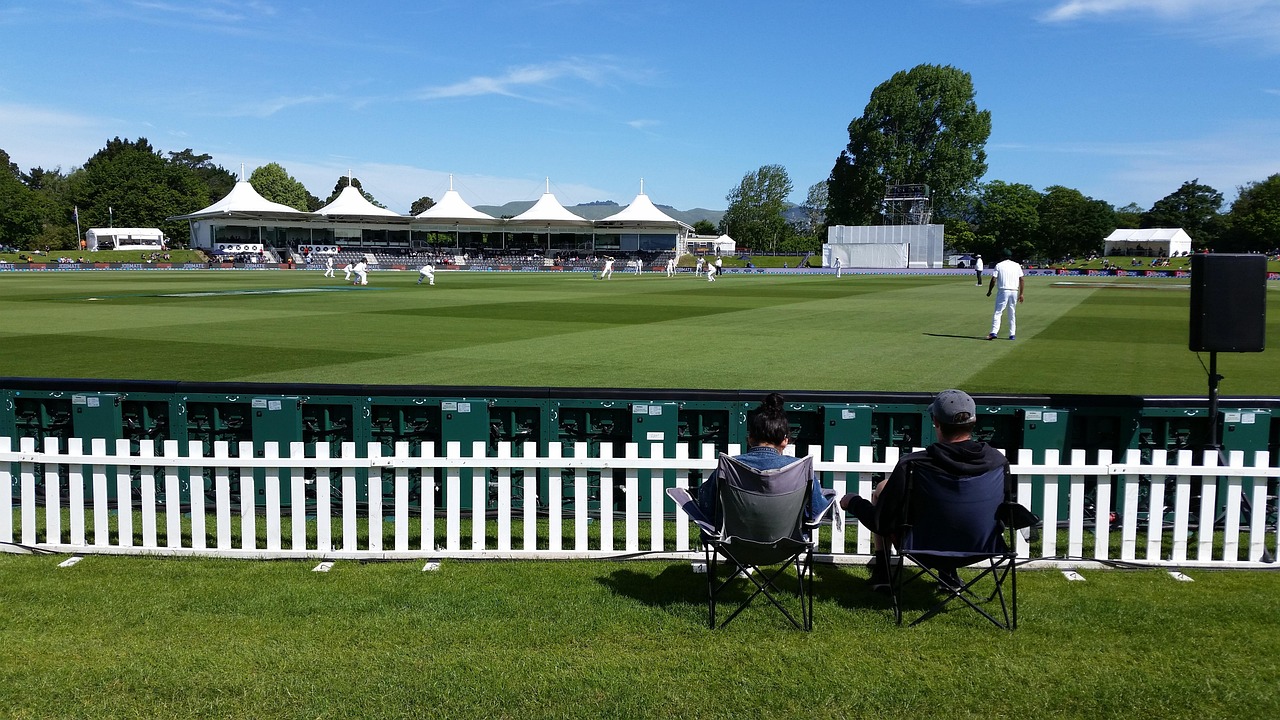
Computer vision in cricket coaching relies on a set of foundational concepts that enable the extraction of meaningful information from video streams. At its core, image processing transforms raw pixel data into a format that algorithms can interpret. A pixel is the smallest unit of an image, represented by intensity values in a specific color space. Common color spaces include RGB, HSV, and YCrCb; each offers advantages for particular tasks such as separating luminance from chrominance, which can improve robustness to lighting changes.
One of the first steps in preparing footage for analysis is noise reduction. Gaussian blur smooths out high‑frequency noise, while median filtering preserves edges better when dealing with salt‑and‑pepper noise. After denoising, thresholding creates a binary image that distinguishes foreground elements—players, the ball, and the pitch—from the background. Adaptive thresholding adjusts the cut‑off value locally, helping to cope with uneven illumination across a stadium.
Edge detection is another fundamental operation. Algorithms such as Canny or Sobel compute gradients to highlight the contours of objects. These edges are often used to generate contours, which are continuous curves that bound shapes. Contour detection can isolate the silhouette of a bowler’s action, allowing coaches to study joint angles and body alignment.
When tracking multiple players simultaneously, it is essential to understand the notion of a region of interest (ROI). An ROI defines a sub‑area of the frame that contains the target of interest, reducing computational load by focusing processing power on relevant pixels. In cricket, ROIs might be set around the batting crease, the bowling end, or specific fielding positions.
Object detection techniques locate and classify objects within an image by drawing bounding boxes. Modern detectors are built on deep learning architectures such as YOLO (You Only Look Once) and SSD (Single Shot MultiBox Detector). These models predict bounding boxes and class probabilities in a single forward pass, enabling real‑time performance essential for live match analysis. Bounding box coordinates are typically expressed as (x, y, width, height) relative to the image frame.
The quality of a detection is measured using the Intersection over Union (IoU) metric, which quantifies the overlap between a predicted box and the ground‑truth annotation. IoU thresholds (commonly 0.5) Determine whether a detection is counted as a true positive. Precision, recall, and average precision (AP) are derived from IoU and provide a comprehensive view of detector performance. For a multi‑class scenario, mean average precision (mAP) aggregates AP across all classes, offering a single figure of merit.
Beyond detecting static objects, player tracking demands continuous identification across frames. A popular framework is DeepSORT, which couples a deep appearance descriptor with a Kalman filter. The Kalman filter predicts the future position of a player based on a motion model, while the appearance model compares visual features to resolve ambiguities when players intersect or occlude each other. The appearance descriptor is often extracted from a convolutional neural network (CNN) trained on a re‑identification dataset, producing a high‑dimensional vector that captures texture and color cues.
Alternative tracking approaches include Siamese networks, which learn a similarity function between a template patch and candidate regions. By sliding the template across the search area, the network produces a response map indicating the most likely location of the target. Siamese trackers excel at handling fast motion and scale changes, which are common when a ball is delivered at high velocity.
In cricket, the ball itself is a critical object to track. Due to its small size and rapid movement, traditional detection pipelines may miss the ball in low‑resolution footage. Specialized ball detection pipelines often combine motion cues—such as optical flow—with color filtering to isolate the white or red ball against the green pitch. Optical flow algorithms, like the Lucas‑Kanade method, estimate pixel‑wise motion vectors by assuming small displacements between consecutive frames. By aggregating flow vectors that converge to a point, a ball trajectory can be reconstructed even when the ball is partially obscured.
The integration of pose estimation further enriches player tracking. Pose estimation predicts the 2D coordinates of anatomical keypoints (e.G., Shoulders, elbows, hips) for each player. Methods such as OpenPose or HRNet use heatmaps to localize keypoints with sub‑pixel accuracy. In cricket coaching, pose data allow analysts to quantify batting stance width, back‑foot placement, and bowling arm angle, facilitating biomechanical feedback.
When extending pose estimation to three dimensions, depth information becomes necessary. Stereo vision, structured light, or depth cameras can provide a depth map, which assigns a distance value to each pixel. Combining depth with 2D keypoints yields a 3D skeleton, enabling precise measurement of joint angles and angular velocities. However, outdoor stadiums seldom have depth sensors, so researchers often rely on monocular depth estimation, where a CNN predicts relative depth from a single RGB image based on learned cues such as texture gradients and perspective.
Camera calibration is a prerequisite for accurate spatial measurements. Calibration determines the intrinsic parameters (focal length, principal point, lens distortion) and extrinsic parameters (rotation, translation) that relate the camera coordinate system to the world coordinate system. Techniques such as the checkerboard method compute these parameters by capturing images of a known pattern at multiple orientations. Once calibrated, a homography can transform points from the image plane to a planar world coordinate system, such as the cricket pitch. This transformation enables the conversion of pixel distances to real‑world meters, which is essential for speed estimation.
Speed estimation typically follows a two‑step process: Detection of the ball in consecutive frames and conversion of pixel displacement to physical distance using the calibrated homography. The time interval between frames, derived from the frame rate (e.G., 60 Fps), provides the temporal component. By dividing the distance traveled by the time elapsed, the ball’s instantaneous speed can be calculated. This method is widely used to verify compliance with speed regulations in limited‑overs cricket.
Tracking player trajectories over time produces a trajectory analysis that reveals movement patterns, heat maps, and positional tendencies. Heat maps visualize the density of player positions across a match, highlighting zones of high activity. For example, a batsman’s heat map may show a concentration of footwork near the crease, while a fielder’s heat map may reveal a wide coverage area indicative of a “cover‑point” role. These visualizations assist coaches in devising field placements and spotting gaps in defensive strategies.
One challenge in generating reliable heat maps is dealing with occlusion. When a player is hidden behind another player or a structure, detection may fail, leading to gaps in the trajectory. To mitigate this, algorithms employ temporal interpolation, where missing positions are estimated based on surrounding frames. More advanced solutions use multi‑camera setups, fusing data from different viewpoints to resolve occlusions. Data fusion often leverages sensor fusion techniques that combine visual information with wearable sensors such as GPS or inertial measurement units (IMUs). Wearable sensors provide continuous position and orientation data, which can be aligned with visual tracks through synchronization of timestamps.
Synchronization is critical when merging video and sensor streams. Each frame carries a timestamp, and sensor data are recorded at a potentially different sampling rate. By interpolating sensor readings to the video timestamps, a unified timeline is established, allowing precise correlation of visual events (e.G., Ball release) with biomechanical metrics (e.G., Wrist angular velocity). Accurate synchronization also enables latency compensation, where processing delays are accounted for to ensure that real‑time feedback aligns with the athlete’s current state.
Training deep learning models for detection and tracking requires a well‑annotated dataset. Annotation involves labeling each frame with bounding boxes, keypoints, and class labels. Tools such as LabelImg or CVAT facilitate this process. The resulting dataset is split into training, validation, and test subsets to evaluate model generalization. Overfitting—where a model memorizes training data but performs poorly on unseen data—is mitigated through regularization techniques like dropout, weight decay, and data augmentation. Data augmentation artificially expands the training set by applying transformations such as rotation, scaling, color jitter, and horizontal flipping, exposing the model to a wider variety of scenarios.
Transfer learning accelerates model development by initializing a network with weights pre‑trained on large generic datasets (e.G., ImageNet) and fine‑tuning it on cricket‑specific data. Fine‑tuning may involve freezing early layers that capture generic features (edges, textures) while updating later layers that learn task‑specific patterns (batting stance, ball shape). This approach reduces the amount of domain‑specific data required and shortens training time.
Optimization of deep networks hinges on appropriate choice of loss functions and optimizers. For object detection, a combination of classification loss (e.G., Cross‑entropy) and localization loss (e.G., Smooth L1) guides the network to predict accurate class probabilities and box coordinates. Focal loss addresses class imbalance by down‑weighting easy negatives, which is useful when background dominates the image. Optimizers such as Adam or stochastic gradient descent (SGD) with momentum adjust model parameters based on gradients, while learning‑rate schedules (step decay, cosine annealing) control the pace of convergence.
Real‑time deployment demands careful consideration of computational resources. Inference speed is often measured in frames per second (FPS). To meet the latency constraints of live analysis, models may be pruned—removing redundant filters—or quantized—reducing precision from 32‑bit floating point to 8‑bit integer. GPU acceleration using CUDA libraries dramatically speeds up convolution operations, and frameworks like TensorRT can further optimize the execution graph for specific hardware.
OpenCV, a widely used computer‑vision library, provides building blocks for many of the described operations. It offers functions for camera calibration, image filtering, contour detection, and optical flow. Deep learning frameworks such as TensorFlow and PyTorch supply the infrastructure for designing, training, and exporting neural networks. Exported models can be integrated into a C++ or Python pipeline that ingests live video, processes frames, and outputs tracking data to a visualization dashboard.
Visualization of tracking results is essential for coaches to interpret the data. Overlays such as bounding boxes, keypoint skeletons, and trajectory lines are drawn on the original video frames. Heat maps can be rendered as semi‑transparent color gradients on a top‑down view of the pitch. Dashboards may display summary statistics—average run rate, bowler speed, fielding coverage—alongside video replay, enabling rapid tactical decisions.
Despite the progress in computer vision, several challenges persist in cricket environments. Lighting variation is a significant factor; stadium illumination changes throughout the day, and shadows cast by the pavilion or clouds can alter pixel intensities. Robust algorithms must adapt to these changes, often through illumination‑invariant features or adaptive histogram equalization. Motion blur, caused by fast ball movement or camera shake, degrades edge clarity, making detection harder. High‑speed cameras with short exposure times mitigate blur but increase data volume and processing demands.
Occlusion remains a pervasive problem, especially in close‑fielding scenarios where multiple players converge. Multi‑object tracking algorithms rely on data association to match detections across frames; when detections are missing, the association step may produce identity switches. The Hungarian algorithm solves the assignment problem efficiently, but its performance degrades when the cost matrix becomes ambiguous due to similar appearance features. Incorporating contextual cues—such as team formation and typical player routes—can improve association accuracy.
Scale variation is another difficulty; players appear at different sizes depending on their distance from the camera. Feature pyramids and multi‑scale anchors address this by processing images at multiple resolutions, ensuring that small objects like the ball are still detectable. However, processing multiple scales increases computational load, necessitating a balance between accuracy and speed.
Perspective distortion can cause straight lines to appear curved, especially near the edges of the frame. This distortion affects measurements of distance and angle unless corrected by a homography that maps the image plane to the ground plane. Accurate homography requires precise camera calibration and knowledge of the pitch dimensions, which may vary slightly between venues.
Real‑time constraints impose strict limits on algorithmic complexity. Even a modest increase in model size can push inference latency beyond acceptable thresholds for live coaching feedback. Edge computing, where processing is performed on a device close to the camera (e.G., An on‑site GPU server), reduces network latency but introduces hardware management challenges.
Data privacy and ethical considerations are gaining prominence. Video footage of players may contain personally identifiable information, and regulations such as GDPR require careful handling of stored data. Anonymization techniques—blurring faces, removing jersey numbers—must be applied when sharing datasets for research while preserving the utility of the visual information.
Finally, the integration of computer‑vision outputs with traditional coaching workflows demands user‑friendly interfaces. Coaches may not be familiar with technical jargon, so dashboards should present insights in plain language, using visual cues like color coding to indicate performance thresholds (e.G., Ball speed above 140 km/h). Interactive tools that allow coaches to select a particular delivery, replay the associated frames, and view the extracted metrics streamline the decision‑making process.
In summary, the vocabulary of computer vision and player tracking encompasses a broad spectrum of concepts—from low‑level image filtering to high‑level deep learning architectures. Mastery of these terms enables practitioners to design robust pipelines that capture the dynamic nature of cricket, deliver actionable insights, and ultimately enhance coaching effectiveness.
Key takeaways
- Common color spaces include RGB, HSV, and YCrCb; each offers advantages for particular tasks such as separating luminance from chrominance, which can improve robustness to lighting changes.
- After denoising, thresholding creates a binary image that distinguishes foreground elements—players, the ball, and the pitch—from the background.
- Contour detection can isolate the silhouette of a bowler’s action, allowing coaches to study joint angles and body alignment.
- An ROI defines a sub‑area of the frame that contains the target of interest, reducing computational load by focusing processing power on relevant pixels.
- These models predict bounding boxes and class probabilities in a single forward pass, enabling real‑time performance essential for live match analysis.
- The quality of a detection is measured using the Intersection over Union (IoU) metric, which quantifies the overlap between a predicted box and the ground‑truth annotation.
- The Kalman filter predicts the future position of a player based on a motion model, while the appearance model compares visual features to resolve ambiguities when players intersect or occlude each other.