
Project Approach In Reggio Emilia
The term Project Approach refers to a pedagogical strategy in which children engage in extended, purposeful investigations that arise from their own interests and the questions they pose. In the Reggio Emilia context, a project is not a pre…
The term Project Approach refers to a pedagogical strategy in which children engage in extended, purposeful investigations that arise from their own interests and the questions they pose. In the Reggio Emilia context, a project is not a predetermined lesson plan but a collaborative, evolving inquiry that lasts days, weeks, or even months. The core idea is that learning deepens when children are invited to explore a topic in depth, using multiple representations, and when the learning environment is deliberately arranged to support that exploration. A project typically begins with a “spark” – an observation, a story, a material, or a community event – that captures the children’s curiosity. The educator’s role is to listen, document, and co‑construct a plan that honors the children’s emerging ideas while providing scaffolds that extend thinking.
Key vocabulary associated with the Project Approach includes:
Emergent Curriculum – This concept describes a curriculum that develops organically from the children’s interests, observations, and experiences. Rather than following a rigid scope and sequence, teachers remain responsive, adjusting learning goals and resources as the inquiry unfolds. In practice, an emergent curriculum requires teachers to maintain a heightened awareness of the classroom “conversation” and to be adept at translating spontaneous moments into meaningful learning pathways.
Documentation – Documentation is the process of recording children’s thinking, actions, and the development of the project. It includes photographs, audio recordings, children’s drawings, transcribed dialogue, and artifacts created during the inquiry. Documentation serves three main purposes: It makes learning visible for families and the community, it provides a reflective tool for educators to assess progress, and it becomes a resource that children can revisit to extend their ideas. For example, a wall display of a week‑long investigation into “local wildlife” might feature a timeline of observations, children’s sketches of animals, and a collective story that the group has authored.
Environment as Third Teacher – In Reggio Emilia, the learning environment is considered a “third teacher” alongside the adult and the child. The physical space is arranged deliberately to invite exploration, collaboration, and reflection. When implementing a project, the environment is transformed to reflect the inquiry theme – a corner may become a “research lab” with magnifying glasses, specimens, and reference books; a wall may be dedicated to a “project board” where children can pin photos, notes, and questions. The design of the space supports the project’s continuity, encouraging children to return to their work over time.
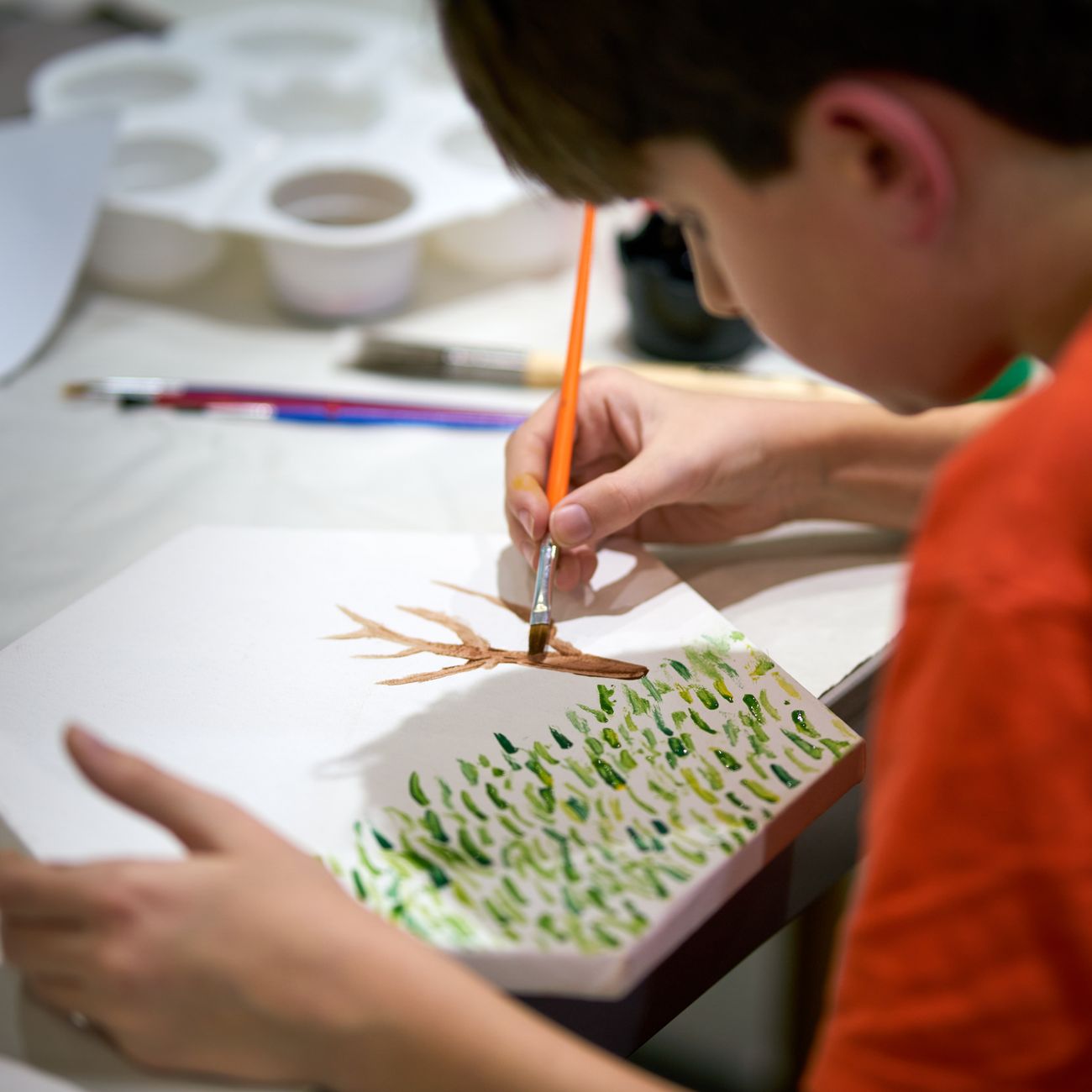
Pedagogical Atelier – The atelier is a specialized studio space where children can engage in artistic expression, often guided by a professional artist or crafts person. Within a project, the atelier becomes a site for the creation of visual representations of ideas. For instance, during a project on “community helpers,” children might use clay to model a fire station, or paint a mural that illustrates the roles they have discussed. The atelier’s resources – varied materials, tools, and open-ended media – enable children to externalize their thinking in concrete forms.
Co‑construction – This term highlights the collaborative nature of knowledge building in Reggio Emilia. Rather than the teacher delivering information, educators and children co‑construct meaning. In a project, the teacher may pose a question such as “How do plants grow?” And then invite children to suggest hypotheses, design experiments, and record observations together. The co‑construction process emphasizes dialogue, negotiation, and shared decision‑making.
Inquiry Cycle – The inquiry cycle is a repeatable sequence that guides the progression of a project. It typically includes: (1) Observation and questioning, (2) hypothesis formation, (3) experimentation and data collection, (4) analysis and reflection, and (5) presentation or sharing. Though flexible, the cycle provides a structure that helps children understand the logical flow of an investigation, fostering critical thinking and problem‑solving skills.
Children’s Voice – This phrase underscores the importance of listening to and valuing the perspectives of children. In a project setting, children’s voice is evident when they initiate topics, articulate their thoughts, and influence the direction of the inquiry. Practically, teachers may record a child’s suggestion – “Let’s look at the clouds tomorrow” – and integrate it into the next day’s activities, thereby affirming that children are active contributors to their learning.
Scaffolding – Scaffolding refers to the temporary support provided by adults to extend a child’s current level of understanding. In the Project Approach, scaffolding might involve asking probing questions, modeling a research method, or providing vocabulary that helps children articulate their ideas. The support is gradually withdrawn as children gain confidence and competence.
Transdisciplinary Learning – Transdisciplinary learning blurs the boundaries between traditional subject areas. Projects naturally lend themselves to this approach because a single inquiry can involve mathematics (measuring growth), language arts (writing a report), science (observing phenomena), and the arts (creating a representation). The integration reinforces connections and helps children see the relevance of knowledge across contexts.
Reflective Practice – Reflective practice is the habit of continuously evaluating one’s teaching decisions and the outcomes of a project. Teachers keep reflective journals, discuss with colleagues, and analyze documentation to identify what worked, what could be improved, and how the project aligned with broader learning goals. This practice ensures that the Project Approach remains dynamic and responsive.
Community Partnership – Engaging families, local experts, and community organizations enriches the project. For example, a project on “local history” may involve inviting a senior citizen to share stories, or collaborating with a museum to provide artifacts. Community partnerships extend learning beyond the classroom walls and strengthen the relevance of the inquiry.
Temporal Dimension – The temporal dimension acknowledges that projects unfold over time, allowing for deepening of understanding. Unlike short, isolated activities, a project respects the rhythm of children’s learning, giving them the opportunity to revisit ideas, refine theories, and celebrate progress. Teachers schedule regular “project meetings” where children discuss what they have discovered and plan next steps.
Materiality – Materiality emphasizes the role of physical materials in shaping thought. In Reggio Emilia, a wide range of natural and synthetic materials is made available for children to manipulate. During a project on “textures,” children might explore sand, fabric, leaves, and metal, discovering how different surfaces feel and sound. The tactile experience supports conceptual development and encourages curiosity.
Multimodal Representation – Children express ideas through various modes – drawing, writing, speaking, gesturing, digital media, and constructing. The Project Approach values these multiple forms of representation, allowing children to choose the mode that best captures their thinking. A child might record a voice memo describing an observed bird, then later translate that observation into a drawing or a digital slideshow.
Learning Outcomes – While the Project Approach is child‑driven, educators still align investigations with broader learning outcomes, such as those outlined in the UK Early Years Foundation Stage (EYFS) framework. These outcomes may include communication, personal, social, and emotional development, and physical development. Teachers map the emergent learning onto these outcomes, ensuring that the project supports statutory expectations while preserving the child‑centered nature of the inquiry.
Collaborative Inquiry – Collaborative inquiry is the process by which children work together to investigate a question. It involves sharing responsibilities, negotiating roles, and building collective knowledge. In practice, a group of children might assign one member to be the “data collector,” another to be the “recorder,” and a third to be the “presenter,” rotating these roles as the project progresses.
Open‑Ended Questions – These are questions that invite expansive thinking rather than simple yes/no answers. In a project setting, teachers use open‑ended questions to deepen discussion: “What do you think would happen if we changed the amount of water for the plant?” Such questions stimulate hypothesis formation and encourage children to consider multiple possibilities.
Critical Reflection – Critical reflection goes beyond surface‑level assessment; it involves analyzing underlying assumptions, power dynamics, and cultural influences that shape a project. Teachers examine how their own biases may affect the direction of the inquiry, ensuring that the project remains inclusive and respectful of diverse perspectives.
Pedagogical Documentation Board – This board is a visual display that chronicles the stages of a project. It may include photographs of children’s work, excerpts of dialogue, and the evolving research questions. The board is accessible to children, families, and visitors, serving as a transparent record of the learning journey.
Ethical Considerations – When children engage in real‑world investigations, ethical issues may arise, such as privacy when photographing community members, or the handling of sensitive topics. Educators must model ethical decision‑making, obtain consent where appropriate, and guide children in respectful inquiry.
Professional Collaboration – Implementing the Project Approach often requires teamwork among educators, specialists, and administrators. Regular planning meetings, shared documentation platforms, and joint reflection sessions enhance consistency and fidelity to the Reggio Emilia philosophy.
Scalable Implementation – Scalability refers to the ability to adapt the Project Approach across different settings, class sizes, and resource levels. Teachers may begin with micro‑projects – short, focused investigations – and gradually expand to larger, cross‑class projects, ensuring that the core principles remain intact.
Assessment for Learning – This form of assessment emphasizes ongoing feedback, rather than summative judgment. Documentation, peer review, and self‑assessment are tools used to gauge children’s progress during a project. For instance, a child may reflect on a recorded video of their presentation, noting strengths and areas for improvement.
Learning Narrative – A learning narrative is a written account that weaves together observations, children’s quotes, and analysis of the project’s trajectory. It provides a holistic view of the child’s development and serves as a communication bridge to parents and other professionals.
Spatial Organization – The arrangement of the physical space influences how children interact with materials and each other. In a project on “building bridges,” the classroom might be reorganized to create a “construction zone” with clearly defined workstations, encouraging focused collaboration.
Language Rich Environment – Language development is central to the Project Approach. Teachers embed rich vocabulary related to the project theme, label materials, and model complex sentences. Children are encouraged to label their observations, negotiate meanings, and engage in academic discourse.
Child‑Led Documentation – While teachers often lead documentation, empowering children to document their own learning fosters autonomy. Children may take photographs, record audio clips, or create hand‑drawn logs of their observations, thereby taking ownership of the knowledge they generate.
Reflective Dialogue – Reflective dialogue involves purposeful conversations where children discuss what they have learned, how they felt, and what they might do next. These dialogues can be facilitated during “project circles,” where each child shares a highlight and a challenge from the week.
Pedagogical Intent – Pedagogical intent articulates the underlying purpose behind a project activity. For a project on “weather patterns,” the intent might be to develop scientific inquiry skills, enhance mathematical measurement (temperature), and expand descriptive language. Clarifying intent helps teachers maintain focus while remaining flexible.
Resource Allocation – Effective projects require careful planning of resources – time, materials, specialist support, and space. Teachers must balance the need for abundant, high‑quality materials with budgetary constraints, often seeking community donations or repurposing everyday objects.
Iterative Design – Projects are not linear; they are revised and refined as new information emerges. An iterative design mindset encourages teachers to revisit earlier stages, modify research questions, or introduce new materials in response to children’s evolving interests.
Intergenerational Learning – Involving multiple generations enriches the project experience. Grandparents may share stories about local traditions, providing historical context that deepens children’s understanding of a community‑focused project.
Digital Documentation – Technology can augment traditional documentation methods. Digital cameras, tablets, and collaborative platforms allow for rapid capture, organization, and sharing of project artifacts. However, educators must ensure that digital tools complement, rather than dominate, the tactile and relational aspects of learning.
Playful Inquiry – Play remains a vital component of the Project Approach. Inquiry is embedded within playful contexts, such as role‑play scenarios that simulate scientific experiments or imaginative storytelling that explores abstract concepts.
Negotiated Meaning – Children construct meaning through dialogue and negotiation. When two children have differing explanations for a phenomenon, the teacher facilitates a conversation that helps them articulate their reasoning, compare evidence, and reach a shared understanding.
Community of Practice – This term describes the network of educators who share a commitment to the Reggio Emilia philosophy and the Project Approach. Through communities of practice, teachers exchange resources, discuss challenges, and co‑create solutions.
Professional Development – Ongoing learning for educators is essential for sustaining high‑quality project work. Workshops on documentation, material selection, and collaborative inquiry equip teachers with the skills needed to support children’s investigations.
Inclusivity – Projects must be designed to include children of diverse abilities, cultures, and linguistic backgrounds. This may involve providing multilingual labels, adapting materials for sensory sensitivities, and ensuring that every child can contribute meaningfully.
Temporal Pacing – Managing the rhythm of a project involves balancing sustained focus with opportunities for rest and spontaneous play. Teachers monitor children’s engagement levels, offering breaks or alternative activities when attention wanes.
Project Evaluation – At the conclusion of a project, teachers assess its impact on learning outcomes, child agency, and community involvement. Evaluation may involve reviewing documentation, gathering feedback from families, and reflecting on the alignment with curricular goals.
Future Inquiry – Projects naturally generate new questions. The “future inquiry” phase encourages children to identify next steps, extending the learning beyond the current project’s closure. This continuity sustains curiosity and reinforces the perception of learning as an ongoing journey.
Practical application of these terms can be illustrated through a sample project. Imagine a class that becomes intrigued by the presence of a new “bee hotel” installed in the school garden. The project begins when a child asks, “Why are the bees coming here?” The teacher records the question, photographs the hotel, and invites the children to explore the garden. The environment is rearranged: A corner of the room is transformed into a “nature lab” with magnifying glasses, field guides, and a display board. Children collect data by observing bee activity, drawing sketches of the insects, and noting the times of day they appear. The documentation board captures each step, displaying photographs of the garden, children’s notes, and a timeline of observations.
As the inquiry deepens, the children co‑construct a hypothesis: “Bees are attracted to the hotel because it provides a safe place to lay eggs.” The teacher scaffolds this hypothesis by introducing vocabulary such as “pollination,” “habitat,” and “life cycle.” A local beekeeper is invited to discuss bee behavior, providing a community partnership that enriches the project. Children then design a simple experiment, placing a small tray of water near the hotel to see if moisture influences bee visitation. They record results, analyze patterns, and reflect on their findings during a project circle.
Throughout the project, multiple forms of representation emerge. Some children create clay models of bees, while others produce a short video documentary. The atelier supplies paints and canvases for a collaborative mural that celebrates the garden’s biodiversity. Documentation is co‑produced: Children photograph their own work, transcribe their spoken explanations, and add captions to the display board. The learning narrative later compiled by the teacher includes excerpts of children’s dialogue, photographs of the experiment, and reflections on the project’s impact on their understanding of nature.
Challenges inevitably arise. One common difficulty is maintaining momentum when children’s interest wanes. Teachers address this by revisiting the “open‑ended question” that sparked the project, introducing new angles (e.G., “How do bees help us eat our food?”) And integrating related themes such as nutrition or garden planting. Another challenge is balancing the depth of inquiry with curriculum requirements. In the UK context, the EYFS framework necessitates coverage of specific outcomes. Educators meet this by mapping the project’s emergent learning onto the EYFS domains, ensuring that language development, mathematical reasoning (measuring the size of the bee hotel), and physical development (handling tools) are all documented.
Scaffolding is also required when children encounter scientific concepts that exceed their current understanding. Teachers may model scientific language, demonstrate how to use a magnifying glass, or provide graphic organizers that help children categorize observations (e.G., “What do we see?” “What do we think?” “What do we want to find out?”). Over time, the scaffolds are gradually removed as children become confident researchers.
Ethical considerations surface when photographing the garden or involving external experts. Teachers obtain consent from families before sharing images online, explain the importance of respecting living creatures, and model responsible behavior when handling insects. This ethical dialogue becomes part of the learning experience, reinforcing values of care and respect.
Professional collaboration supports the project’s success. The lead teacher shares documentation with a colleague who specializes in early numeracy, prompting the addition of counting activities (e.G., Tallying the number of bees observed each day). The collaborative team meets regularly to reflect on the project’s progress, discuss challenges, and plan extensions, such as a garden planting activity that connects the bee project to food production.
Inclusivity is ensured by providing materials that cater to different sensory needs. Children with visual impairments receive tactile models of the bee hotel, while those with speech delays are offered picture cards to express observations. Multilingual labels are added to the project board, inviting families who speak languages other than English to contribute translations and cultural perspectives on bees.
Finally, the project concludes with a “sharing celebration.” Children present their findings to parents, community members, and younger peers. They showcase the mural, play the video, and explain their experiment results. The documentation board is displayed in the school hallway, allowing the wider community to see the children’s learning journey. After the celebration, the teacher leads a reflective dialogue, asking children what they enjoyed most, what surprised them, and what they would like to explore next. This final conversation seeds the “future inquiry” phase, perhaps leading to a new project on “flowers and pollination” or “building habitats for butterflies.”
Through such an example, the interconnectedness of the key terms becomes evident. The Project Approach is not a single technique but a constellation of practices—emergent curriculum, documentation, co‑construction, and reflective practice—that together create a rich, child‑centered learning experience. Each term carries both theoretical weight and practical implications, and mastery of the vocabulary equips educators to design, implement, and evaluate projects that honor children’s agency, foster deep understanding, and align with the rigorous standards of early childhood education in the United Kingdom.
In daily practice, teachers may keep a “vocabulary log” that records the key terms as they arise in the classroom. For instance, after a project on “water cycles,” the log might note how “materiality” influenced children’s exploration of different liquids, how “multimodal representation” allowed a child to create a digital animation of clouds, and how “critical reflection” led the team to reconsider the placement of the water table to better support accessibility. By systematically linking each term to concrete classroom events, educators deepen their pedagogical awareness and build a shared language that strengthens collaboration.
When challenges appear—such as limited resources, time constraints, or differing interpretations of the project’s direction—teachers can draw on the defined vocabulary to diagnose the issue. A lack of “scaffolding” might be identified if children struggle to articulate hypotheses; a need for “professional collaboration” may emerge if the project requires specialist knowledge (e.G., Environmental science). By naming the challenge with precise terminology, the team can develop targeted strategies, such as arranging a workshop on scaffolding techniques or inviting a local environmental scientist to co‑facilitate.
The Project Approach also intersects with assessment frameworks. The EYFS emphasizes “observation” as a primary assessment tool. In a Reggio‑inspired project, observation is enriched through documentation, providing a richer evidence base for assessing children’s competencies. Teachers can triangulate data—video clips, children’s drawings, and verbal explanations—to form a comprehensive picture of development. This triangulation aligns with the principle of “assessment for learning,” ensuring that assessment informs instruction and supports children’s growth.
Moreover, the approach encourages a shift from product‑oriented outcomes to process‑oriented learning. While the final presentation or mural may be visible, the true value lies in the children’s journey: Asking questions, testing ideas, revising hypotheses, and reflecting on their learning. Emphasizing the process nurtures perseverance, curiosity, and a growth mindset. The “learning narrative” captures this process, offering families insight into how their child’s thinking evolves over time.
To sustain the Project Approach within a broader institutional context, schools may embed it within their strategic plans. Policies that allocate dedicated time for project work, provide budget lines for material acquisition, and recognize documentation as a core teacher responsibility reinforce the approach’s viability. Leadership can champion “environment as third teacher” by ensuring that spaces are flexible, well‑stocked, and designed to showcase project work prominently.
In summary, the key terms and vocabulary outlined here form the conceptual scaffolding for implementing the Project Approach within the Reggio Emilia framework in the United Kingdom. Mastery of these concepts enables educators to create learning environments where children’s curiosity drives inquiry, where documentation makes learning visible, and where collaboration with families and the community enriches the educational experience. By integrating these terms into daily practice, reflecting on challenges, and continuously refining methods, practitioners can deliver a high‑quality, child‑centered curriculum that aligns with national standards while honoring the spirit of Reggio Emilia.
Key takeaways
- The core idea is that learning deepens when children are invited to explore a topic in depth, using multiple representations, and when the learning environment is deliberately arranged to support that exploration.
- In practice, an emergent curriculum requires teachers to maintain a heightened awareness of the classroom “conversation” and to be adept at translating spontaneous moments into meaningful learning pathways.
- Documentation serves three main purposes: It makes learning visible for families and the community, it provides a reflective tool for educators to assess progress, and it becomes a resource that children can revisit to extend their ideas.
- Environment as Third Teacher – In Reggio Emilia, the learning environment is considered a “third teacher” alongside the adult and the child.
- Pedagogical Atelier – The atelier is a specialized studio space where children can engage in artistic expression, often guided by a professional artist or crafts person.
- Co‑construction – This term highlights the collaborative nature of knowledge building in Reggio Emilia.
- It typically includes: (1) Observation and questioning, (2) hypothesis formation, (3) experimentation and data collection, (4) analysis and reflection, and (5) presentation or sharing.