
Joint Force Intelligence and Surveillance
Joint Force Intelligence and Surveillance (JFIS) is a critical component of the military's intelligence, surveillance, and reconnaissance (ISR) capabilities. JFIS refers to the collection, analysis, and dissemination of intelligence informa…
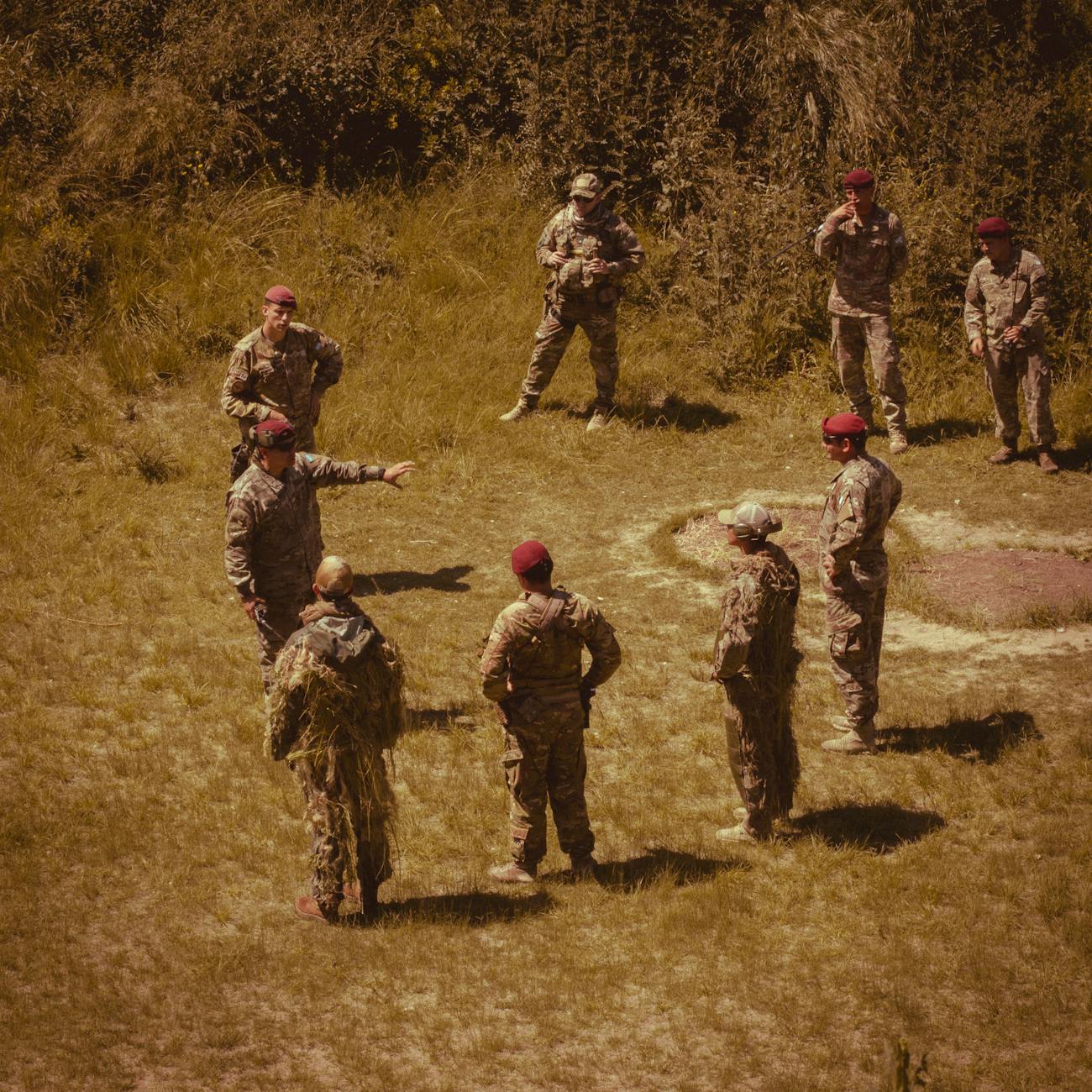
Joint Force Intelligence and Surveillance (JFIS) is a critical component of the military's intelligence, surveillance, and reconnaissance (ISR) capabilities. JFIS refers to the collection, analysis, and dissemination of intelligence information to support joint military operations. In this explanation, we will discuss the key terms and vocabulary associated with JFIS in the context of the Professional Certificate in Joint Force Command and Operations.
1. ISR: Intelligence, Surveillance, and Reconnaissance ISR is the process of collecting, analyzing, and disseminating information about an adversary's capabilities, actions, and intentions. ISR can be conducted through various means, including human intelligence (HUMINT), signals intelligence (SIGINT), imagery intelligence (IMINT), and measurement and signature intelligence (MASINT). ISR is a critical component of JFIS, providing decision-makers with the information they need to plan and execute military operations. 2. Joint: Collaborative Military Operations Joint refers to military operations that involve more than one branch of the military, such as the Army, Navy, Air Force, and Marine Corps. Joint operations require coordination and cooperation among the different branches, and JFIS plays a critical role in facilitating this coordination. JFIS provides a common operating picture (COP) of the battlefield, allowing decision-makers to share information and make informed decisions. 3. Intelligence: Information about an Adversary Intelligence is information about an adversary's capabilities, actions, and intentions. Intelligence can be collected through various means, including HUMINT, SIGINT, IMINT, and MASINT. Intelligence is analyzed and disseminated to decision-makers, who use it to plan and execute military operations. 4. Surveillance: Continuous Observation of a Target Surveillance is the continuous observation of a target, typically through electronic means such as sensors or cameras. Surveillance can provide real-time information about an adversary's movements and actions, allowing decision-makers to respond quickly to emerging threats. 5. Reconnaissance: Limited Observation of a Target Reconnaissance is a limited observation of a target, typically conducted to gather specific information about an adversary's capabilities or intentions. Reconnaissance can be conducted through various means, including ground patrols, aerial reconnaissance, or unmanned aerial vehicles (UAVs). 6. Common Operating Picture (COP): Shared Understanding of the Battlefield A COP is a shared understanding of the battlefield, providing decision-makers with a common frame of reference for situational awareness. A COP is created by integrating data from various sources, including ISR systems, sensors, and other intelligence sources. A COP enables decision-makers to share information and make informed decisions. 7. All-Source Intelligence: Integration of Multiple Intelligence Disciplines All-source intelligence is the integration of multiple intelligence disciplines, including HUMINT, SIGINT, IMINT, and MASINT. All-source intelligence provides a more comprehensive understanding of an adversary's capabilities, actions, and intentions than any single intelligence discipline. 8. Fusion Center: Centralized Location for Intelligence Analysis A fusion center is a centralized location for intelligence analysis, where data from multiple sources is integrated and analyzed. Fusion centers are typically staffed by analysts from various intelligence disciplines, who work together to provide a more comprehensive understanding of the battlefield. 9. Joint Intelligence Operations Center (JIOC): Centralized Location for Joint Intelligence Operations A JIOC is a centralized location for joint intelligence operations, where data from multiple branches of the military is integrated and analyzed. A JIOC provides a COP for joint operations, enabling decision-makers to share information and make informed decisions. 10. Joint Intelligence, Surveillance, and Reconnaissance (JISR): Integration of Joint ISR Capabilities JISR is the integration of joint ISR capabilities, providing decision-makers with a more comprehensive understanding of the battlefield. JISR involves the integration of various ISR systems, sensors, and other intelligence sources, providing a COP for joint operations. 11. National Intelligence: Intelligence Collected by National-Level Agencies National intelligence is intelligence collected by national-level agencies, such as the Central Intelligence Agency (CIA) or the National Security Agency (NSA). National intelligence is typically focused on strategic-level issues, such as global threats or geopolitical developments. 12. Tactical Intelligence: Intelligence Collected for Tactical Operations Tactical intelligence is intelligence collected for tactical operations, typically focused on immediate threats or enemy movements. Tactical intelligence is collected through various means, including HUMINT, SIGINT, IMINT, and MASINT. 13. Strategic Intelligence: Intelligence Collected for Strategic Planning Strategic intelligence is intelligence collected for strategic planning, typically focused on long-term threats or geopolitical developments. Strategic intelligence is collected through various means, including national intelligence agencies or open-source intelligence. 14. Counterintelligence: Efforts to Detect and Counter Adversary Intelligence Activities Counterintelligence is the efforts to detect and counter adversary intelligence activities, protecting sensitive information from being compromised. Counterintelligence involves various activities, including security measures, investigations, and deception operations. 15. Cyber Intelligence: Intelligence Collected from Cyber Activities Cyber intelligence is intelligence collected from cyber activities, including network traffic, system logs, or social media. Cyber intelligence can provide insights into adversary capabilities, actions, and intentions, and is an increasingly important component of JFIS. 16. Geospatial Intelligence (GEOINT): Intelligence Derived from Imagery and Geospatial Information GEOINT is intelligence derived from imagery and geospatial information, providing a detailed understanding of the physical environment. GEOINT can be used for various purposes, including targeting, route planning, or damage assessment. 17. Signals Intelligence (SIGINT): Intelligence Derived from Electronic Signals SIGINT is intelligence derived from electronic signals, including communications, radar, or electronic warfare. SIGINT can provide insights into adversary capabilities, actions, and intentions, and is an important component of JFIS. 18. Human Intelligence (HUMINT): Intelligence Derived from Human Sources HUMINT is intelligence derived from human sources, including interpersonal or cultural information. HUMINT can provide insights into adversary capabilities, actions, and intentions, and is a critical component of JFIS. 19. Measurement and Signature Intelligence (MASINT): Intelligence Derived from Physical Characteristics MASINT is intelligence derived from physical characteristics, including material or energy signatures. MASINT can provide insights into adversary capabilities, actions, and intentions, and is an important component of JFIS.
Challenges in Joint Force Intelligence and Surveillance
JFIS faces various challenges, including the increasing complexity of the battlefield, the proliferation of sensors and data sources, and the need for real-time information. JFIS must also address the challenges of integrating various intelligence disciplines, ensuring the security of sensitive information, and balancing the needs of strategic and tactical intelligence.
One of the key challenges in JFIS is the integration of various intelligence disciplines. Each intelligence discipline has its strengths and limitations, and integrating them requires a deep understanding of each discipline's capabilities and limitations. Fusion centers and JIOCs play a critical role in integrating various intelligence disciplines, providing a COP for joint operations.
Another challenge in JFIS is ensuring the security of sensitive information. JFIS involves the collection, analysis, and dissemination of sensitive information, and protecting this information from adversaries is a critical challenge. Counterintelligence efforts, including security measures and investigations, play a critical role in protecting sensitive information.
Balancing the needs of strategic and tactical intelligence is another challenge in JFIS. Strategic intelligence is focused on long-term threats or geopolitical developments, while tactical intelligence is focused on immediate threats or enemy movements. Balancing the needs of strategic and tactical intelligence requires a deep understanding of the battlefield and the ability to prioritize resources accordingly.
Example of Joint Force Intelligence and Surveillance
An example of JFIS in action is the use of ISR systems to support joint operations in Afghanistan. ISR systems, including sensors and UAVs, provide real-time information about adversary movements and actions, enabling decision-makers to respond quickly to emerging threats. Fusion centers and JIOCs integrate data from various sources, providing a COP for joint operations.
JFIS also plays a critical role in counterterrorism operations. ISR systems, including SIGINT and HUMINT, provide insights into adversary capabilities, actions, and intentions, enabling decision-makers to disrupt terrorist networks and prevent attacks.
Conclusion
Joint Force Intelligence and Surveillance is a critical component of the military's ISR capabilities, providing decision-makers with the information they need to plan and execute military operations. Understanding the key terms and vocabulary associated with JFIS is essential for military professionals
Key takeaways
- In this explanation, we will discuss the key terms and vocabulary associated with JFIS in the context of the Professional Certificate in Joint Force Command and Operations.
- Joint Intelligence, Surveillance, and Reconnaissance (JISR): Integration of Joint ISR Capabilities JISR is the integration of joint ISR capabilities, providing decision-makers with a more comprehensive understanding of the battlefield.
- JFIS must also address the challenges of integrating various intelligence disciplines, ensuring the security of sensitive information, and balancing the needs of strategic and tactical intelligence.
- Each intelligence discipline has its strengths and limitations, and integrating them requires a deep understanding of each discipline's capabilities and limitations.
- JFIS involves the collection, analysis, and dissemination of sensitive information, and protecting this information from adversaries is a critical challenge.
- Strategic intelligence is focused on long-term threats or geopolitical developments, while tactical intelligence is focused on immediate threats or enemy movements.
- ISR systems, including sensors and UAVs, provide real-time information about adversary movements and actions, enabling decision-makers to respond quickly to emerging threats.