
Digital Tools for Immersive Interior Design
Digital Tools for Immersive Interior Design --------------------------------------
Digital Tools for Immersive Interior Design --------------------------------------
### Introduction
In the Professional Certificate in Immersive Interior Design, digital tools play a crucial role in creating immersive and interactive interior environments. These tools enable designers to visualize, simulate, and communicate their ideas in a more engaging and realistic way. This explanation will cover key terms and vocabulary related to digital tools used in immersive interior design.
### 3D Modeling
3D modeling is the process of creating a three-dimensional representation of an object or space. It is a fundamental skill in immersive interior design as it allows designers to visualize and manipulate the space in a realistic and interactive way. Popular 3D modeling software includes SketchUp, Revit, and Blender.
### Texturing
Texturing is the process of adding visual details to a 3D model, such as colors, patterns, and textures. It helps to bring the 3D model to life and make it look more realistic. Texturing can be done using various software such as Substance Painter, Quixel Mixer, and Adobe Photoshop.
### Lighting
Lighting is an essential element in creating an immersive interior design. It sets the mood and atmosphere of the space, highlights key features, and affects the way colors and materials are perceived. Realistic lighting can be achieved through the use of global illumination techniques and lighting software such as V-Ray and Corona Renderer.
### Virtual Reality (VR)
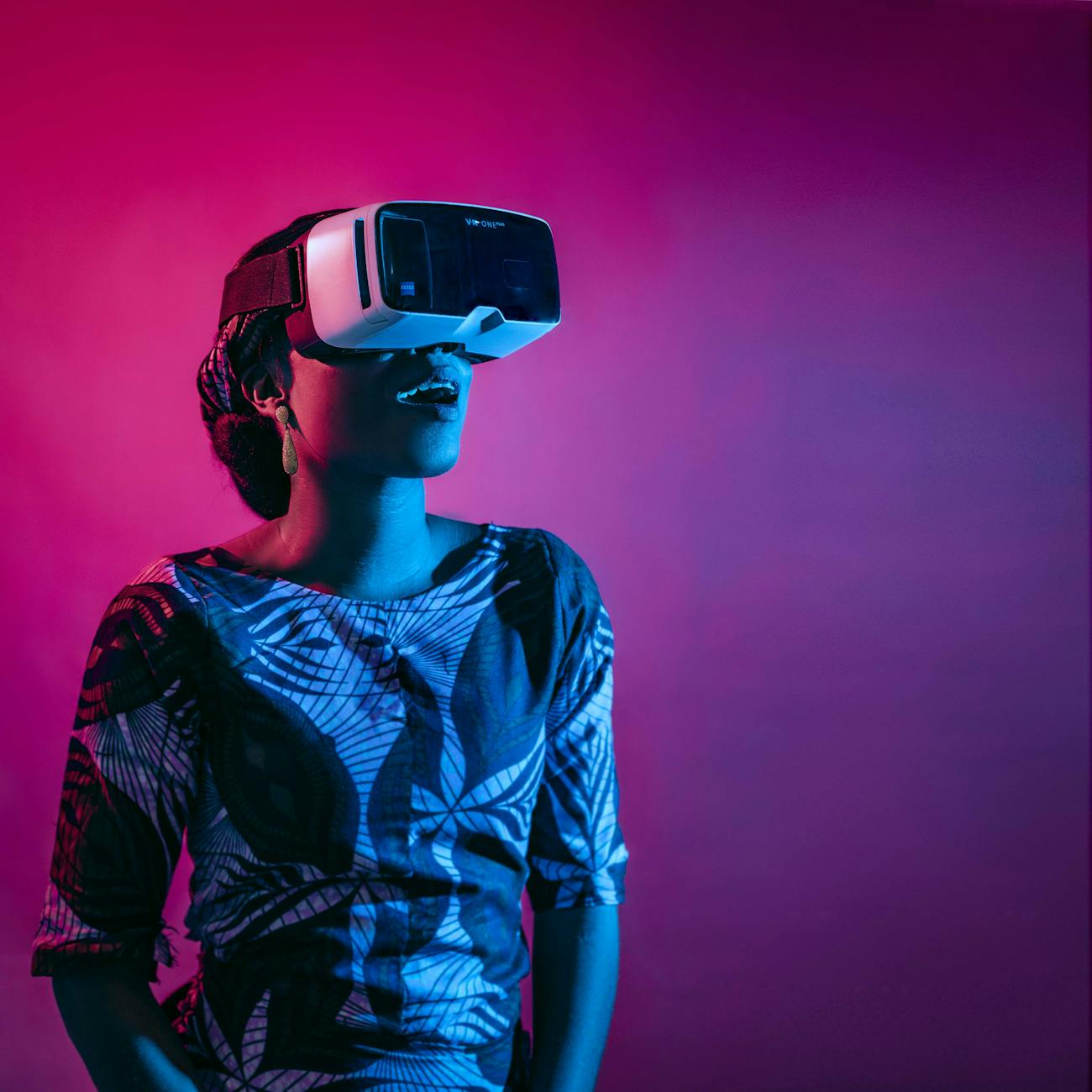
Virtual Reality (VR) is a technology that allows users to experience a simulated environment in a first-person perspective. It provides a fully immersive experience, enabling users to interact with the space in a more intuitive and engaging way. Popular VR platforms for immersive interior design include Oculus, HTC Vive, and Google Cardboard.
### Augmented Reality (AR)
Augmented Reality (AR) is a technology that overlays digital information onto the real world, allowing users to see both the physical and digital environment at the same time. It provides a more interactive and practical way of experiencing immersive interior design, as users can see how the design will look in their own space. Popular AR platforms for immersive interior design include ARCore and ARkit.
### Real-time Rendering
Real-time rendering is the process of generating images in real-time, as opposed to pre-rendering which can take hours or even days. Real-time rendering enables designers to interact with the space in a more dynamic and responsive way, making it ideal for immersive interior design. Real-time rendering engines such as Unity and Unreal Engine are commonly used in immersive interior design.
### Parametric Design
Parametric design is a design approach that uses parameters and rules to generate forms and shapes. It allows designers to create complex and customizable designs with ease, and enables real-time updates and modifications. Popular parametric design software includes Grasshopper and Dynamo.
### Physical-based Rendering (PBR)
Physical-based rendering (PBR) is a rendering technique that simulates the physical properties of materials, such as reflection, refraction, and texture. It provides a more realistic and accurate representation of the space, making it ideal for immersive interior design. PBR materials can be created using software such as Substance Designer and Quixel Bridge.
### Motion Capture
Motion capture is the process of recording the movement of objects or humans and translating it into digital data. It is commonly used in immersive interior design to create realistic and interactive animations and simulations. Motion capture technology can be found in various software such as MotionBuilder and iClone.
### Conclusion
In conclusion, digital tools are essential in creating immersive and interactive interior environments. Understanding the key terms and vocabulary related to these tools can help designers to communicate and visualize their ideas more effectively. By incorporating 3D modeling, texturing, lighting, virtual reality, augmented reality, real-time rendering, parametric design, physical-based rendering, and motion capture, designers can create more engaging and realistic interior designs.
### Examples and Practical Applications
Here are some examples and practical applications of how these digital tools can be used in immersive interior design:
* Use 3D modeling software to create a detailed and accurate representation of the space, including walls, floors, ceilings, and furniture. * Use texturing software to add visual details to the 3D model, such as colors, patterns, and textures. * Use lighting software to simulate realistic lighting conditions, such as natural light, artificial light, and shadows. * Use virtual reality platforms to provide a fully immersive experience, allowing users to explore the space in a first-person perspective. * Use augmented reality platforms to provide a more interactive and practical way of experiencing the design, as users can see how it will look in their own space. * Use real-time rendering engines to create dynamic and responsive designs, allowing designers to interact with the space in a more intuitive way. * Use parametric design software to create complex and customizable designs, and enable real-time updates and modifications. * Use physical-based rendering software to simulate the physical properties of materials, providing a more realistic and accurate representation of the space. * Use motion capture technology to create realistic and interactive animations and simulations.
### Challenges
Here are some challenges that designers may face when using digital tools in immersive interior design:
* Learning how to use new software and technologies can be time-consuming and challenging. * Creating realistic and accurate 3D models, textures, and lighting can be difficult and require a high level of skill and expertise. * Virtual and augmented reality platforms can be expensive and require specialized hardware. * Real-time rendering engines can be resource-intensive and may require powerful hardware. * Parametric design software can be complex and may require a steep learning curve. * Physical-based rendering software can be slow and may require long rendering times. * Motion capture technology can be difficult to set up and may require specialized equipment and expertise.
However, with practice and experience, designers can overcome these challenges and create immersive and interactive interior environments that engage and inspire users.
Key takeaways
- In the Professional Certificate in Immersive Interior Design, digital tools play a crucial role in creating immersive and interactive interior environments.
- It is a fundamental skill in immersive interior design as it allows designers to visualize and manipulate the space in a realistic and interactive way.
- Texturing can be done using various software such as Substance Painter, Quixel Mixer, and Adobe Photoshop.
- Realistic lighting can be achieved through the use of global illumination techniques and lighting software such as V-Ray and Corona Renderer.
- Virtual Reality (VR) is a technology that allows users to experience a simulated environment in a first-person perspective.
- Augmented Reality (AR) is a technology that overlays digital information onto the real world, allowing users to see both the physical and digital environment at the same time.
- Real-time rendering enables designers to interact with the space in a more dynamic and responsive way, making it ideal for immersive interior design.