
Sustainable Practices in Immersive Design
Sustainable practices in immersive design involve creating interior spaces that are not only visually stunning and functional, but also environmentally friendly and socially responsible. This approach requires an understanding of several ke…
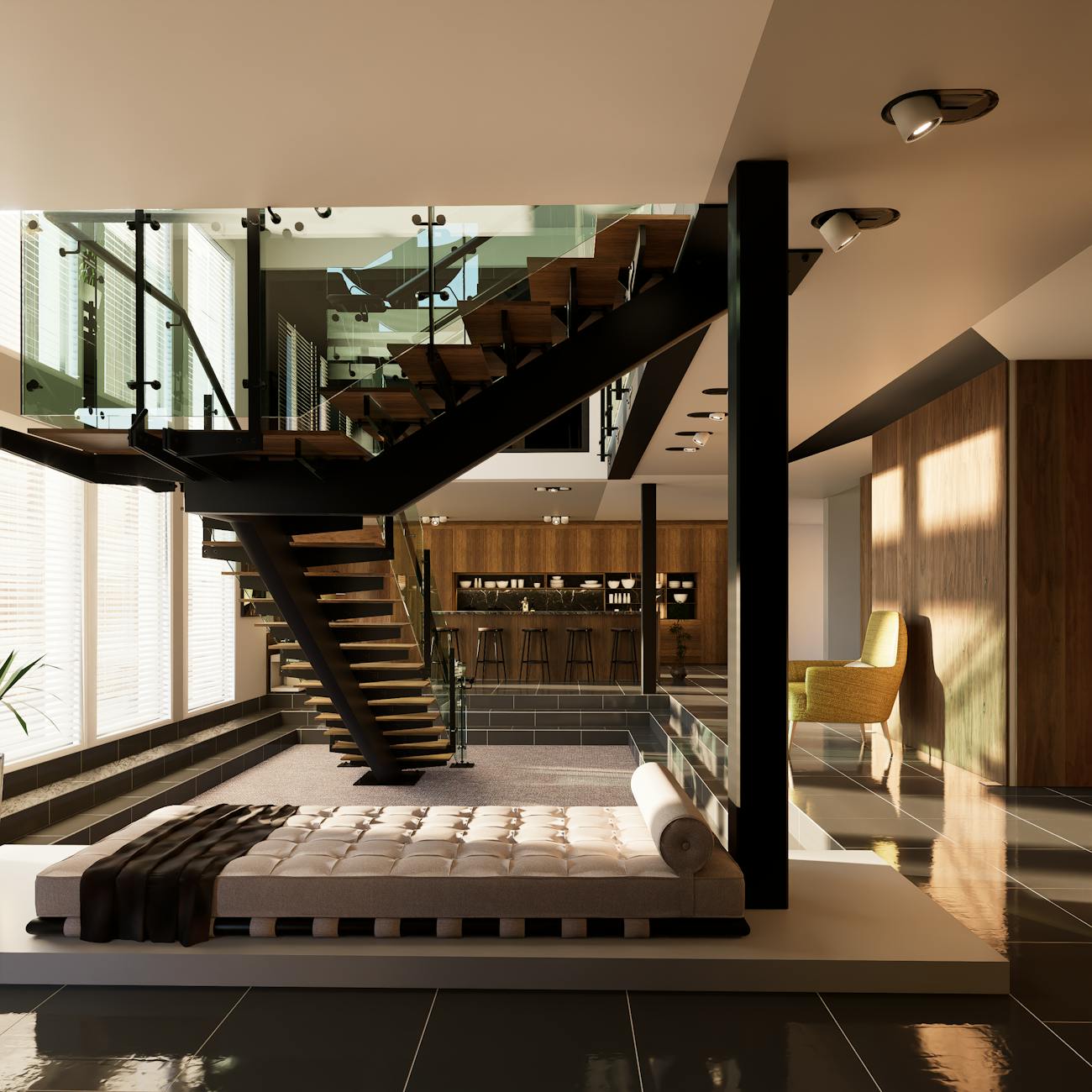
Sustainable practices in immersive design involve creating interior spaces that are not only visually stunning and functional, but also environmentally friendly and socially responsible. This approach requires an understanding of several key terms and concepts related to sustainability, as well as an awareness of the practical challenges and opportunities associated with sustainable design.
One important term in this context is "life cycle assessment" (LCA), which refers to the process of evaluating the environmental impacts of a product or system throughout its entire life cycle, from raw materials extraction to end-of-life disposal. LCA is a useful tool for identifying hotspots of environmental impact and for making informed decisions about material selection and product design. For example, an LCA of a piece of furniture might reveal that a significant portion of its environmental impact comes from the energy used to manufacture and transport it, prompting the designer to consider using locally sourced materials or designing for disassembly and recycling.
Another key concept in sustainable design is "cradle-to-cradle" (C2C) thinking, which goes beyond the traditional "cradle-to-grave" approach of LCA to imagine a closed-loop system where waste is eliminated and materials are continuously cycled through biological and technical metabolisms. In a C2C system, materials are designed to be either biodegradable and safely returned to the earth, or infinitely recyclable without loss of quality. This approach requires careful consideration of material properties and end-of-life scenarios, as well as collaboration with suppliers and manufacturers to ensure that materials are sourced and processed in a responsible manner.
"Biophilic design" is another important concept in sustainable immersive design, which involves incorporating elements of nature into interior spaces to promote physical and psychological well-being. Biophilic design can take many forms, from the use of natural materials and textures, to the incorporation of living plants, to the creation of views and vistas that connect occupants to the outdoors. By creating immersive interior spaces that foster a connection to nature, designers can help to reduce stress, improve cognitive function, and enhance overall well-being.
One practical application of these concepts is the use of sustainable materials in immersive design. This can involve selecting materials that have low embodied energy, are sourced from renewable or recycled sources, or have minimal environmental impacts. Examples of sustainable materials that can be used in immersive design include reclaimed wood, bamboo, cork, natural fiber upholstery, and low-VOC paints and finishes. By using sustainable materials, designers can reduce the environmental impact of their projects, while also providing occupants with healthy and comfortable interior spaces.
Another practical application is the integration of energy-efficient systems and technologies into immersive design. This can involve selecting lighting systems that use LED bulbs or daylighting strategies, incorporating natural ventilation and passive cooling techniques, or using smart thermostats and other building automation systems to optimize energy use. By designing for energy efficiency, designers can reduce the operational carbon footprint of their projects, while also providing occupants with comfortable and controllable indoor environments.
Challenges to sustainable immersive design can include cost constraints, limited availability of sustainable materials, and resistance from clients or stakeholders. However, designers can overcome these challenges by demonstrating the long-term benefits of sustainable design, such as reduced operating costs, improved occupant health and well-being, and enhanced brand reputation. Additionally, designers can partner with suppliers and manufacturers to source sustainable materials and technologies, and can leverage data and analytics to make evidence-based decisions about material selection and system design.
In summary, sustainable practices in immersive design involve an understanding of key terms and concepts such as life cycle assessment, cradle-to-cradle thinking, and biophilic design. By incorporating these concepts into their work, designers can create immersive interior spaces that are not only visually stunning and functional, but also environmentally friendly and socially responsible. Practical applications of sustainable design can include the use of sustainable materials, the integration of energy-efficient systems and technologies, and the creation of healthy and comfortable indoor environments. Challenges to sustainable design can be overcome through education, collaboration, and the use of data and analytics to make informed decisions.
Key takeaways
- This approach requires an understanding of several key terms and concepts related to sustainability, as well as an awareness of the practical challenges and opportunities associated with sustainable design.
- LCA is a useful tool for identifying hotspots of environmental impact and for making informed decisions about material selection and product design.
- This approach requires careful consideration of material properties and end-of-life scenarios, as well as collaboration with suppliers and manufacturers to ensure that materials are sourced and processed in a responsible manner.
- Biophilic design can take many forms, from the use of natural materials and textures, to the incorporation of living plants, to the creation of views and vistas that connect occupants to the outdoors.
- By using sustainable materials, designers can reduce the environmental impact of their projects, while also providing occupants with healthy and comfortable interior spaces.
- By designing for energy efficiency, designers can reduce the operational carbon footprint of their projects, while also providing occupants with comfortable and controllable indoor environments.
- Additionally, designers can partner with suppliers and manufacturers to source sustainable materials and technologies, and can leverage data and analytics to make evidence-based decisions about material selection and system design.