
Climate Change Modeling and Mapping
Climate Change Modeling and Mapping are crucial components of the Graduate Certificate in GIS for Climate Change and Conservation. Here are some key terms and vocabulary related to these topics:
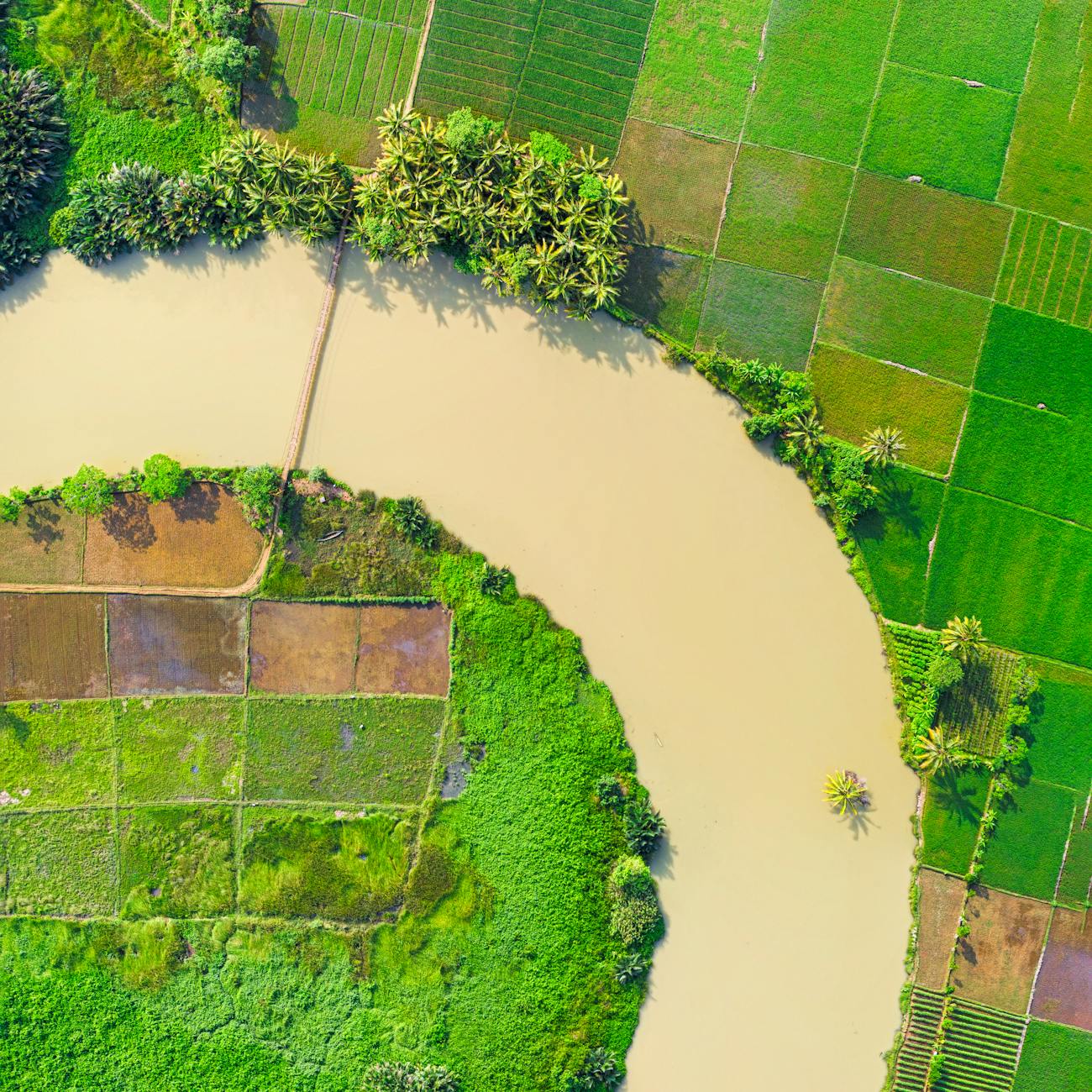
Climate Change Modeling and Mapping are crucial components of the Graduate Certificate in GIS for Climate Change and Conservation. Here are some key terms and vocabulary related to these topics:
1. **Climate Modeling**: Climate modeling is the process of creating mathematical representations of the Earth's climate system to project future changes. These models use physical, chemical, and biological principles to simulate the Earth's atmosphere, oceans, land surface, and cryosphere. Climate models can be used to understand past climate changes, analyze present-day climate, and project future climate under different scenarios. 2. **General Circulation Models (GCMs)**: GCMs are the most comprehensive type of climate model, simulating the Earth's atmosphere, oceans, land surface, and sea ice. GCMs are used to project future climate changes at the global scale and are the basis for developing future climate scenarios. 3. **Regional Climate Models (RCMs)**: RCMs are higher-resolution models that are nested within GCMs to provide more detailed information about climate changes at the regional or local scale. RCMs can capture finer-scale processes such as topography, land use, and coastal effects that are not represented in GCMs. 4. **Downscaling**: Downscaling is the process of taking coarse-resolution climate model outputs and increasing their spatial resolution to provide more detailed information about climate changes at the local or regional scale. There are two main types of downscaling: dynamical downscaling, which uses RCMs, and statistical downscaling, which uses statistical methods to relate large-scale climate variables to local climate variables. 5. **Climate Scenarios**: Climate scenarios are plausible descriptions of future climate that are based on climate model simulations. Scenarios are used to inform climate change impact assessments, adaptation planning, and mitigation strategies. The Intergovernmental Panel on Climate Change (IPCC) provides a set of scenarios called Representative Concentration Pathways (RCPs), which describe different trajectories of greenhouse gas emissions and resulting climate changes. 6. **Geographic Information Systems (GIS)**: GIS is a system for managing, analyzing, and visualizing spatial data. GIS can be used to create maps, analyze spatial patterns, and perform spatial analyses. GIS is a powerful tool for climate change modeling and mapping, as it can integrate climate data with other spatial data such as topography, land use, and population data. 7. **Climate Data**: Climate data are measurements or estimates of climate variables such as temperature, precipitation, and wind. Climate data can come from observations, reanalyses, or model simulations. Climate data are often stored in gridded formats, with values assigned to a regular grid of points covering the Earth's surface. 8. **Climate Mapping**: Climate mapping is the process of creating maps that show spatial patterns of climate variables or climate changes. Climate maps can be used to visualize climate data, identify climate hotspots, and communicate climate change impacts to stakeholders. Climate maps can be created using GIS software and can be combined with other spatial data to create integrated maps that show the relationships between climate and other factors such as land use, population, and ecosystems. 9. **Climate Change Vulnerability Assessment**: A climate change vulnerability assessment is a process for identifying and evaluating the risks and impacts of climate change on human and natural systems. Vulnerability assessments can inform adaptation planning and prioritization of resources. GIS can be used to integrate climate data with other spatial data to perform vulnerability assessments. 10. **Adaptation Planning**: Adaptation planning is the process of developing strategies to reduce the risks and impacts of climate change on human and natural systems. Adaptation planning can be informed by climate change vulnerability assessments and can involve a range of measures such as infrastructure improvements, land use planning, and emergency response planning. GIS can be used to support adaptation planning by providing spatial data and analysis to inform decision-making.
Examples:
* A climate model simulation may project that temperatures in a particular region will increase by 2°C by the end of the century. This projection can be used to inform climate change impact assessments, such as evaluating the impacts on agriculture, water resources, and human health. * A GIS-based climate map may show that a particular region is experiencing increasing trends in heavy precipitation events. This information can be used to inform infrastructure planning, such as designing stormwater management systems that can handle increased runoff. * A climate change vulnerability assessment may identify that a particular community is highly vulnerable to sea-level rise due to its location in a low-lying coastal area. This information can be used to inform adaptation planning, such as developing strategies to protect critical infrastructure or relocate affected residents.
Practical applications:
* Climate model simulations can be used to inform climate change mitigation strategies, such as evaluating the effectiveness of different greenhouse gas reduction scenarios. * GIS-based climate maps can be used to communicate climate change impacts to stakeholders, such as policymakers, community leaders, and the general public. * Climate change vulnerability assessments can be used to prioritize resources for climate change adaptation, such as identifying areas that are most at risk and developing targeted adaptation strategies.
Challenges:
* Climate model simulations are subject to uncertainties due to limitations in the models, data, and assumptions used. It is important to communicate these uncertainties to stakeholders and consider multiple scenarios when making decisions. * GIS-based climate maps can be complex and may require specialized expertise to interpret. It is important to ensure that climate maps are accessible and understandable to a wide range of stakeholders. * Climate change vulnerability assessments can be time-consuming and resource-intensive. It is important to prioritize resources for vulnerability assessments and ensure that they are tailored to the specific needs and contexts of the communities being assessed.
In conclusion, Climate Change Modeling and Mapping are crucial components of the Graduate Certificate in GIS for Climate Change and Conservation. Understanding key terms and vocabulary related to these topics can help students develop the skills and knowledge needed to inform climate change impact assessments, adaptation planning, and mitigation strategies. Through the use of GIS and climate data, students can create maps and analyses that communicate climate change impacts and inform decision-making. However, it is important to recognize the challenges and uncertainties associated with climate modeling and mapping and communicate these to stakeholders.
Key takeaways
- Climate Change Modeling and Mapping are crucial components of the Graduate Certificate in GIS for Climate Change and Conservation.
- The Intergovernmental Panel on Climate Change (IPCC) provides a set of scenarios called Representative Concentration Pathways (RCPs), which describe different trajectories of greenhouse gas emissions and resulting climate changes.
- * A climate change vulnerability assessment may identify that a particular community is highly vulnerable to sea-level rise due to its location in a low-lying coastal area.
- * Climate change vulnerability assessments can be used to prioritize resources for climate change adaptation, such as identifying areas that are most at risk and developing targeted adaptation strategies.
- It is important to prioritize resources for vulnerability assessments and ensure that they are tailored to the specific needs and contexts of the communities being assessed.
- Understanding key terms and vocabulary related to these topics can help students develop the skills and knowledge needed to inform climate change impact assessments, adaptation planning, and mitigation strategies.