
Disaster Risk Reduction and GIS
Disaster Risk Reduction (DRR) is the systematic approach to identifying, assessing, and reducing the risks associated with natural and human-induced disasters. DRR aims to lessen the impact of disasters on vulnerable communities, reduce eco…
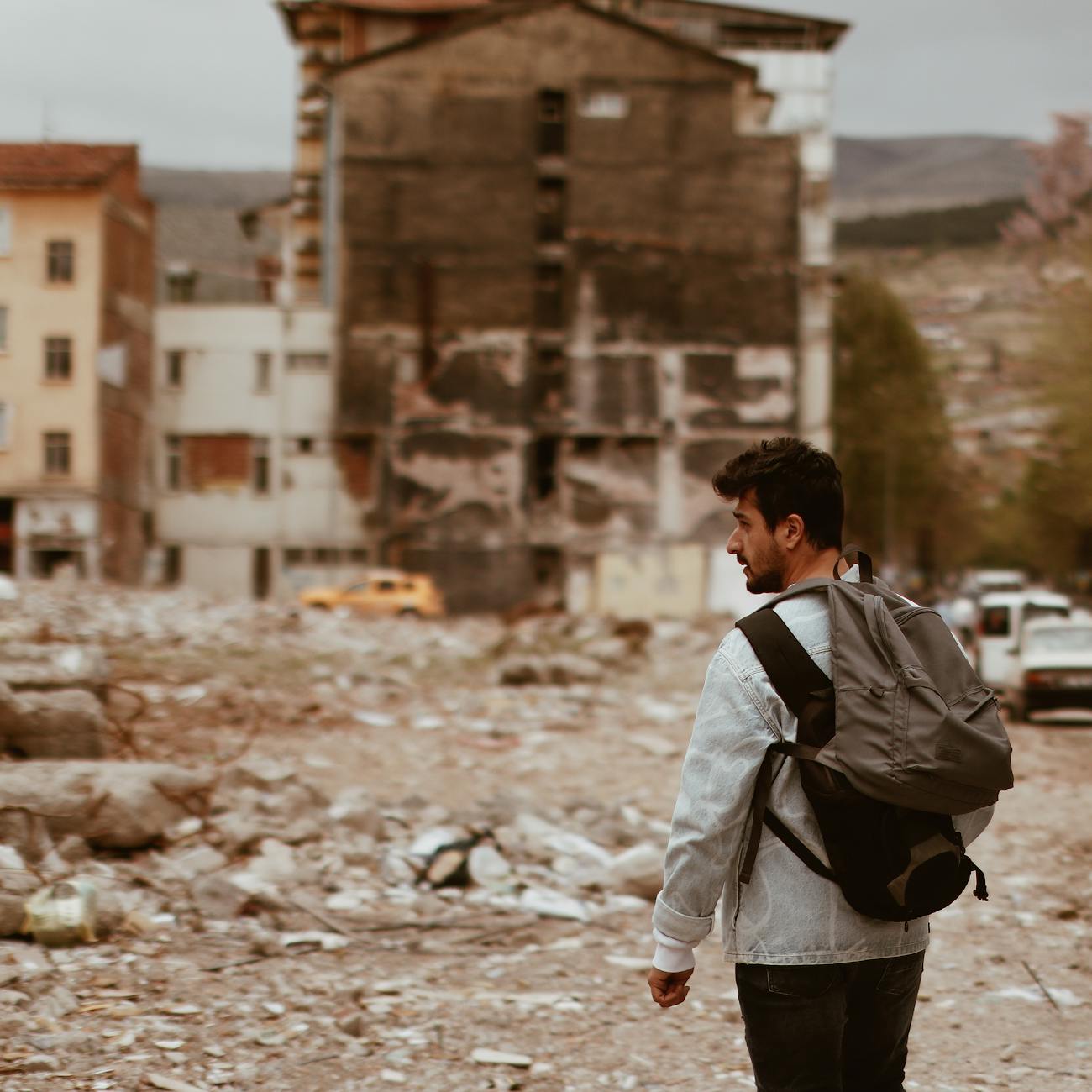
Disaster Risk Reduction (DRR) is the systematic approach to identifying, assessing, and reducing the risks associated with natural and human-induced disasters. DRR aims to lessen the impact of disasters on vulnerable communities, reduce economic losses, and protect critical infrastructure. Geographic Information Systems (GIS) play a vital role in DRR by providing tools for data collection, analysis, visualization, and dissemination. In this explanation, we will discuss key terms and vocabulary related to DRR and GIS in the context of the Graduate Certificate in GIS for Climate Change and Conservation.
1. Disaster Risk Reduction (DRR): DRR is a proactive approach to minimize the impact of disasters on communities and the environment. DRR involves identifying hazards, assessing risks, and implementing strategies to reduce vulnerability and exposure to those risks. 2. Geographic Information Systems (GIS): GIS is a powerful tool for managing, analyzing, and visualizing spatial data. GIS enables users to create maps, perform spatial analysis, and develop models that can inform decision-making related to DRR. 3. Hazard: A hazard is a natural or human-induced phenomenon that has the potential to cause harm to people, property, or the environment. Examples of hazards include earthquakes, hurricanes, floods, and landslides. 4. Vulnerability: Vulnerability refers to the susceptibility of a community or system to harm from a hazard. Factors that contribute to vulnerability include poverty, lack of access to resources, and inadequate infrastructure. 5. Exposure: Exposure refers to the extent to which people, property, or the environment are at risk from a hazard. Factors that influence exposure include population density, land use patterns, and infrastructure location. 6. Risk: Risk is a function of hazard, vulnerability, and exposure. Risk is the likelihood of harm from a hazard, given the vulnerability and exposure of a community or system. 7. Spatial Data: Spatial data is data that has a geographic component. Spatial data can include information about the location, extent, and attributes of geographic features. 8. Remote Sensing: Remote sensing is the collection of data about the Earth's surface using sensors mounted on aircraft or satellites. Remote sensing can provide valuable information about hazards, vulnerability, and exposure. 9. Georeferencing: Georeferencing is the process of associating spatial data with a coordinate system. Georeferencing allows users to locate data on a map and perform spatial analysis. 10. Geoprocessing: Geoprocessing is the automated analysis of spatial data. Geoprocessing can include tasks such as buffering, overlay analysis, and network analysis. 11. Spatial Analysis: Spatial analysis is the process of analyzing spatial data to identify patterns, trends, and relationships. Spatial analysis can inform decision-making related to DRR. 12. Visualization: Visualization is the process of creating maps, charts, and other graphics to communicate spatial data. Visualization can help stakeholders understand complex data and make informed decisions. 13. Open Source GIS: Open source GIS refers to GIS software that is freely available and can be modified by users. Open source GIS can provide an affordable alternative to commercial GIS software. 14. Web GIS: Web GIS refers to GIS software that is accessed through a web browser. Web GIS can provide real-time data and enable collaboration between stakeholders. 15. Disaster Management Cycle: The disaster management cycle is a framework for managing disasters from preparedness to recovery. The cycle includes four phases: mitigation, preparedness, response, and recovery. GIS can support each phase of the disaster management cycle.
Examples and Practical Applications:
GIS can support DRR in various ways, including:
1. Hazard Mapping: GIS can be used to create maps of hazardous areas, such as flood zones or landslide-prone areas. Hazard maps can inform land use planning and emergency response efforts. 2. Vulnerability Mapping: GIS can be used to create maps of vulnerable communities, such as areas with high poverty rates or limited access to healthcare. Vulnerability maps can inform resource allocation and emergency response efforts. 3. Exposure Mapping: GIS can be used to create maps of exposed infrastructure, such as power plants or hospitals. Exposure maps can inform emergency response planning and infrastructure protection efforts. 4. Risk Assessment: GIS can be used to perform risk assessments that consider hazard, vulnerability, and exposure. Risk assessments can inform decision-making related to DRR. 5. Emergency Response Planning: GIS can be used to create maps and models that support emergency response planning. GIS can help identify safe evacuation routes, allocate resources, and predict the spread of hazards. 6. Damage Assessment: GIS can be used to assess damage after a disaster. GIS can help identify areas of significant damage, prioritize response efforts, and track recovery progress. 7. Climate Change Adaptation: GIS can be used to identify areas that are at risk from climate change-related hazards, such as sea-level rise or increased frequency of extreme weather events. GIS can support climate change adaptation efforts by informing land use planning and infrastructure design.
Challenges:
Despite the many benefits of GIS for DRR, there are also challenges, including:
1. Data Quality: GIS relies on accurate and up-to-date data. Ensuring the quality of data can be challenging, particularly in developing countries. 2. Data Access: GIS data can be expensive and difficult to access. Open source GIS and web GIS can help address data access challenges. 3. Technical Expertise: GIS requires specialized technical expertise. Building capacity in GIS can be challenging, particularly in communities with limited resources. 4. Data Privacy: GIS data can include sensitive information about individuals and communities. Ensuring data privacy can be challenging, particularly in the context of emergency response efforts. 5. Integration with Decision-Making: GIS data and analysis must be integrated with decision-making processes to be effective. Building relationships with decision-makers and ensuring the relevance of GIS data and analysis can be challenging.
Conclusion:
DRR and GIS are closely linked, with GIS providing valuable tools for data collection, analysis, visualization, and dissemination. Understanding key terms and vocabulary related to DRR and GIS is essential for professionals working in climate change and conservation. GIS can support DRR in various ways, from hazard mapping to emergency response planning. Despite the challenges, GIS has the potential to significantly improve DRR efforts and support sustainable development. By building capacity in GIS and integrating GIS data and analysis with decision-making processes, communities can reduce their vulnerability to disasters and build resilience in the face of a changing climate.
Key takeaways
- In this explanation, we will discuss key terms and vocabulary related to DRR and GIS in the context of the Graduate Certificate in GIS for Climate Change and Conservation.
- Hazard: A hazard is a natural or human-induced phenomenon that has the potential to cause harm to people, property, or the environment.
- Climate Change Adaptation: GIS can be used to identify areas that are at risk from climate change-related hazards, such as sea-level rise or increased frequency of extreme weather events.
- Integration with Decision-Making: GIS data and analysis must be integrated with decision-making processes to be effective.
- By building capacity in GIS and integrating GIS data and analysis with decision-making processes, communities can reduce their vulnerability to disasters and build resilience in the face of a changing climate.